Which device is worth buying for your hands and forearms? Start with the action you want to practice: closing your hand, holding a load, or moving your wrist. Tools for grip workouts and equipment for exercising the forearms can look similar while placing very different demands on your hands.
A compact device can make a particular movement convenient, but it is one part of a training routine. Choose a resistance you can control, consider what other equipment you already use, and leave time between demanding sessions for recovery.
Forearm exercise equipment: match the action to the device
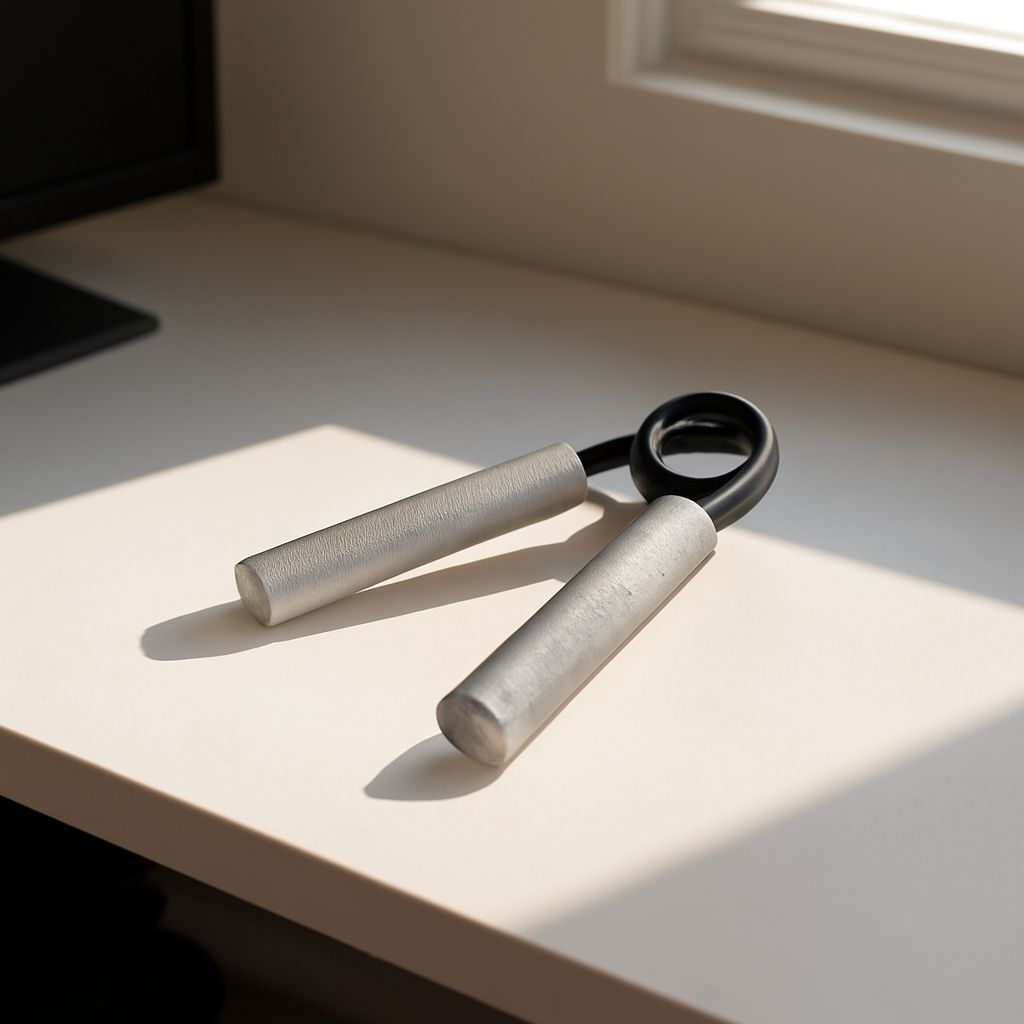
A spring gripper has two handles that you squeeze together. It emphasizes a closing grip and is easy to keep in a bag or drawer. Some have a dial or other adjustment; others have a fixed spring, so a different resistance means buying a different unit. Handle spacing and texture affect whether you can position it comfortably and complete a controlled squeeze.
A wrist roller uses a handle, a strap or cord, and a suspended weight. Turning the handle winds the load up; reversing the movement lowers it. This requires space and a secure attachment, and the effort includes holding your arms in position as well as moving the wrists. The Rogue Wrist Roller is designed for a kettlebell or a loading pin with plates; check which accessories are included before comparing its cost with a handheld gripper.
A dumbbell is a practical piece of forearm exercise equipment if you already own one. You can hold it for a timed carry or support your forearm and move your wrist through a comfortable range. A carry emphasizes maintaining a grip over time, while a wrist curl involves a bending action. Neither is the same task as repeatedly closing a gripper, so choose according to the activity you want to practice.
Check resistance and adjustment
The right forearm workout tool lets you perform the intended movement smoothly from the start. For a gripper, look for a setting or model you can close under control and release slowly for several repetitions. If you must twist your wrist or use the other hand to force it shut, choose less resistance. A lighter starting point also makes it easier to learn how the handles sit in your palm.
Manufacturers may quote gripper resistance in pounds, but the number is not a universal measure of how hard different designs feel. Handle spread, spring geometry, and the point at which force is measured can change the experience. IronMind’s comparison guidance cautions against directly comparing ratings across brands. Its fixed-resistance Captains of Crush line includes a Guide model listed at approximately 60 pounds and a Sport model at approximately 80 pounds; those figures describe the maker’s products, not a recommended starting load for everyone. Manufacturer information was checked November 4, 2026.
An adjustable gripper can offer several settings in one purchase. Check the adjustment range and whether you can change it easily and return to a known setting. With a wrist roller, resistance depends on the attached load: start light enough to raise and lower it without letting it drop. Check the maker’s limits for the device and attachments, and use compatible weights and fasteners.
Make comfort and setup part of the decision
The best forearm exercise tool is one you can position securely and use as intended. A handle that is too wide can make the first part of a squeeze awkward, while aggressive texture may be uncomfortable for longer sessions. If possible, try the device or compare its dimensions with an item you already hold comfortably. Check both hands, since their comfortable range and strength may differ.
For a roller, account for the hanging load and a clear path below it. Verify the connection before each set, keep feet away from the weight, and lower it deliberately. For a carry, pick a clear route and a weight you can put down safely. Inspect handles, straps, springs, and attachment points according to the manufacturer’s directions; replace damaged components rather than relying on them to hold.
Portability also matters. A small gripper needs little setup, whereas a loaded roller may require separate plates, a pin, and storage space. If your available time is short, a simpler device that you will use consistently may be more practical than a more versatile setup that is inconvenient to assemble.
Put a tool into a sensible session
Begin with a brief warm-up and a light effort. Practice a few controlled repetitions or a short hold, then rest and notice how your hands and forearms respond before adding more. Increase resistance or time gradually when the current workload feels manageable and your technique remains steady. Stop if the movement causes pain.
Grip work can complement a broader routine that includes pulling, carrying, and other strength exercises. It does not replace those sessions, and buying a device does not determine a particular outcome. If you already do heavy rows, carries, or climbing, consider that existing hand demand when deciding how much extra work to add.
Choose the device that matches your intended movement and offers a comfortable, controllable starting resistance.