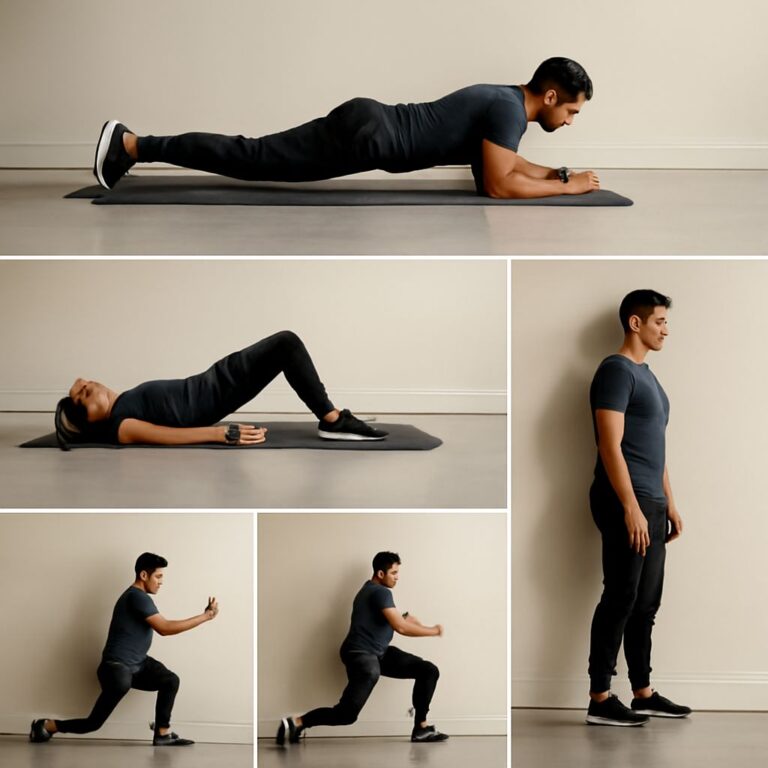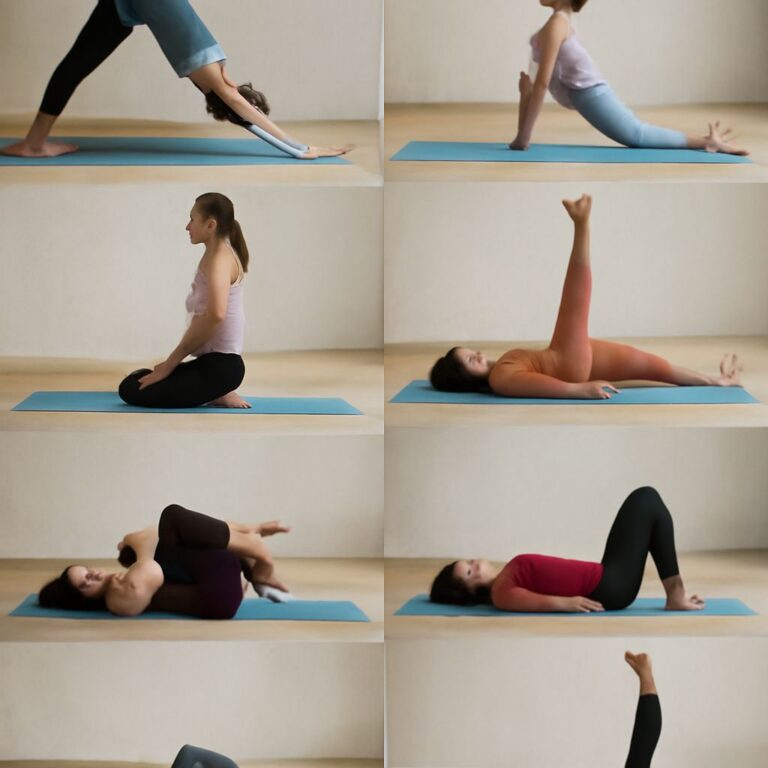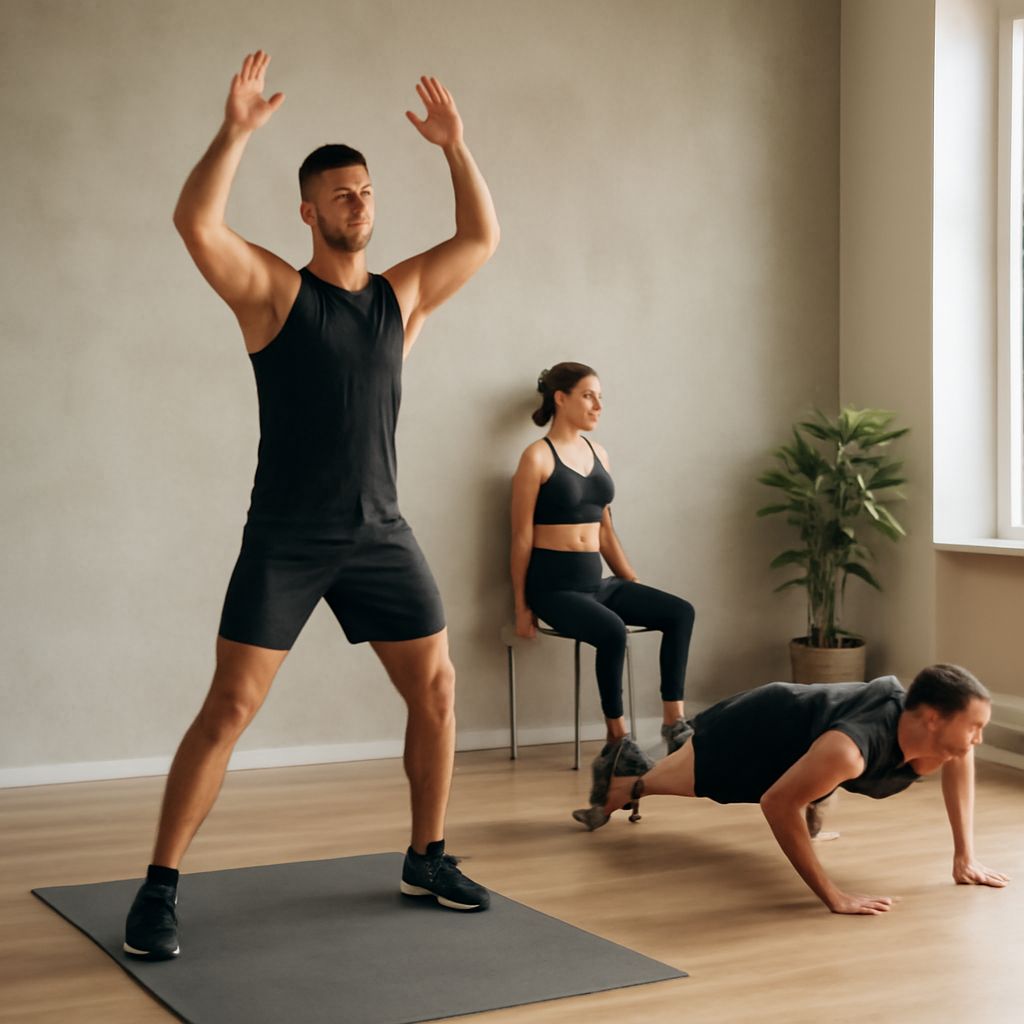
A short, structured circuit can give you a full-body session when your schedule leaves little time. The seven-minute workout organizes familiar bodyweight movements into timed stations, so you can move through the sequence without counting repetitions.
The classic seven-minute exercise routine uses 12 movements, each performed for 30 seconds, with about 10 seconds to transition between them. The name is approximate: 12 work periods total six minutes, and 11 transitions add one minute and 50 seconds. Allow extra time for a warm-up, a slower transition, or any additional rest you need.
7 minutes, workout transitions, and pacing
For 7 minutes, workout participants may focus on moving through the stations, but the full classic sequence with 11 ten-second transitions takes about 7 minutes and 50 seconds. Set a timer for the work and transition periods, and keep the order visible. The brief transitions are intended for changing position, not necessarily full recovery.
The traditional circuit alternates movements that place different demands on the body. It is often presented as a vigorous effort, but speed is not the first priority when learning. Use a pace that allows controlled repetitions, and extend the breaks if you cannot prepare for the next movement safely. A modified circuit with longer pauses will take more time than the named format.
Set up before you start
Choose a clear, level area with a nonslip floor and enough room to lie down, stand, and move your arms. You will need a stable wall and a sturdy chair that will not slide or tip. Avoid a rolling chair. Check the chair’s position before using it, and wear footwear that provides reliable traction.
Warm up for several minutes with easy marching, shoulder movements, and a few comfortable squats. Practice unfamiliar movements slowly before starting the timer. If you have a recent injury, experience pain with a movement, or have a health condition that makes vigorous exercise uncertain, ask a healthcare professional for guidance before trying the circuit.
Follow the 12 stations
Perform each movement for up to 30 seconds, then use the next 10 seconds to change position. Stop earlier if your form becomes difficult to control. The options after each movement can make the circuit more manageable.
- Jumping jacks: step one foot out at a time while raising your arms instead of jumping.
- Wall sit: slide down a wall into a shallow seated position. Stay higher on the wall if a deeper bend is uncomfortable.
- Push-ups: place your hands on a stable wall or counter and keep your body aligned as you press away.
- Abdominal crunches: lie on your back with knees bent and lift your head and shoulders a small distance; keep the motion slow.
- Step-ups onto a chair: use a low, stable step instead, or march in place if a secure platform is unavailable.
- Squats: sit back toward a stable chair and stand again, using a comfortable depth.
- Chair triceps dips: replace these with wall push-ups if lowering your body between your arms feels uncomfortable or you cannot stabilize the chair.
- Plank: place your forearms on a stable elevated surface, or lower your knees to the floor while keeping your trunk steady.
- High knees running in place: march and lift each knee to a comfortable height without bouncing.
- Lunges: hold a stable support and take a shallow step, or use a supported split stance without moving forward.
- Push-ups with rotation: perform a wall push-up, then turn your chest gently to one side without lifting a hand if balance is uncertain.
- Side plank: support yourself on a forearm and bent knee, keeping your hips lifted only as long as you can control the position.
The classic 7-minute workout uses the same timer for every station, but you can stop a movement before the signal and rest for the remaining time. For balance or floor transitions, give yourself extra seconds and restart when you are ready. The goal is to complete movements you can control, not to rush through every station at any cost.
Choose your effort and rest
A 7 min workout can feel very different depending on the variations and speed you choose. Begin with one round and a manageable effort. You should be able to recognize when you need to slow down and maintain steady breathing between movements. If a station causes sharp pain, stop that movement and choose another appropriate option.
Use the timer for this seven-minute training circuit as a guide rather than an obligation. For example, work for 20 seconds and take 20 seconds to recover or change position. This changes the interval structure and total duration, but it can give you time to practice well. Record the choices you make so you can repeat or adjust them later.
This seven-minute circuit is one way to fit movement into a busy day. Longer walks, strength sessions, and other activities can serve different goals across the week. Add another round only if you have time, have recovered, and can maintain control; rest between rounds instead of treating the transition as a race.
Set a timer now and rehearse a slow 30-second chair squat, followed by at least 10 seconds of rest. Notice whether the pace and chair feel stable, then decide which station variations you would use for your first complete circuit.