Which muscles does a rowing machine work, and what can you expect from it? A stroke combines a leg push, a controlled swing of the torso, and an arm pull. The advantages of rowing include cardiovascular exercise and muscular endurance, with the legs supplying much of the initial force.
Understanding that sequence makes the machine easier to use. The handle moves toward you, but pulling hard with your arms from the start is not the same as making a coordinated stroke.
What does a rowing machine work during each stroke?
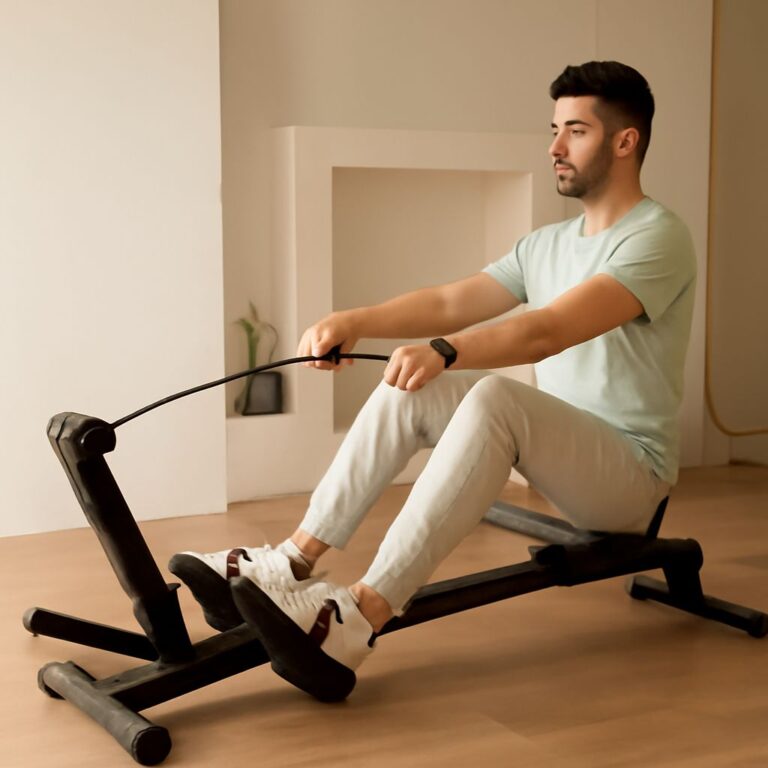
A rowing stroke has four phases. The drive and finish move the handle toward the body; the recovery and catch prepare the next push. Each phase involves several muscle groups working together rather than one muscle acting in isolation.
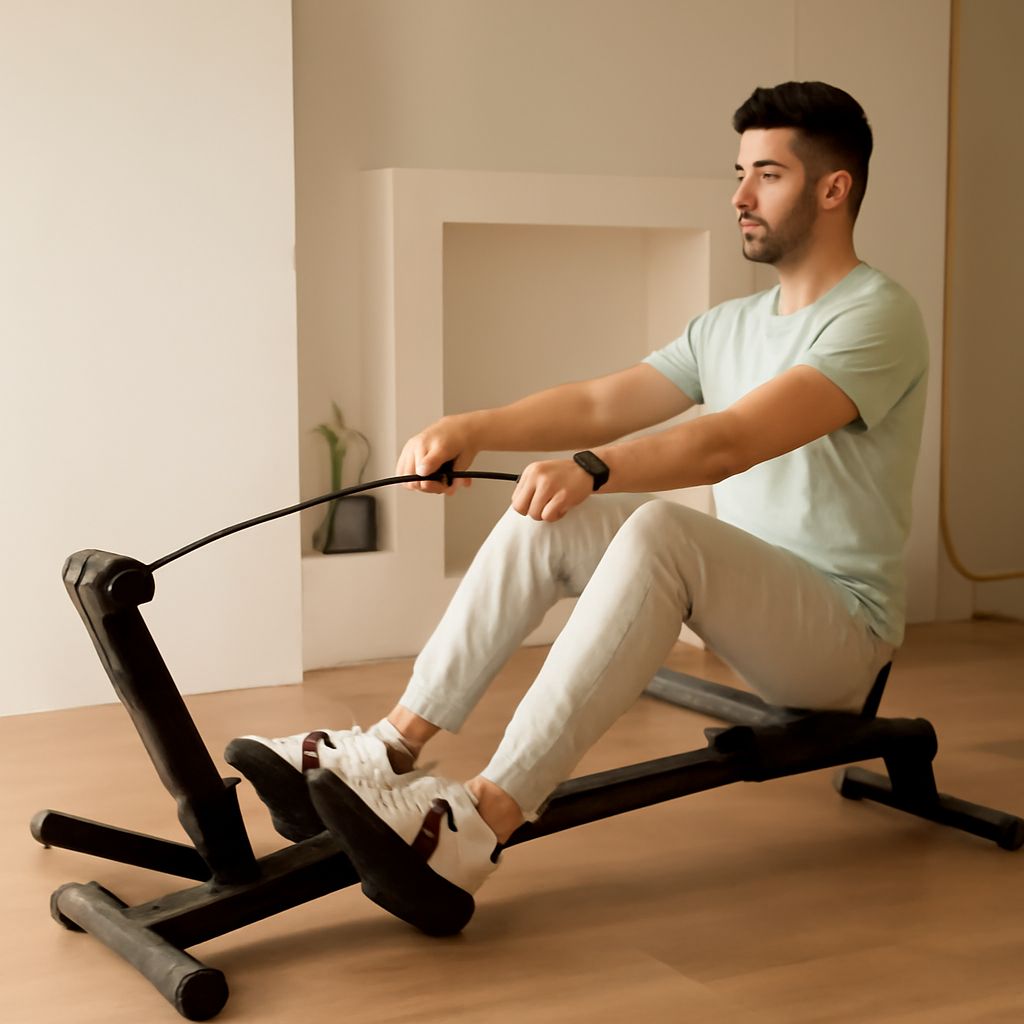
- Catch: At the front of the machine, your knees are bent, arms extended, and torso tilted slightly forward from the hips. Your shins are roughly vertical. The abdominal and back muscles help hold your trunk steady as you prepare to push.
- Drive: Press through your feet to slide the seat back. The quadriceps at the front of the thighs extend the knees, while the glutes and hamstrings contribute as the hips open. Keep the arms long initially; the upper back helps connect the handle to the leg drive.
- Finish: As your legs approach straight, lean back slightly from the hips and draw the handle toward your lower ribs. The lats, muscles along the sides of your back, help pull the arms toward the body; the upper back and biceps also contribute. Your core keeps the torso controlled.
- Recovery: Extend the arms, pivot forward from the hips, and then bend the knees to slide toward the front. The movement is controlled rather than a collapse toward the handle. This quieter return gives you time to set up the next drive.
A useful answer to what does a rowing machine work is therefore broader than “arms and back.” The legs initiate the drive, the trunk transfers force, and the arms complete it. The relative demand changes with technique and resistance, so the movement is not a precise way to isolate a single muscle.
What the workout can improve
The benefits of rowing depend on how consistently and intensely you practice. A steady session raises your heart rate and breathing, training cardiovascular endurance. With repeated strokes, the involved muscles also practice producing force over time, which can improve muscular endurance.
A rowing workout can be challenging without impact from repeated foot strikes. The seat and footrests support the body, although the knees, hips, and back still move under load. It also demands coordination: linking the leg drive to the torso and arms takes practice, particularly when fatigue sets in.
The benefits you gain from regular rowing are different from those of a heavy strength workout. Resistance on a rower can make each stroke harder, but the machine is generally used for repeated efforts. If your goal is maximal strength or substantial muscle growth, include progressively challenging strength exercises as well.
Set up for a controlled first session
Adjust the footrests so the straps cross the widest part of your feet and you can bend your knees comfortably. Hold the handle with a relaxed grip and straight wrists. Set resistance at a manageable level: a higher setting is not required for an effective session, and it can make a beginner pull too hard before learning the sequence.
For a first workout, try this simple structure:
- Row easily for about five minutes, using smooth strokes to learn the motion.
- Continue at a moderate effort for five to ten minutes. You should be breathing more deeply while still able to speak in short sentences.
- Slow down for a few minutes to finish. If your form deteriorates, reduce the effort or take a break.
Asking which muscles a rowing machine works becomes more useful when you notice how the stroke feels. You should feel a firm leg push and work through the back, without having to yank the handle. Increase duration gradually as your technique and comfort improve.
Common technique corrections
On a stationary rowing machine, a short, smooth stroke is more useful than forcing extra reach. At the catch, avoid rounding the lower back or rolling the shoulders forward just to move farther toward the flywheel. Hinge at the hips and stop where you can maintain a comfortable, controlled position.
Another common mistake is bending the arms before the legs have driven the seat back. That makes the upper body take over early and interrupts the sequence. On the return, bending the knees before the handle has passed them can make the handle travel over the knees. Send the hands away first, then tip the torso forward, then bend the knees.
When rowing on a stationary machine, keep the motion quiet and deliberate rather than chasing a high stroke rate. If the machine has a display, use it to observe a sustainable rhythm instead of treating every stroke as a sprint. A faster pace is useful only when you can retain control through both the drive and recovery.
The muscle groups worked by a rowing machine share the effort across the stroke, so discomfort in one spot is a reason to reassess your position and load. Stop if you feel sharp pain, and seek qualified guidance if it persists.
For your next session, remember: legs, body, arms; arms, body, legs. Push, swing, and pull; then reverse the sequence as you return.