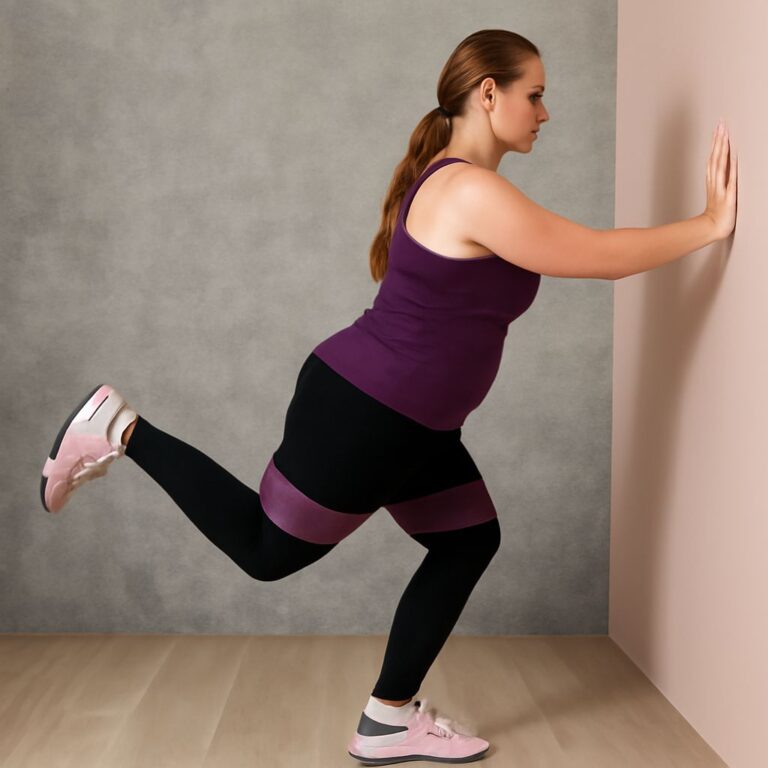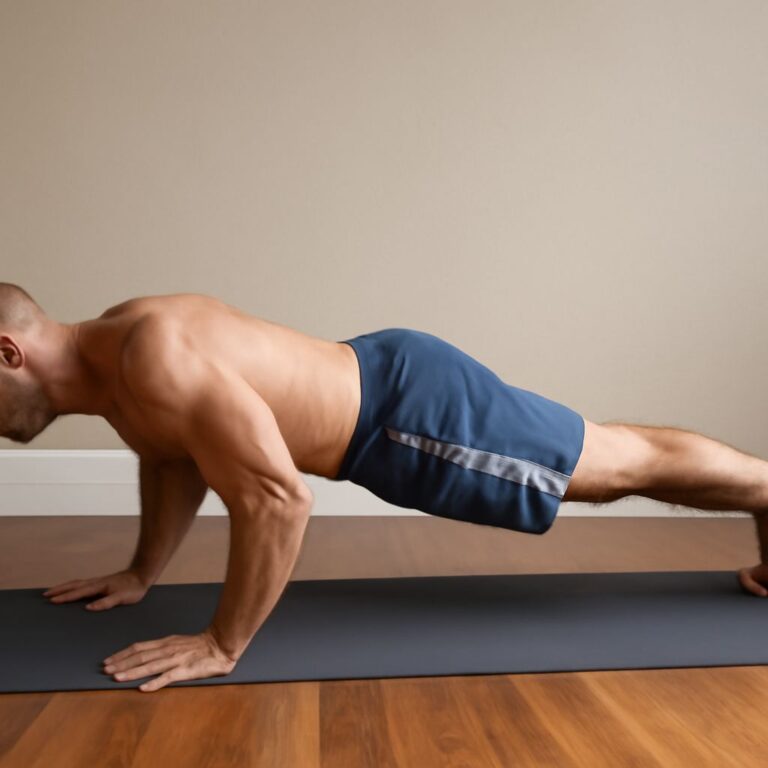
A controlled descent makes it easier to stand back up with your feet planted; dropping quickly can leave you struggling to regain balance. Practicing a bodyweight squat as an exercise lets you learn that control before adding any load. Begin with a depth that feels comfortable and concentrate on a steady path down and up.
Several exercises using squats can build on the same basic movement. For now, all you need is a clear space, a stable floor, and, if balance is uncertain, a sturdy chair or counter within reach.
Squat Exercises: Set Up Your Stance
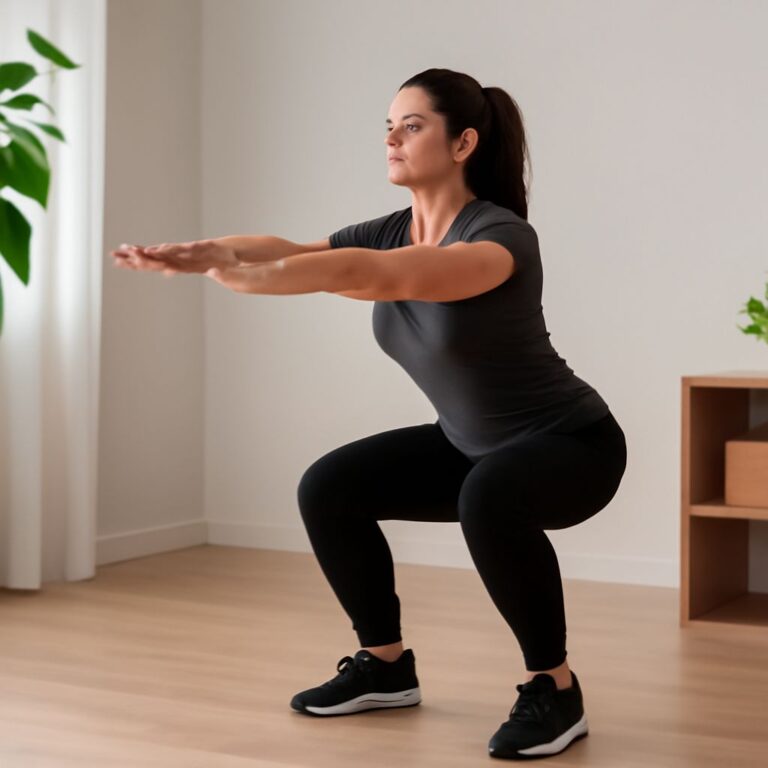
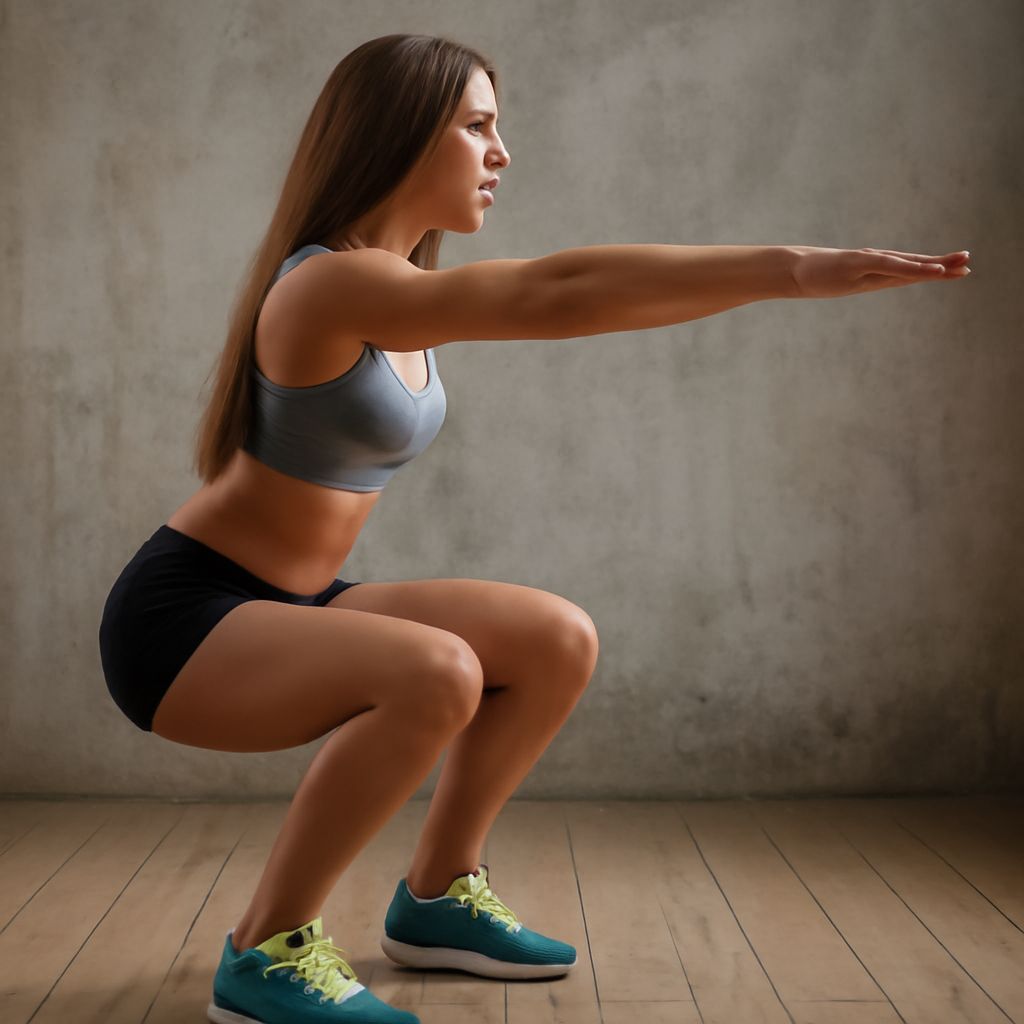
Stand with your feet roughly hip- to shoulder-width apart and your toes pointing forward or slightly outward. Place your weight across each whole foot, including the heel and the base of the big and little toes. Let your arms reach forward if that helps you balance.
Look ahead and keep your chest comfortably lifted. Gently brace your abdomen as if preparing for a light tap, while continuing to breathe. Your back does not need to be perfectly vertical: a natural forward lean helps keep your weight over your feet as your hips move back.
The squat exercise works the thighs and hips as you bend and straighten your legs. Your trunk muscles also help you maintain a stable position. Different body proportions and ankle mobility affect how far your knees and torso travel, so use the instructions as a starting point and make small adjustments for comfort.
Lower and Stand With Control
- Begin the descent. Bend your hips and knees together, allowing your hips to move back and down. Keep both feet planted and allow your knees to travel in the direction of your toes.
- Choose a comfortable depth. Lower only as far as you can while keeping your balance and moving without sharp pain. You may start with a small bend; your thighs do not have to reach parallel with the floor.
- Stand up. Press through your feet and straighten your hips and knees together. Exhale as you rise, keeping your movement smooth until you are standing tall.
- Repeat deliberately. Inhale as you lower again. For your first practice, try five controlled repetitions, then rest and consider whether your position stayed steady.
Squats exercise the thigh and hip muscles as you lower and stand; keep the descent controlled instead of relaxing into the bottom position. The American Council on Exercise describes keeping the feet grounded and monitoring knee alignment as you lower and rise. A comfortable, repeatable range gives you a clear basis for practicing the movement.
Use a Chair to Learn the Pattern
Place a firm, stable chair behind you, ideally against a wall so it cannot slide. Stand close enough that you can reach the seat as you lower. Move your hips back, lightly touch the chair, and then stand again. If needed, sit fully and reset your feet before rising. You can use your hands on a stable support to help with balance.
This squatting exercise gives you a consistent depth target and a place to pause. If the seat is too low for a controlled movement, choose a higher, stable surface. As the movement becomes familiar, reduce how much you rely on your hands or stop just above the seat. A chair is a guide for the movement, so avoid dropping onto it.
Notice and Correct Common Difficulties
Your heels lift. Stop before the point where they rise, then try a slightly wider stance or a small outward turn of the toes. Keep pressure across the whole foot. A shallower range may let you practice comfortably while you develop control.
Your knees move inward. Slow down and let each knee follow the direction of its toes. Try fewer repetitions or a shallower bend so you can maintain that alignment. A mirror or a front-facing video can make the movement easier to see.
You tip forward or lose balance. Reach your arms forward and use a chair or counter for light support. Check that you are bending both hips and knees rather than sending your hips back without bending your knees. Rise through your whole foot instead of shifting onto your toes.
You feel pain rather than ordinary effort. Shorten the range or stop the movement. If sharp pain continues or an existing condition makes the movement uncertain, seek individual guidance from a qualified health professional.
Practice at a Useful Level
A few deliberate repetitions give you more information than rushing through a long set. For exercise, squats should remain smooth enough that you can control both the descent and the return. Rest when your form changes, and try another short set only if you can repeat the same comfortable pattern.
Over time, you can gradually lower farther if your feet stay grounded and the movement remains comfortable. Strength and control develop with practice; there is no need to force a deeper position on the first day. Combine squat exercises with other activities that work the rest of your body.
If your heels begin to lift at the bottom, you have found a depth where control changes. Stop a little higher on the next repetition, keep your whole foot planted, and use a chair for balance while you practice.