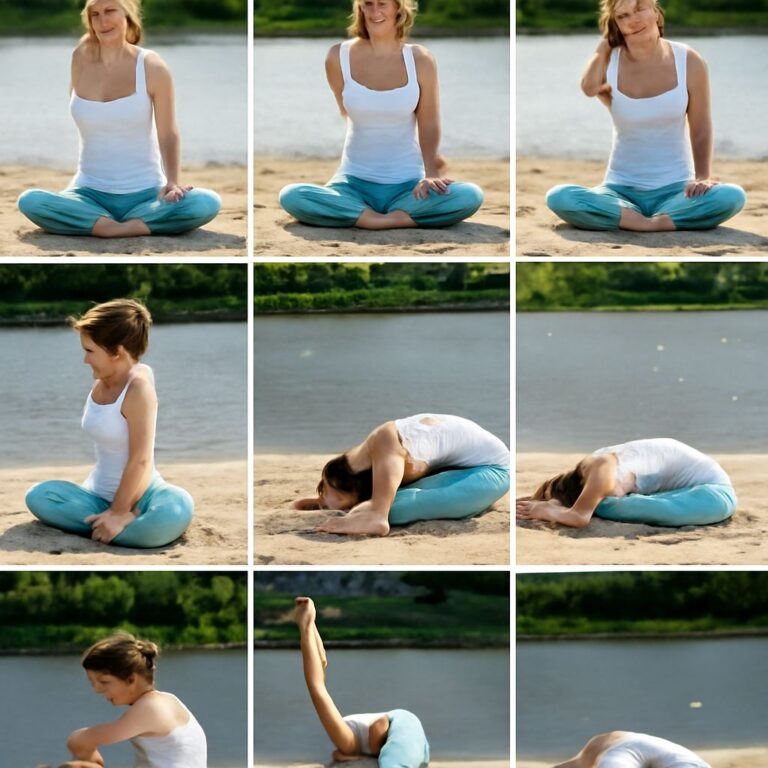
A clear floor and a stable chair make a leg session easier to control; a sliding chair or crowded path can interrupt your balance before your muscles are challenged. Workouts for your legs at home can be effective with body weight alone when you choose movements that match your ability and make the last few repetitions demanding.
You can organize leg workouts at home around the thighs, hips, and calves without a rack of weights. This session combines those areas in a practical order, with easier and harder options for each movement.
Home Leg Workouts: Prepare Your Space
Place a firm chair without wheels against a wall, leaving room to stand in front of it and move to one side. Keep a counter or another fixed support within reach for balance. Clear loose rugs and objects from the floor, and use a mat or folded towel if you want padding for floor work. Wear footwear that grips the surface or use bare feet if the floor is dry and nonslip.
For good leg workouts at home, prepare the space before choosing the difficulty. If you use a backpack for added weight, close it securely and check that the contents cannot shift. You should be able to set it down easily if you lose your position.
Start With a Short Warm-Up
Walk around the room or march in place for three to five minutes. Then try a few slow chair sit-to-stands and gentle heel raises. The aim is to rehearse the movements and feel ready to work; you do not need to exhaust your legs before the first set.
A repetition is one complete movement, and a set is a group of repetitions followed by rest. Begin an at home leg workout with one set of each exercise below. Aim for 8 to 12 controlled repetitions, or the specified number for each side, and rest for roughly 60 to 90 seconds between sets. Adjust the rest so you can begin the next movement with steady technique and settled breathing.
Follow the Session
1. Chair squat
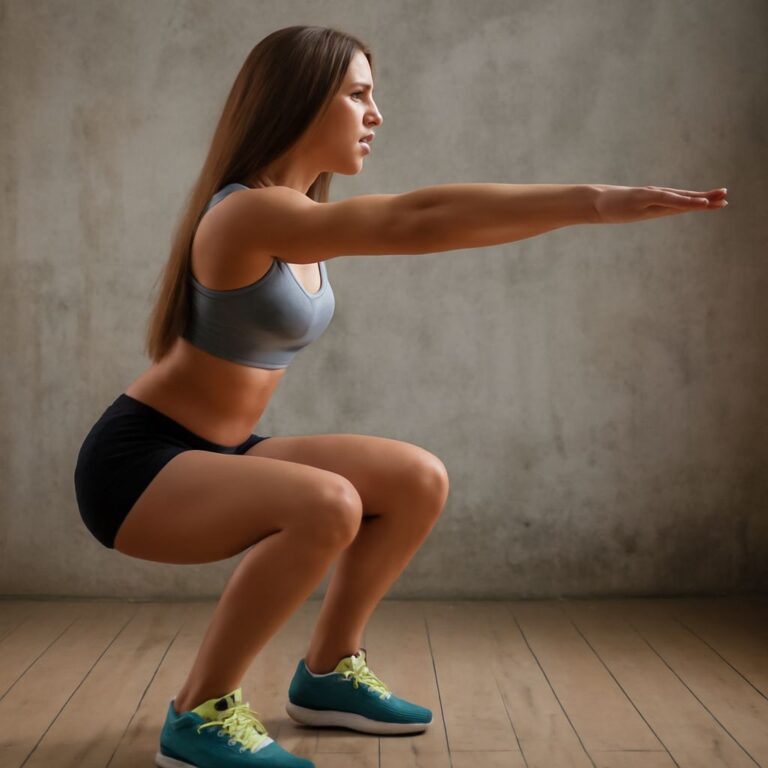
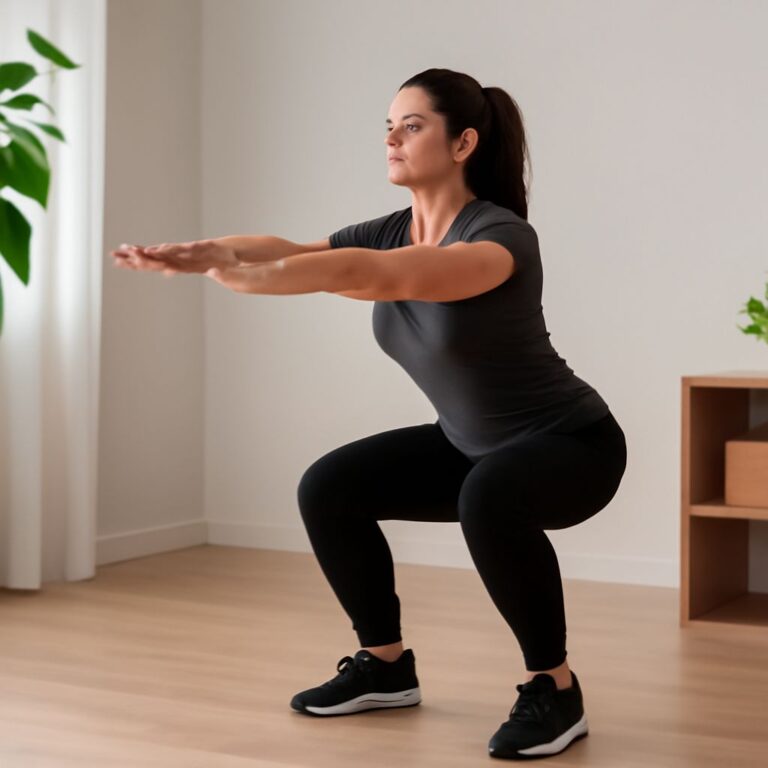
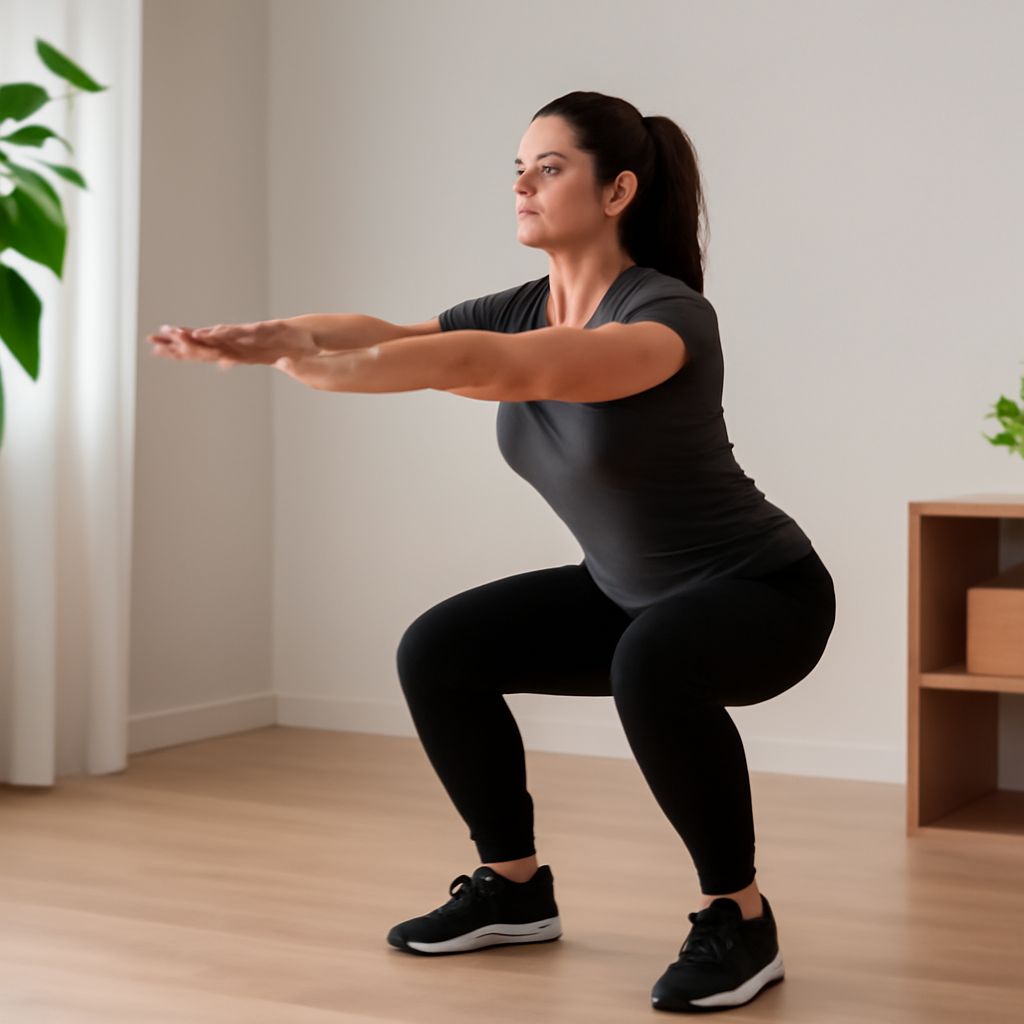
Stand in front of the chair with your feet roughly hip-width apart. Bend your knees and hips, move back toward the seat, and touch it lightly or sit down. Press through both feet to stand. Keep your knees generally aligned with your toes and lower only as far as you can control.
Use your hands on a stable support or choose a higher seat if needed. To make the set harder, lower slowly for about three seconds before standing. The NHS describes sit-to-stands and supported mini-squats as accessible strength exercises.
2. Hip hinge
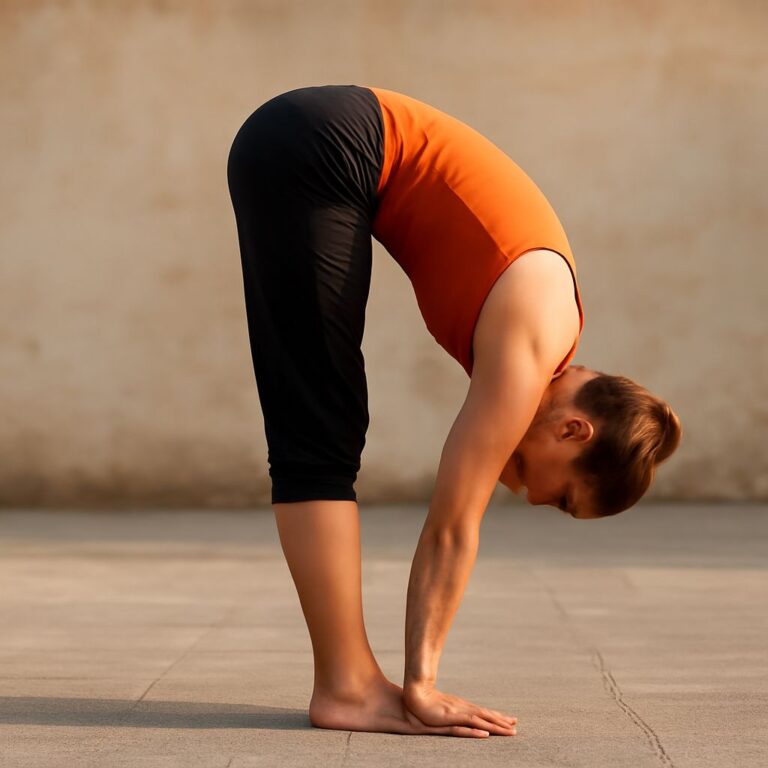
Stand tall with soft knees and slide your hips backward as your torso leans forward. Keep your back comfortably straight and your weight distributed across your feet. When you feel tension in the backs of your thighs, bring your hips forward to stand. This movement emphasizes the hips and backs of the thighs.
Practice without a load first. Once the pattern feels steady, hold a light, securely closed backpack close to your body. Stop before rounding your back or losing balance; the aim is a controlled range, not a particular depth.
3. Supported split squat
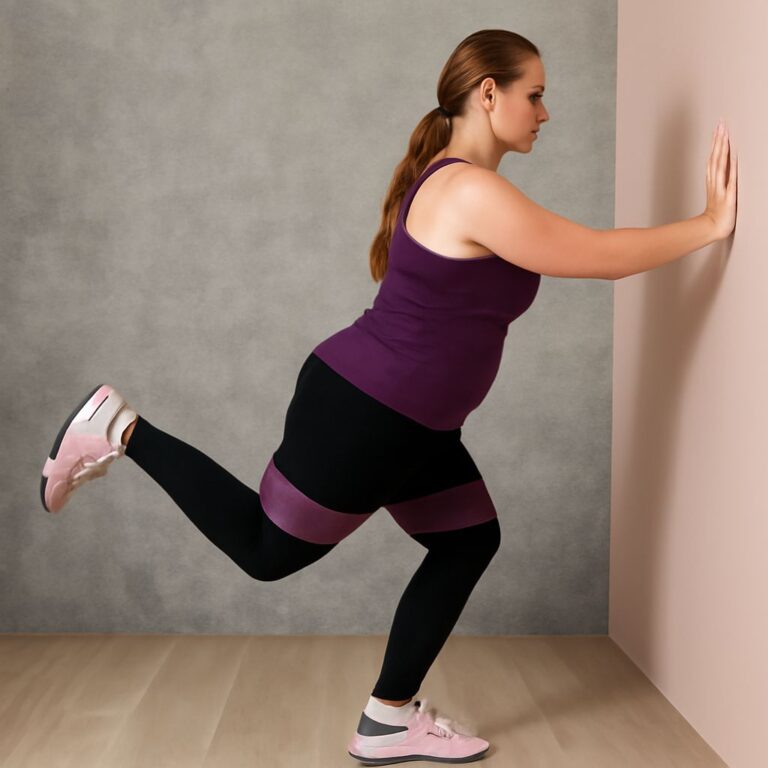
Hold a counter lightly and take a comfortable step back with one foot. Bend both knees to lower a short distance, keeping most of your weight over the front foot, then push through that foot to rise. Do 6 to 10 repetitions, switch legs, and repeat.
A short range and hand support make this more approachable. As you gain control, lower a little farther or pause briefly near the bottom. Each side works separately, so start with the more difficult side and use the same number of repetitions on the other.
4. Glute bridge
Lie on your back on the mat with knees bent and feet flat. Press through your feet to lift your hips until your body forms a comfortable line from shoulders to knees, then lower slowly. Keep your ribs relaxed and avoid arching your lower back to gain height.
Pause for a second at the top to increase the challenge. If getting onto the floor is impractical, use an additional set of chair sit-to-stands instead, focusing on pressing through both feet as you rise.
5. Calf raise
Stand behind the stable chair and hold its back for balance. Lift your heels, pause briefly, and lower them slowly to the floor. Start with both feet together and 10 to 15 repetitions. For more challenge, put slightly more weight on one foot, then swap sides, while keeping support available.
Progress When Your Weights Are Limited
At home leg workouts can progress through a slower lowering phase, a pause, additional repetitions, or a second set. Change one variable at a time. When the last few repetitions feel challenging but remain smooth, the difficulty is appropriate for that set. If you could easily continue well beyond the target, add a small challenge next time.
For stronger legs, a workout at home should also leave room for recovery. Schedule the next demanding lower-body session after a rest day, and reduce the difficulty if soreness or fatigue changes your movement. Stop for sharp pain; seek individual guidance if it persists.
Quick Reference
- Prepare: Secure a chair, clear the floor, and warm up for three to five minutes.
- Move: Chair squat, hip hinge, split squat, bridge, then calf raise.
- Dose: Start with one controlled set; rest until ready to move steadily again.
- Progress: Add repetitions, a slow lowering phase, a pause, or another set.