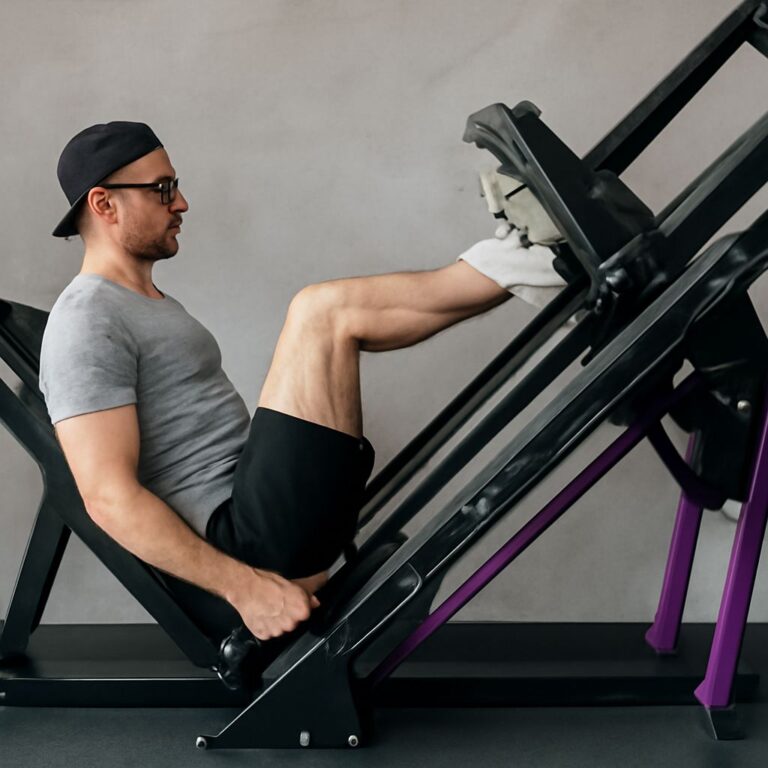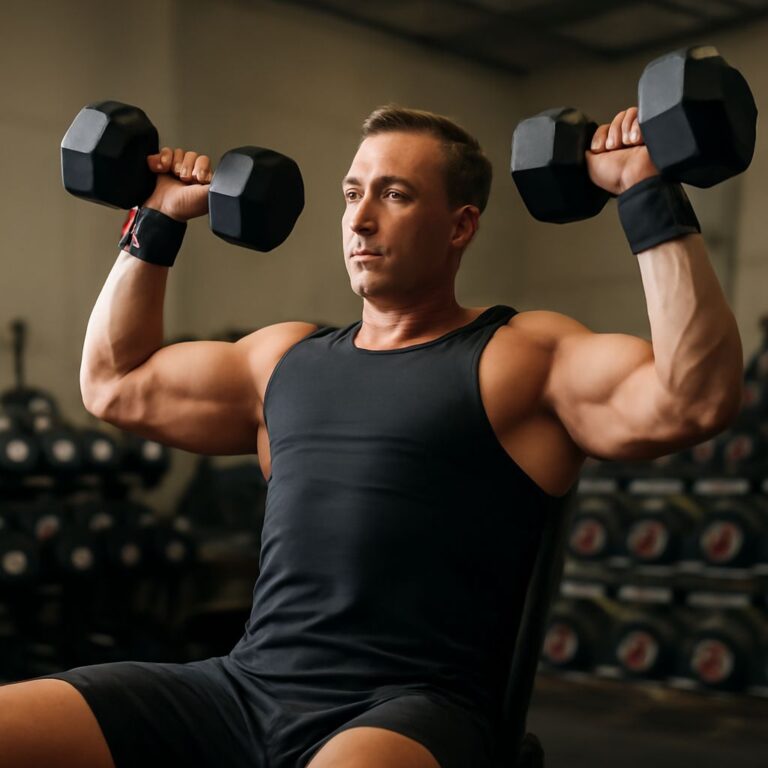
A person learning the movement may need a light pair of dumbbells, while an experienced lifter of the same size may control a loaded bar for several repetitions. The right weight for a bench press depends on what you can move steadily through the intended range, not on what another person lifts.
If you are wondering how much you should be able to bench press, a standards chart can offer context. It cannot select your first training load: your experience, technique and equipment all affect that choice.
How much should I be able to bench press for my size?
Many bench press strength standards group results by body weight and experience. When you ask “how much should I be able to bench press,” a chart might compare a lifter’s best single repetition with entries from people in the same weight category. This gives a rough reference for that group, provided you know how its results were collected and which lifting rules applied.
For example, a hypothetical 160-pound lifter pressing 120 pounds has lifted 75% of body weight: divide 120 by 160. A 200-pound lifter pressing the same load has lifted 60%. The ratio gives a second way to compare the lifts, although the two people may have different training histories and proportions.
Look at the chart’s source before treating an average bench press weight as a target. A database of people who voluntarily report lifts describes that group; it does not necessarily represent all adults. Age, sex, training background and the size of the sample also affect the comparison. Different charts may use measured results, estimates or self-reported numbers.
A bench press percentile describes position within a particular dataset. For instance, the 60th percentile means a result is at or above roughly 60% of the results in that comparison group. It does not say how close you are to your own potential, and a percentile from one dataset may differ from another.
Compare like with like
A one-repetition maximum, or 1RM, is the heaviest load lifted once under the chosen rules. A set of eight repetitions at a lighter load measures a different performance. Do not enter your eight-rep training load into a chart intended for a single maximum and expect a meaningful ranking.
Technique changes the comparison too. A competition-style lift may require a pause on the chest and specific commands; a gym set may use a continuous touch and press. Range of motion, grip width and whether a spotter helps can change what a number represents. Count the bar and both plates when recording the total, and note the equipment and repetitions beside it.
When someone asks how much can you bench press, the answer is more informative with those details. “95 pounds for eight controlled reps” describes a different effort from a single rep at 95 pounds with assistance. Keep your own setup consistent so that a later comparison reflects progress rather than a change in the test.
Choose a load without testing a maximum
You do not need a maximum attempt to begin training. If you are asking how much should I bench press, use a load you can control for a practice set and adjust it from what you observe. A standard 45-pound bar may be too heavy for a first session; a lighter training bar, dumbbells or a chest-press machine can provide a manageable load.
- Warm up with a few minutes of comfortable movement and practice the pressing motion without a load. Set a stable bench and position your feet on the floor.
- Choose a light load and perform 6 to 10 repetitions. Lower smoothly toward the chest, then press up with control. Keep your wrists aligned over your forearms and your shoulders supported by the bench.
- Stop the set while you could still perform a few clean repetitions. If the weight drops unevenly, you cannot control the descent, or you need help to finish, reduce it. Stop if you feel sharp pain.
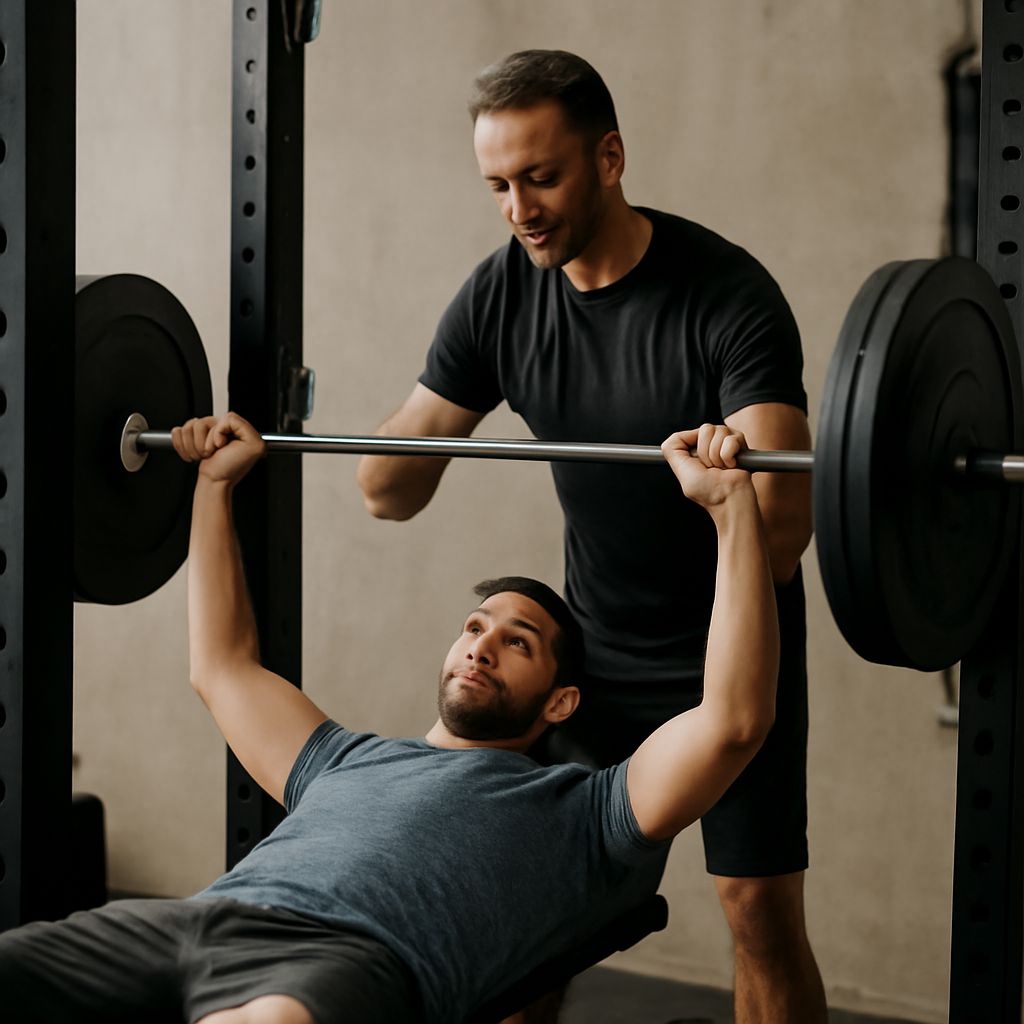
- If every repetition feels stable and you could easily do several more, add a small amount and try another set after resting. Use a spotter who can assist or properly set safety arms when pressing a barbell; ask a qualified coach to check your setup if you are unsure.
Your working pressing load should allow the planned repetitions with the same deliberate movement from the first to the last. Rest between sets and record the load, repetitions and how the set felt. If a 45-pound bar is already difficult to control, start with lighter equipment and build the movement there.
Use the chart to track context, not set a deadline
Training experience matters because learning the movement is part of getting stronger. A beginner asking “whats a good bench press for me?” can focus on repeating a stable setup and completing consistent sets. An experienced lifter may use a chart alongside a structured program and a clearly defined test. Neither needs to reach a particular ratio before a session counts.
For progress, repeat a manageable load until the planned repetitions feel controlled across your sets. Then try the smallest practical increase; if form deteriorates, return to the previous load and build more consistency. Changes in sleep, recovery or recent training can affect a day’s performance, so use that day’s repetitions to guide the adjustment.
Pick a starting load you can press for controlled repetitions today. If your descent or press becomes uneven, lower the weight; when every repetition remains steady and you have several in reserve, try a small increase.