Build a balanced upper-body session with dumbbells by combining presses, rows, shoulder work and a small amount of direct arm training. Together, these movements give the chest, back, shoulders and arms a clear job without requiring a full gym.
This dumbbell workout for the upper body uses five exercises in a practical order. Choose loads you can lift and lower steadily, and adjust the session to your experience and equipment.
Upper body workout with dumbbells: How to set up
For an upper body workout, dumbbells offer independent movement for each arm and let you adjust the load by exercise. You will also need a stable chair or bench for support and enough clear floor space to set the weights down safely. A mat is helpful for the floor press.
Start with a few minutes of easy movement, then practice each exercise without weight or with a light pair. For the main upper body dumbbell workout, perform two sets of 8 to 12 controlled repetitions per exercise, in the order below. A set is a group of consecutive repetitions; rest about 60 to 90 seconds between sets, or longer if you need to regain control of your breathing and movement. For the one-arm row, complete the target repetitions on each side before resting.
Pick a weight that makes the last few repetitions feel challenging while leaving enough control for two or three more. You may need different weights for presses, rows and smaller arm movements. This upper-body strength session with dumbbells works best when each load matches the movement. Start with one set if you are new to resistance training, and add the second when you can recover and repeat the movements comfortably.
1. Dumbbell floor press
Lie on your back with knees bent and feet on the floor. Hold a dumbbell in each hand beside your chest, with elbows angled slightly away from your body. Press the weights upward until your arms are extended without forcing your elbows backward. Lower slowly until your upper arms touch the floor gently, then repeat.
This press trains the chest, front of the shoulders and triceps. The floor limits how far the elbows travel behind the body. Keep your wrists stacked over your forearms and avoid bouncing your arms off the floor. Begin with weights you can position and put down safely; a bench press is an option if you have a stable bench and know how to use it.
2. Supported one-arm row
Place one hand on a stable bench or chair and step back enough to hinge forward at the hips. Hold one dumbbell in the other hand with the arm hanging below the shoulder. Keeping your torso steady, draw the elbow toward your hip, then lower the weight slowly until the arm is extended. Switch sides after the same number of repetitions.
The row trains the back and helps balance the pressing work. Avoid twisting your torso to lift the weight or pulling the shoulder up toward the ear. If you cannot keep the support steady, use a bench or another solid surface; a lighter weight also makes the position easier to maintain.
3. Seated shoulder press
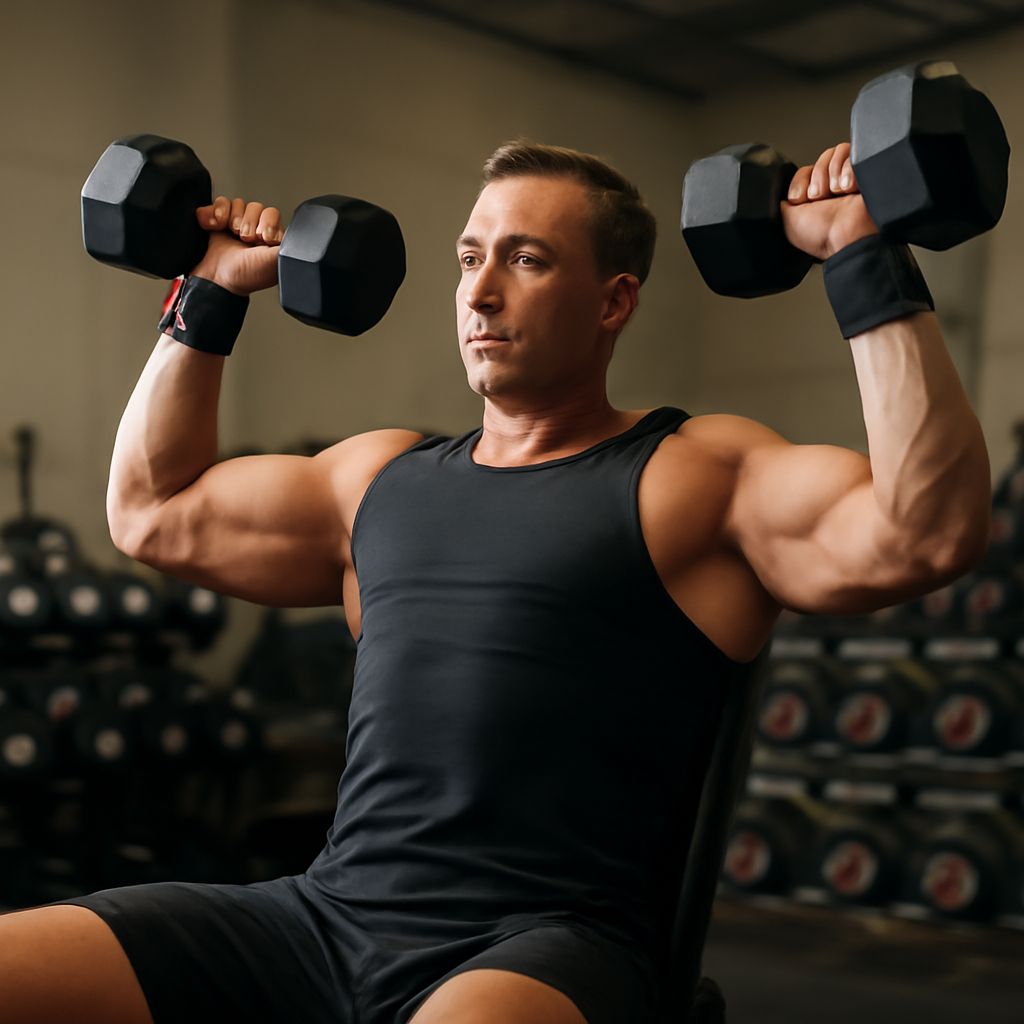
Sit upright on a stable chair, feet planted. Hold the dumbbells near shoulder level with palms facing forward or slightly inward. Press upward through a comfortable range, then lower with control. Keep your ribs and torso steady rather than leaning back to push the weights overhead.
Use lighter weights than for the row if needed. If overhead movement causes pain or you cannot reach it without arching, stop and choose a pain-free alternative with guidance from a qualified professional. A workout for your upper body using dumbbells should fit the range you can control.
4. Biceps curl
Stand or sit with a dumbbell in each hand and arms at your sides. Bend the elbows to bring the weights toward your shoulders, then lower slowly. Keep the upper arms near your sides and avoid swinging. This movement gives the front of the upper arms direct work after the larger pulling exercise.
5. Triceps extension
For a supported option, hold one light dumbbell with both hands above your chest while lying on the floor. Bend the elbows to lower it toward the forehead, then straighten the arms to return. Keep the upper arms as steady as you can and use a load you can grip securely. If this position is uncomfortable, skip it and let the floor press provide triceps work while you seek an alternative.
Adjust the session as you progress
An upper body workout with dumbbells is limited by the weights available: a pair suitable for rows may be too heavy for curls, while a light pair may eventually make presses easy. Adjustable weights or separate pairs give you more options. If a weight is too heavy, reduce it or shorten the set while keeping the same controlled technique.
When you can complete both sets at the top of the repetition range with several repetitions left in reserve, try a small weight increase. If the next pair is too large a jump, add repetitions within the range or slow the lowering phase while maintaining control. Leave at least a day between sessions that train the same muscles, and include lower-body activity elsewhere in your week.
Choose a manageable pair of weights, clear your floor space, and begin with the floor press. Lift and lower each repetition steadily, adjusting the load if your control changes.