A home elliptical that fits your stride and space can make it easier to add indoor cardio to your routine. Compare how a machine feels under your feet before deciding on a display, preset program, or discounted price. The right equipment should let you move smoothly and reach the controls without changing your posture to fit it.
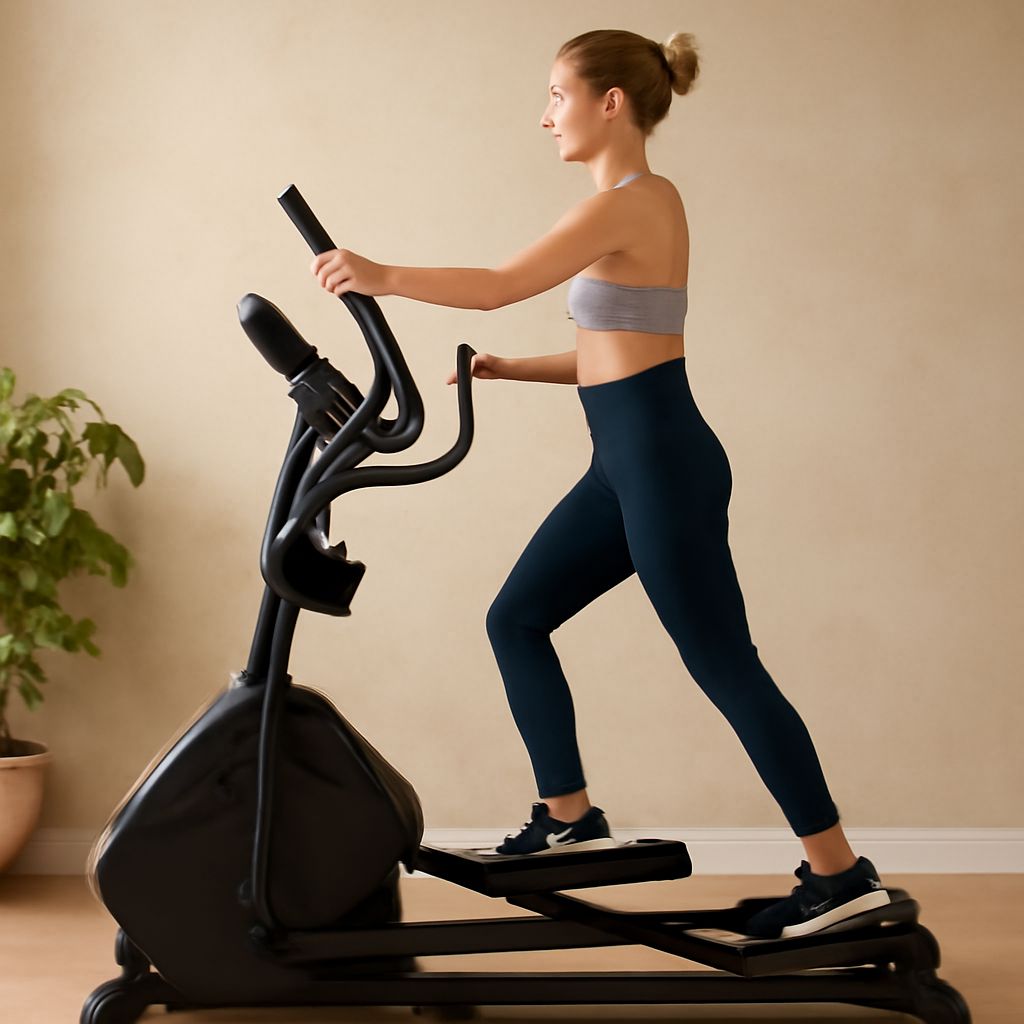
An elliptical cardio machine guides your feet through a repeating path while the pedals remain underfoot. Models differ in that path, resistance, handles, and dimensions. A comfortable short trial and a careful review of the manufacturer’s instructions can help you identify the features that matter in your home.
Cardio elliptical fit: test the movement
Among home exercise equipment, elliptical machines vary in stride length and pedal spacing. Stride length describes the approximate distance between the pedals during movement; spacing affects how far apart your feet are. Published dimensions help narrow a list, but they do not fully describe how a particular motion will feel to you.
If possible, try each machine for several minutes at an easy pace. Stand upright, look forward, and hold the stationary handles while you get accustomed to the pedals. Then try the moving handles if the model has them. Notice whether your knees and hips move comfortably, whether your heels stay supported, and whether you can reach the handles without leaning or stretching.
Increase resistance gradually during the trial. The motion should remain smooth as the effort changes. If more than one person will use the machine, each should try it: a path that feels comfortable to one person may feel cramped or too long to another. Adjustable stride or incline can offer choices, but test the range rather than assuming every setting will suit everyone.
Compare adjustments and controls
A cardio elliptical may offer several resistance levels, incline settings, or programmed sessions. Resistance changes how hard the pedals feel; incline, where available, changes the angle or path of movement. Try the controls while moving at a comfortable pace and check whether the display is readable from your normal position.
Consider which features you will actually use. A simple time and resistance display may be enough for steady sessions. If you want guided workouts, find out whether they require a subscription, an internet connection, or a separate device. Check the continuing cost and what remains available if you choose not to subscribe.
Moving handles let you involve your arms, while fixed handles can provide support as you learn the motion. A water-bottle holder, accessible pause control, and clear buttons may matter more in daily use than a large list of programs. Follow the model’s instructions for getting on, stopping, and getting off safely.
Measure the actual space
Measure the machine’s assembled length and width, then add the clearance specified by the manufacturer. Include room to step on and off and make sure pedals and handles can complete their full travel without contacting a wall, shelf, or other equipment. Measure doorways, stairs, and turns along the delivery route as well.
Ceiling height deserves attention because your body rises above the floor while standing on the pedals. Check the manufacturer’s step-up height and clearance guidance, and allow for the tallest intended user. Place the unit on a level surface that can support its weight and the user load; consult the instructions about floor protection and any power outlet requirements.
Noise and access can affect where elliptical exercise equipment is practical. If it will be used near a bedroom or in an apartment, ask about operating noise and try the model if possible. Leave enough open space that the machine does not obstruct a walkway when it is idle.
Read the rated-use details
Check the manufacturer’s maximum user weight and intended setting. A model designed for a private home may have different usage expectations from one built for a shared facility. Review assembly requirements, recommended maintenance, and the availability of replacement parts before ordering. If assembly is offered separately, include its cost and confirm who will remove packaging.
For an elliptical exercise machine with electronic controls, check the power requirements and where the cord will run. Keep it out of the path of moving parts and foot traffic. If the instructions call for routine tightening, lubrication, or other maintenance, consider whether you can reasonably carry it out.
Judge the full cost of an offer
Compare elliptical deals by total delivered cost, including shipping, assembly, subscriptions, and any removal or return fees. Read the warranty terms for the frame, parts, and labor, along with who provides service in your area. A lower advertised price may be less attractive if service or return shipping is expensive.
For a used machine, ask about its age, use, maintenance, and whether the warranty transfers. Test the pedals, resistance, display, and handles where possible. Listen for unusual noises and check for wobble or visible damage. A sale on an elliptical is worthwhile only if the unit fits your space and users and its condition and support are acceptable.
Choose the model that feels comfortable to the people who will use it, fits with the required clearance, and has controls they can operate easily. Then compare the complete cost and support terms of the suitable options; those details turn a promising machine into a practical choice for your home.