How much space do you need for a battle rope? Allow enough room for two strands to extend from a suitable anchor toward you, plus clearance to move your arms and step safely. The length of the rope, its anchor, and the space available all affect which training ropes will work in your setting.
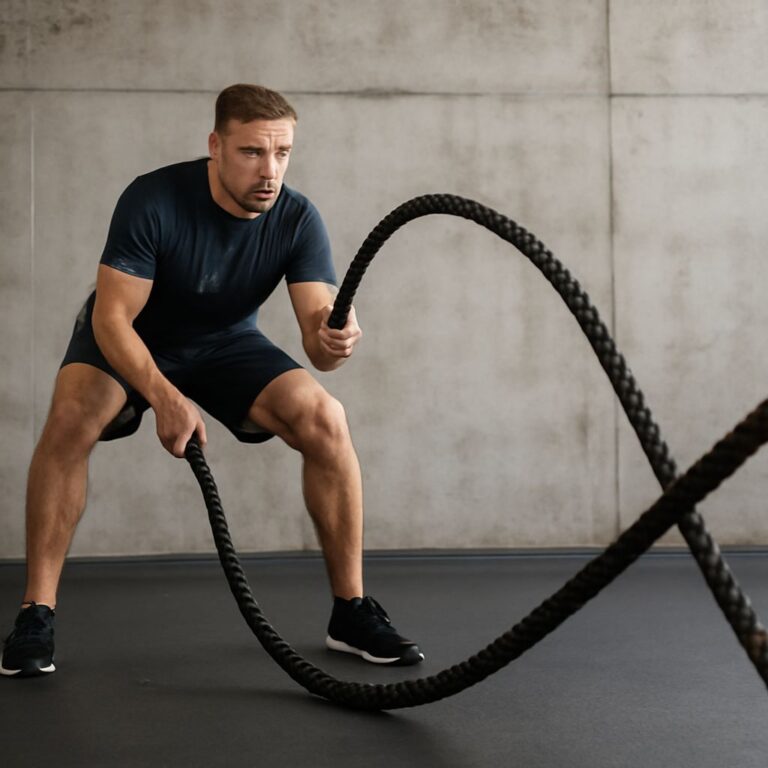
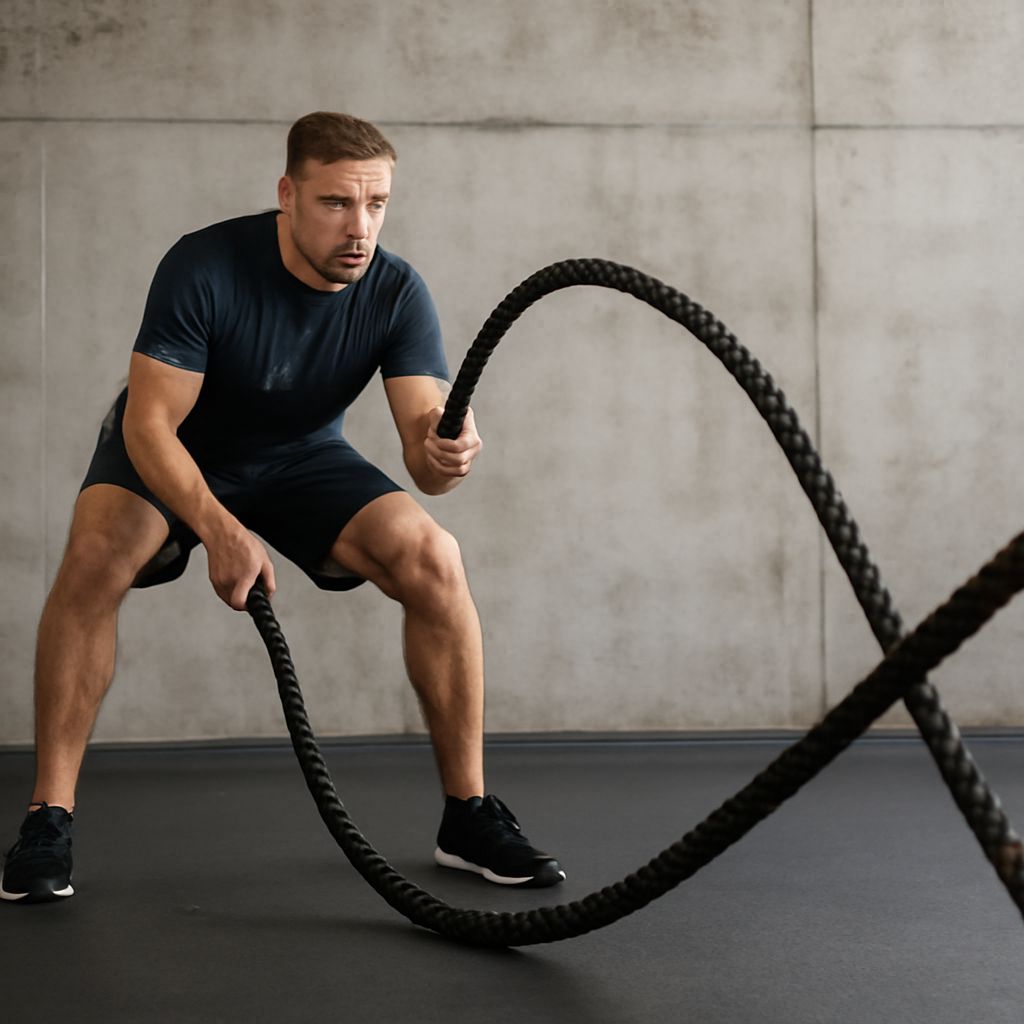
These heavy ropes for exercise are commonly folded around an anchor, with one end held in each hand. You create waves by moving your arms while maintaining a stable stance. A jump rope is a different tool: it is lighter and turns around the body as you jump over it.
Workout ropes: compare length and thickness
These exercise ropes are often sold in lengths such as 30, 40, and 50 feet. A rope folded at its midpoint needs roughly half its total length between the anchor and the user when fully extended, although the working position usually includes some slack. You also need space to enter and leave the area and to move each strand without hitting a wall or another person.
A longer rope generally needs a larger training area and can provide a longer path for the waves to travel. Measure the clear distance to your proposed anchor rather than relying on the room’s total length. Check the product’s specifications and try a rope at a gym if you can: length, material, and weight all influence how it feels.
Thickness affects both grip and overall weight. Common diameters include 1.5 and 2 inches. A thinner rope may be easier to hold, especially for smaller hands, while a thicker one can feel more demanding. Choose a diameter you can grip securely without squeezing so hard that your hands tire before you can practice the movement.
Find a suitable anchor and clear area
An anchor must be intended for the forces of rope training and installed according to its manufacturer’s instructions. A gym may provide a dedicated point; for another setting, use an appropriate rated anchor and seek qualified installation where the instructions require it. Do not loop a rope around a movable object, a door handle, or a fitting whose strength and intended use you cannot establish.
Lay the rope around the anchor as directed, then check that both strands have room to move. Inspect the anchor, attachment, and rope for damage before each session. A protective sleeve can help reduce abrasion at the contact point if it is compatible with the setup. Follow the manufacturer’s guidance for inspection and replacement.
The floor matters as well. Choose a level surface with enough traction for your shoes and remove loose objects from the movement area. Keep other people clear of the rope’s path, including the space behind you. Outdoor use may require extra care around rough ground and moisture; check the product instructions for its intended conditions and storage.
Start with alternating waves
Begin with a brief warm-up, such as walking and gentle arm movements. Then set up the rope with enough slack to make waves without pulling against the anchor. For this exercise rope drill, take one end in each hand and stand facing the anchor with your feet about hip-width apart.
- Bend your knees slightly and move your hips back into a comfortable athletic stance. Keep your torso steady and your grip firm but relaxed.
- Lift one hand a short distance as the other lowers, then alternate. Let the movement travel through the rope toward the anchor.
- Breathe normally and keep your shoulders away from your ears. Use a range you can sustain without swinging your whole body.
- Stop, place the ends down carefully, and rest before repeating.
Try a short interval of about 10 to 20 seconds, followed by enough rest for your breathing to settle. One or two rounds can be sufficient when you are learning. If you cannot keep the waves moving smoothly, shorten the interval, make smaller movements, or rest longer. Stop if you experience pain or feel unsteady.
Adjust effort without losing control
Workout ropes can feel demanding quickly because your arms and grip work continuously. You can change the pace and size of the waves, the interval length, and the amount of rest. Begin with modest movements, then change one variable at a time so you know what made the set harder.
Moving toward the anchor introduces more slack and can change the challenge; moving back reduces slack. Avoid stepping so far back that you pull the rope taut against the anchor. Experiment within a clear, safe area and keep a stable stance. Once alternating waves feel manageable, you can try raising and lowering both hands together for a short set.
Training with battle ropes can complement other strength or conditioning work. Place a brief interval after a warm-up or later in a session when you still have enough control to keep your posture steady. If grip fatigue changes your technique, finish the set and give your hands time to recover.
For a compact area, first confirm that a shorter rope and its required clearance fit your measured space. If you have more room, compare longer options by grip, weight, anchor requirements, and storage. Choose the rope you can hold comfortably and use with a secure setup for the intervals you intend to practice.