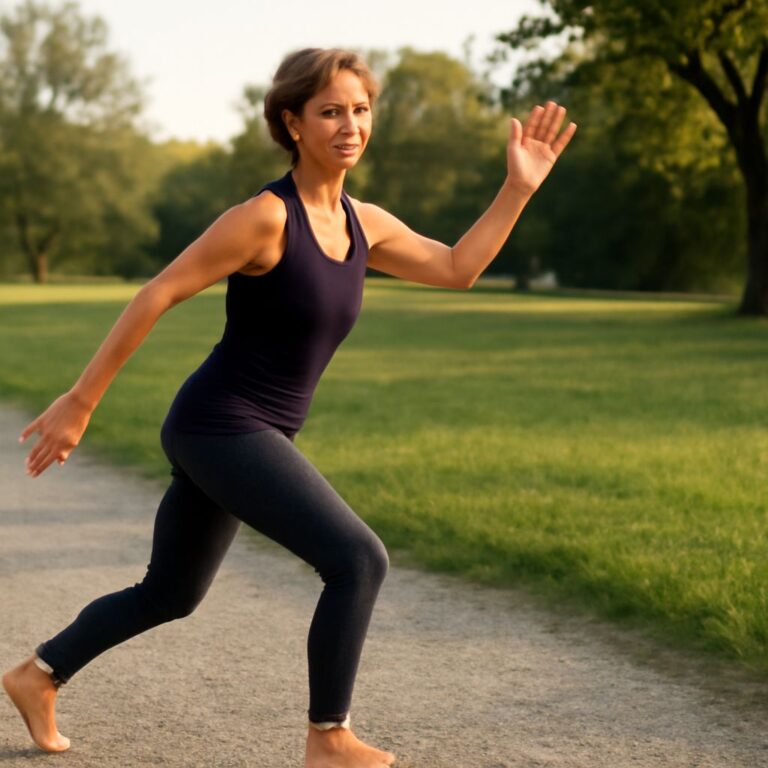
A warm-up before a strength session might focus on the movements you are about to perform, while a stand-alone mobility session can cover more areas at an unhurried pace. Both use controlled movement, but the available time and the activity that follows help determine what to include.
A mobility workout gives you an opportunity to explore a comfortable range at your shoulders, spine, hips, and ankles. Simple movement drills can be repeated without forcing a position or following a fixed daily schedule. Choose a few that fit your space and adjust them to how you feel that day.
Mobility drills for a repeatable sequence
The following mobility drills move from standing to a chair and then to the floor. You need a stable chair, a clear area, and an optional mat. Begin with a minute or two of easy walking or marching, then perform a few slow repetitions of each movement. Use support whenever it helps you remain balanced.
Mobility workouts emphasize moving with control through a range available to you. Flexibility refers to how far a muscle or joint can be moved; mobility also involves your ability to use movement with control. A stretch can be part of a session, but you do not need to hold every position for a long time.
1. Shoulder slides at a wall
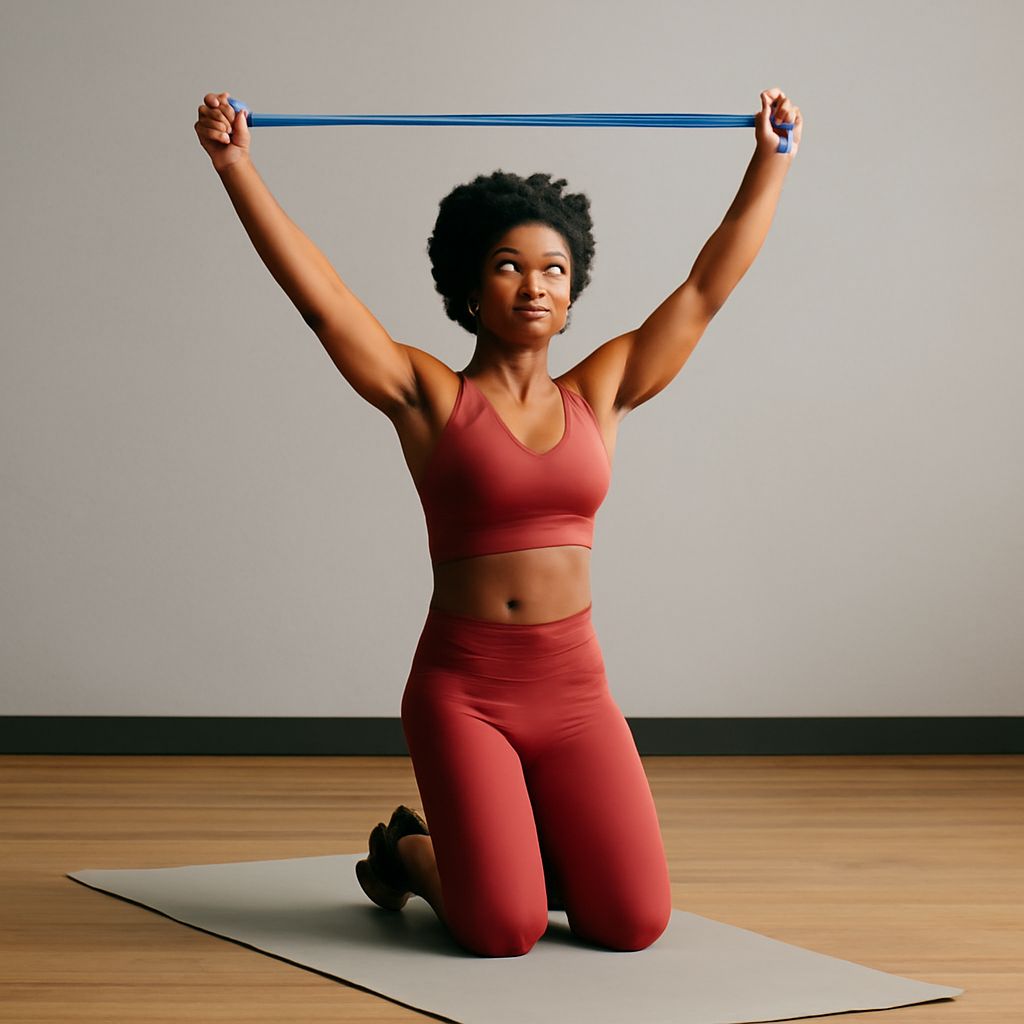
Stand facing a wall and place your hands against it at a comfortable height. Slide them upward slowly as far as you can without shrugging or arching your back, then return. Step closer to the wall if it helps you keep the movement comfortable. Try five to eight repetitions.
If one arm moves differently from the other, work with each separately. A shorter slide still gives you a controlled movement to practice. Stop before pain or a feeling of catching, and keep your breathing relaxed.
2. Seated upper-back rotation
Sit tall on a stable chair with both feet supported. Place your hands across your chest, then turn your upper body gently to one side. Return to the center and turn the other way. Let your head follow the movement and keep your hips settled on the chair.
Try four to six turns per side. Use a small range that lets you return smoothly; do not pull on the chair to twist farther. This movement focuses on the upper back while keeping the transition from standing simple.
3. Seated hip movement
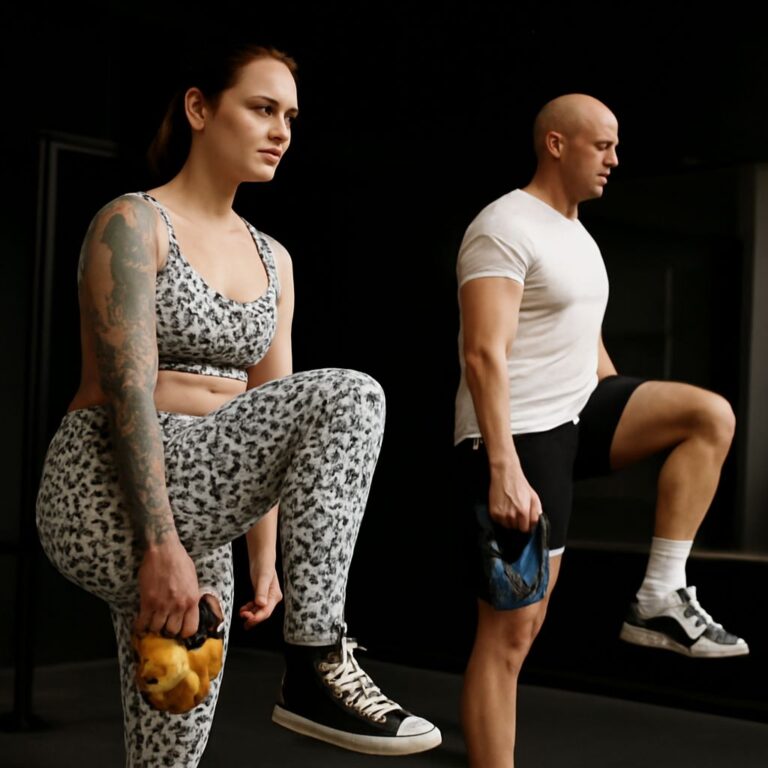
Remain seated near the front of the chair, with room to move and your feet on the floor. Lift one knee a small distance, lower it, then repeat with the other leg. If comfortable, guide the knee slightly outward before returning it to the starting position. Keep your trunk upright and use the chair for support.
Perform five slow repetitions per side. If lifting the foot is difficult, keep it lightly on the floor and slide it a short distance instead. The purpose is to practice a direction of movement you can control, not to reach a particular height.
4. Ankle rocks
Stand facing the chair and hold its back for balance. Place one foot slightly behind the other, keeping both feet flat. Gently bend the front knee forward over the foot, then return. Try to keep the front heel down and stay within a range that feels comfortable.
Complete five to eight rocks on each side. Move the back foot closer if the stance feels awkward. A slow return lets you notice whether your weight stays balanced over the foot.
5. Hands-and-knees spine movement
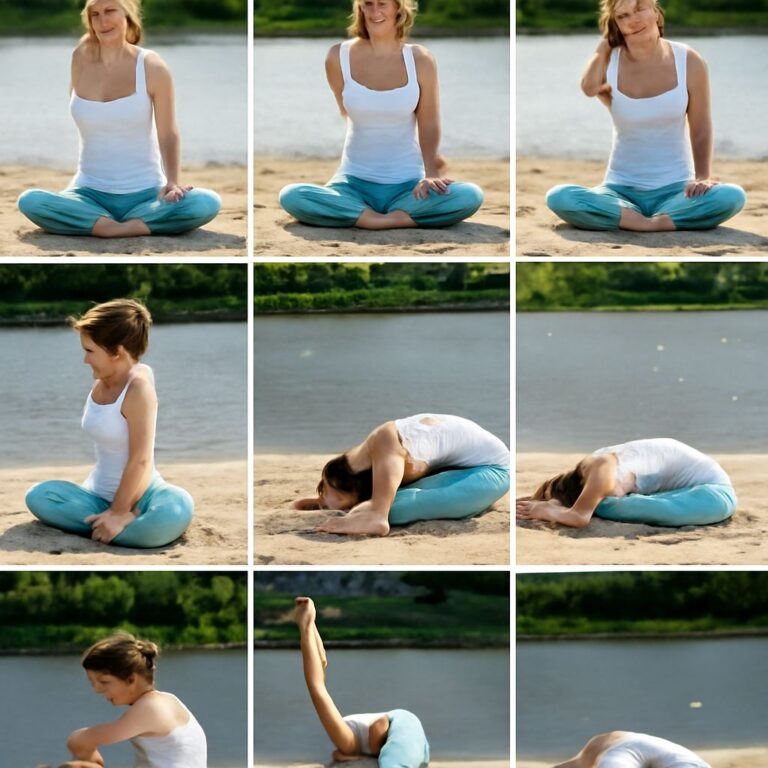
Move to a mat if you can get down and up comfortably. Place your hands beneath your shoulders and knees beneath your hips. Gently round your back as you exhale, then return toward a comfortable neutral position and let the spine move in the opposite direction only as far as feels easy. Repeat five times without rushing.
If the floor is not suitable, place your hands on a stable counter and perform the same small movement while standing. Keep your elbows soft and your feet secure. The supported version lets you practice without making the floor transition a requirement.
Adjust the session to the day
A whole-body mobility session can be brief. One easy round may suit a break in your day; a second round may be appropriate when you have more time and the movements remain comfortable. Rest between drills and use a smaller range if you feel stiff or have difficulty controlling the return.
You can think of your mobility workout of the day as a selection based on your next activity. Before a walk, spend more time on the hips and ankles. Before an upper-body session, choose the wall slide and upper-back rotation. For a stand-alone practice, include one movement from each area and transition at a pace that suits you.
A regular session for mobility should not require pushing through sharp pain, numbness, or increasing discomfort. Stop if those symptoms occur. If they persist, or if an injury or medical condition affects your movement, seek individual guidance from a qualified professional.
Make the routine easy to repeat
Keep the chair and mat accessible and write down the variations that feel manageable. Over time, you can add a few repetitions or explore a slightly larger range while maintaining a smooth return. Progress may look like better control or an easier transition, not simply moving farther.
For your next mobility practice, choose three drills and complete one unhurried round. You can start now with five supported ankle rocks on each side, noticing how much range you can use while keeping your heel down and your balance steady.