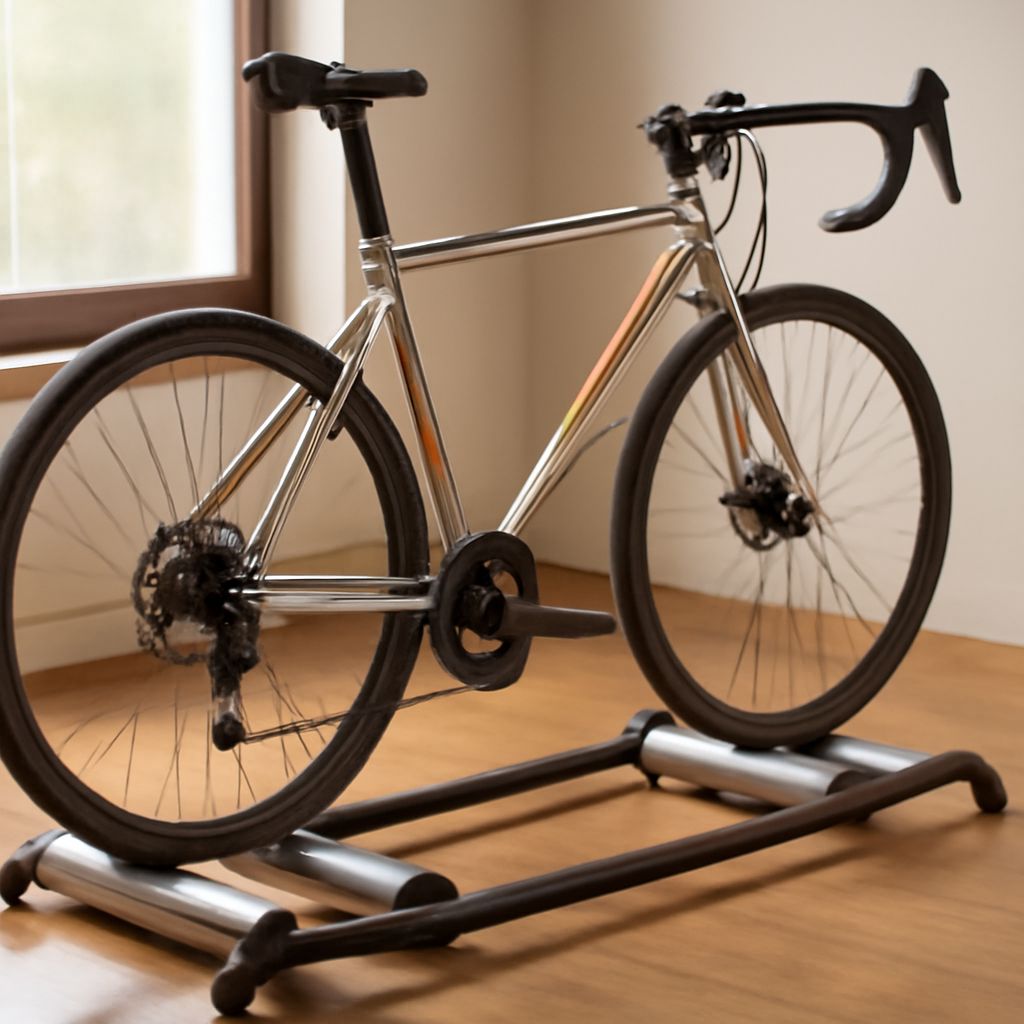
The right equipment depends first on whether you want to balance the bike yourself or have it held in place. Free rollers for indoor cycling let both wheels turn on drums and require continuous steering and balance; a fixed trainer supports the bike, leaving you freer to concentrate on the workout.
That distinction matters as much as resistance or price. Choose a free system if you want to practice a smooth pedal stroke and bike control; choose a supported trainer if you want a steadier platform for hard intervals or are uncomfortable balancing indoors.
Rollers cycling beginners can approach with confidence
The rollers cycling beginners can use have a learning curve even for someone who rides outdoors. The bike responds to small movements, and looking down at the front wheel can make it harder to stay centered. A beginner should value a predictable setup and enough room to step down over advanced features that may never be used.
Some manufacturers shape the drums to help keep the wheels centered. The Elite Arion, for example, has a parabolic profile, with the middle narrower than the ends. It still requires balance and attention; the shape does not hold the bicycle upright. Check the instructions for positioning and use before your first session. Manufacturer information was checked November 4, 2026.
Start with a short, easy session in a clear area with a solid wall within reach, if the manufacturer permits that setup. Wear suitable cycling shoes, look forward, and keep your hands on the bars. Build speed gradually and practice stopping as well as starting. A helper can be present for the first attempt, but keep people and pets clear of the moving wheels and follow the product’s specific safety instructions.
Check the fit before comparing features
Wheelbase is the distance between the front and rear axles. Measure it on your bike or find the figure for its exact model and frame size, then compare it with the adjustment range of the product you are considering. The front drum must be positioned as directed in the manual, rather than simply placed wherever the wheel happens to fit.
For example, Elite lists the Arion for a wheelbase of approximately 37.2–44.3 inches (944–1,124 mm), and specifies ten front-drum positions. It describes the model as suitable for road and mountain bikes. Those figures are specific to this model; tire size, tire width, and any other limits in the current instructions also need to suit your bike.
If you share equipment, check every intended bicycle individually. A frame near the edge of an adjustment range deserves particular attention: confirm the required drum position can be achieved before ordering. A folding cycling roller frame may make storage easier, but its dimensions when open must still fit the available floor space.
Compare the kind of support you want
A free cycling roller setup keeps both wheels on the bicycle and asks the rider to maintain balance. That can make an easy session engaging and reveal an uneven pedal stroke. It also demands concentration throughout the ride, which may be unwelcome during a long workout or a demanding interval.
A fixed trainer holds the bicycle at an attachment point. Wheel-on versions generally press the rear tire against a resistance unit; direct-drive versions replace the rear wheel with a connection to the drivetrain. Check axle, frame, and drivetrain compatibility for the particular model. A secure mounting system makes the bike steadier, although the trainer must still be assembled and used as instructed.
There are also hybrids. The Feedback Sports Omnium Over-Drive secures the fork while the rear wheel runs on drums. Its support changes the balance requirement, while removing and mounting the front wheel adds a setup step. Confirm the correct fork and axle adapters before purchase; a compatible wheelbase alone is not enough.
Match resistance and load to your sessions
The best cycling rollers for a rider who wants gentle spinning may have no adjustable resistance. Elite lists the Arion without a resistance unit; changing gears and cadence can vary the effort, within the limits of the system. If you want repeatable harder intervals, compare models with a resistance mechanism and learn how it is adjusted. Electronic connectivity is a separate feature, so check what sensors or subscriptions are needed for the data you want.
The maximum permitted load is a purchase requirement, not a performance target. Elite lists about 243 pounds (110 kg) for the Arion; Feedback Sports lists 225 pounds for the Omnium Over-Drive. Read each maker’s instructions to determine exactly what its limit covers, and account for the bike and equipment when required. If your intended load exceeds the specified limit, choose a model rated for it.
Before each cycling roller session, inspect the frame, drums, fasteners, and contact surfaces as the maker directs. Set the equipment on a suitable level floor, verify the bike’s position, and allow the moving parts to stop before dismounting. The Omnium manual, for example, calls for checking the locked leg braces and secure fork attachment before use.
Choose the system whose fit, load rating, and balance demands you can meet for every intended rider and bicycle.