Comfort depends on how much weight you place on the roller and where it touches your leg. When using a foam roller for your legs, support more of your weight with your hands or the other foot if the pressure feels intense; shift gradually toward the roller when the contact feels comfortable.
A foam roller exercise for legs can be done before activity or as part of a quiet routine afterward. Start with a soft, smooth roller and a stable surface, then try a small area of muscle before moving on. The aim is a controlled sensation of pressure that lets you breathe normally and adjust your position.
Foam Roller Exercises for Legs: Three Positions
For these foam roller exercises for legs, place a mat on a firm, level floor with enough room to move. Wear comfortable clothing and keep a chair or wall nearby to help you get down and back up. For each position, roll slowly over the fleshy part of the muscle, staying away from joints and bony areas. Begin with about 20 to 30 seconds per side as a practical trial, then stand up and notice how you feel.
Calves
- Sit on the mat with your legs extended and your hands on the floor behind you. Place the roller beneath one calf, between the ankle and the back of the knee.
- Bend the other knee and plant that foot on the floor. Press through your hands and planted foot to lift your hips slightly, keeping some weight on those supports.
- Move gently forward and back along the calf muscle. Stop short of the ankle and knee, then lower your hips and switch sides.
If holding yourself up is tiring, take short passes with frequent rests. A softer option is to sit in a chair and use a handheld roller with light pressure on the calf instead.
Back of the thighs
Sit with the roller under one hamstring, the muscle group along the back of the thigh. Place your hands behind you, bend the opposite knee, and keep that foot on the floor. Lift your hips slightly and move over a short section between the sitting bone and the back of the knee. Lower yourself to rest before changing legs.
To make the pressure gentler, keep more weight on your hands and planted foot. If wrist support is uncomfortable, shorten the session or use a handheld roller while seated. There is no need to cross one leg over the other for extra pressure.
Front of the thighs
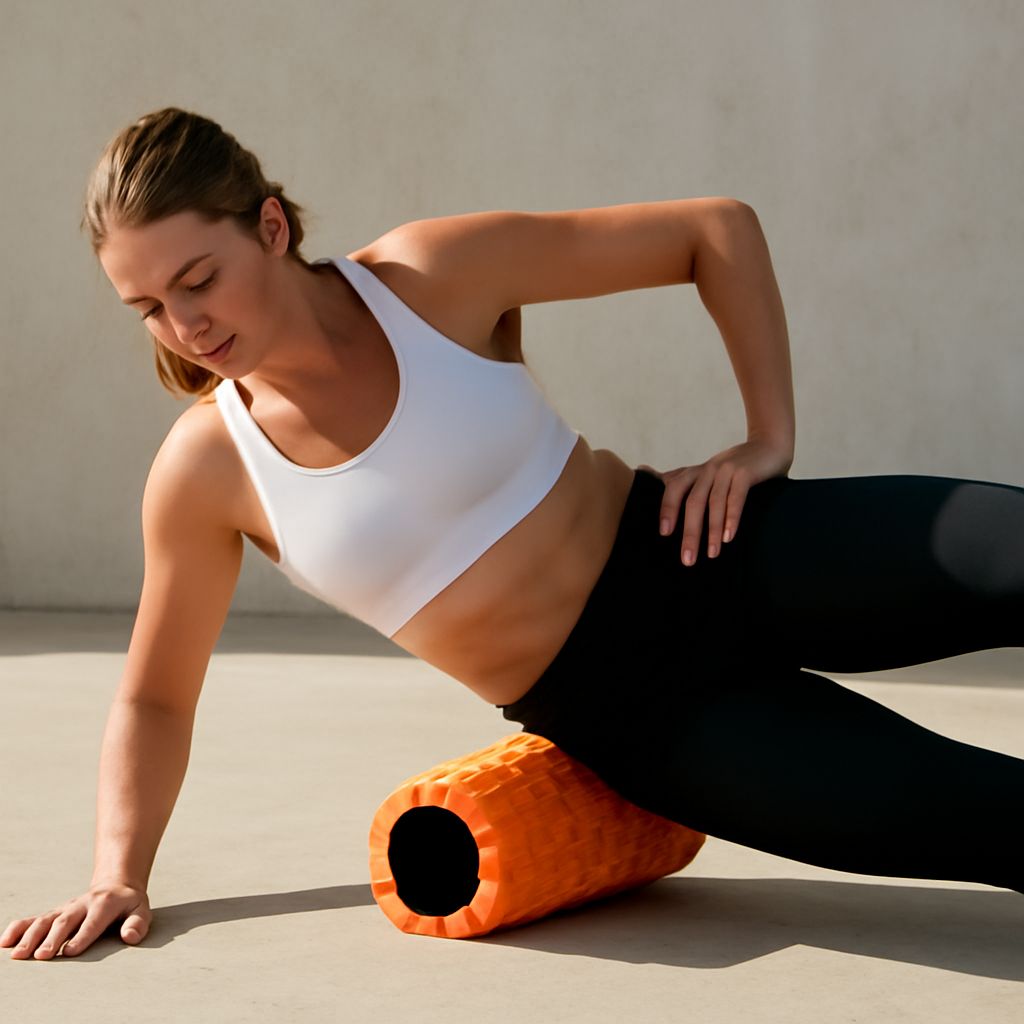
Lie face down with the roller under the front of one thigh and your forearms on the mat. Bend the other leg out to the side, placing its knee and foot on the floor for support. Keep your abdomen gently engaged and your lower back comfortable.
Use your forearms and supported leg to move slowly between the upper thigh and a point above the kneecap. Keep the roller off the knee itself. If this position strains your shoulders or back, stop and try a handheld roller while sitting instead.
Set Pressure and Build a Routine
Choose a foam roller for legs that lets you control the contact. A smooth, softer cylinder is a practical place to start; a firmer or textured one can feel more intense at the same body position. The roller should stay steady under you rather than sliding on the floor.
The easiest way to adjust pressure is to change your support. Keep both hands or forearms planted and use the opposite foot or knee to carry some weight. Lift less of your body from the floor for lighter contact. Move slowly enough to stop immediately, and avoid holding your breath or bracing against pain.
Try calves first, followed by the backs and then fronts of the thighs. You can also choose just one area if getting into each position is tiring. After each side, pause and compare how the movement feels before deciding whether to continue. Foam roller leg exercises are easier to repeat when getting into position is as manageable as the rolling itself.
A small randomized trial found less quadriceps tenderness after a specific post-exercise rolling protocol, but that result does not establish an ideal duration for everyone. Treat the short trial above as a way to learn the movement, and adjust your time to your comfort rather than chasing a stronger sensation.
Know When to Stop
Foam roller massage should feel like tolerable pressure, not sharp or escalating pain. Stop if you experience pain, tingling, numbness, or symptoms that continue afterward. Avoid rolling over bruises, broken skin, swollen areas, or an acute injury; ask a healthcare professional for guidance if you are unsure whether an area is suitable.
If one leg has new unexplained swelling, warmth, redness, or pain, seek prompt medical advice rather than massaging it. If these symptoms occur with chest pain or shortness of breath, seek emergency care. Those symptoms need assessment, as described by the NHS.
For your first foam roller muscle massage, use a soft surface, keep your supports planted, and make a few gentle passes. Check that you can breathe normally and reposition easily; if not, reduce the pressure or stop.