Tadasana yoga, often perceived as a mere standing position, is far from simple. Many beginners and even seasoned practitioners overlook its profound significance in the yoga world. Despite its unassuming appearance, this foundational pose, also known as Mountain Pose, is an essential pillar of stability and balance. By mastering Tadasana, one can unlock the door to more advanced asanas and enhance both physical and mental well-being. Let’s dive deeper into the essence of Tadasana yoga and explore how this pose can transform your practice.
Benefits of Tadasana
Understanding the benefits of Tadasana is crucial for fully embracing this seemingly basic pose. Tadasana offers a multitude of physical advantages. It serves as the starting point for all standing poses and helps improve posture by aligning the spine, shoulders, and pelvis. Practicing this pose regularly can lead to enhanced balance and coordination, crucial for everyday movement and athletic performance.
Beyond the physical realm, Tadasana yoga also nurtures mental clarity and focus. By standing mindfully in Mountain Pose, practitioners cultivate an awareness of the body and breath, promoting a sense of calm and centeredness. This mental state can extend beyond the mat, aiding in stress reduction and fostering a more present and mindful outlook on life.
How to Practice Tadasana
Step-by-Step Guide
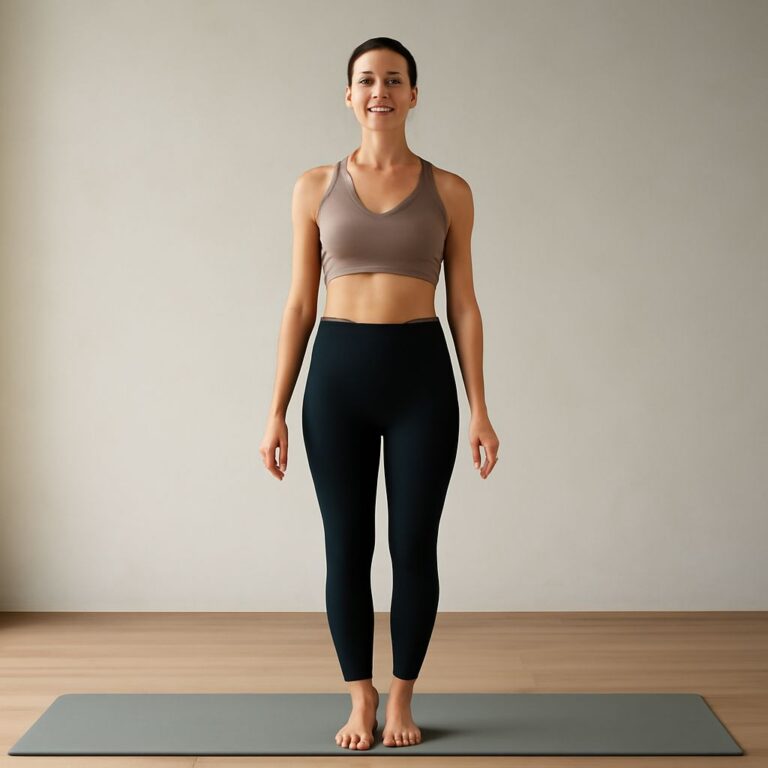
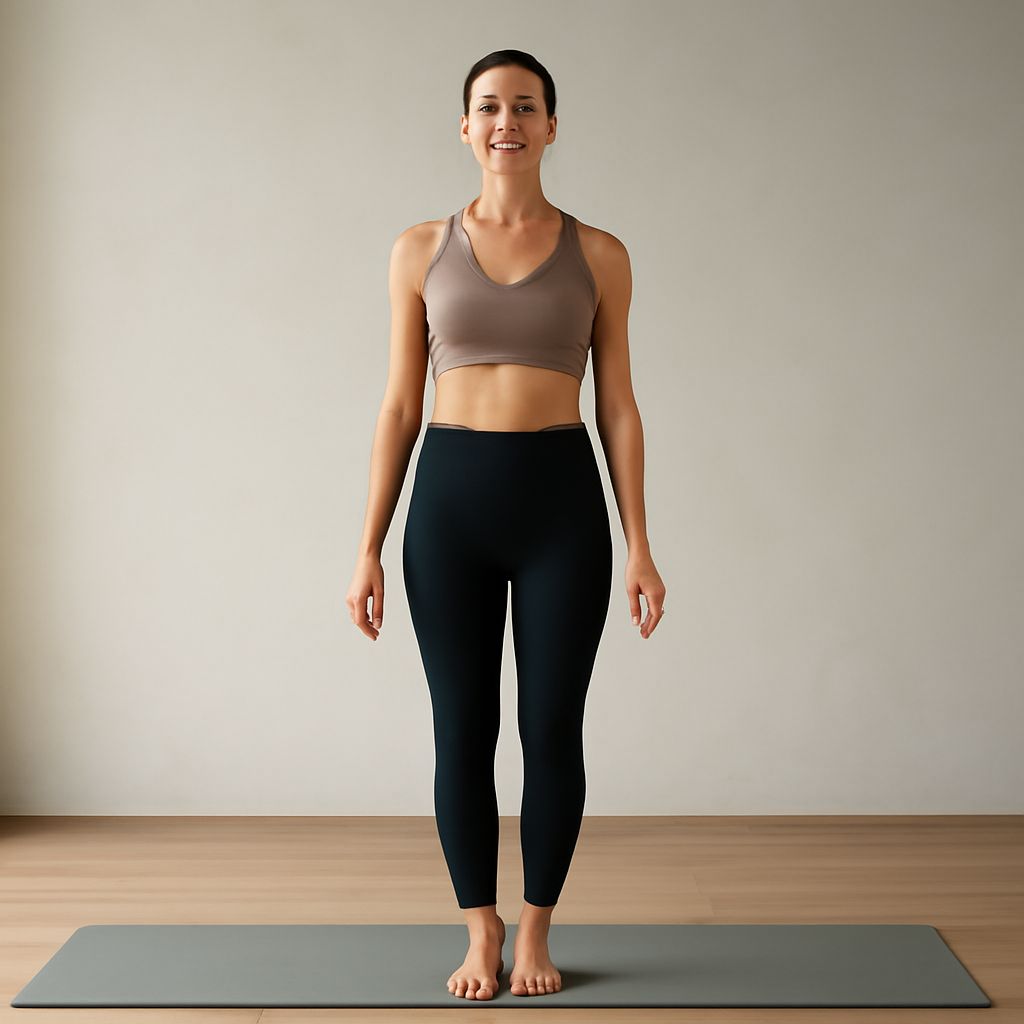
To practice Tadasana effectively, start by standing with your feet together or hip-width apart if that feels more stable. Distribute your weight evenly across both feet. Lift your toes and spread them wide before placing them back down to create a firm foundation.
Engage your quadriceps to lift the kneecaps, while gently tucking your pelvis under to engage the core. Roll your shoulders back and down, creating space in the chest while allowing your arms to hang naturally by your sides with palms facing forward.
As you stand in Tadasana, align your head over your shoulders and lengthen your neck. Keep your gaze soft and forward. Breathe deeply through your nose, feeling the breath rise and fall with each inhalation and exhalation. Hold the pose for several breaths, maintaining awareness of your posture and the sensations in your body.
Common Mistakes
Despite its apparent simplicity, practitioners often make mistakes when attempting Tadasana yoga. A common error is allowing the weight to shift too far forward or backward, disrupting balance and alignment. To avoid this, ensure that your weight remains evenly distributed across the entire foot.
Another frequent mistake is locking the knees. Instead, keep a micro-bend to avoid hyperextension and maintain muscle engagement. Additionally, watch out for excessive arching or rounding of the lower back, which can strain the lumbar region. By gently tucking the pelvis and engaging the abdominal muscles, you can maintain a neutral spine alignment.
Alignment is crucial in protecting the neck and shoulders. Avoid hunching the shoulders or thrusting the chin forward, as these habits can lead to tension. Instead, roll the shoulders down and keep the chin parallel to the floor.
By practicing Tadasana mindfully, you cultivate a deeper understanding of your body’s alignment and balance, creating a solid foundation for all other asanas and daily activities.
Next steps: Incorporate Tadasana into your daily routine, starting each yoga session with this grounding pose. Each practice session offers an opportunity to refine your awareness and posture. Over time, these efforts will deepen your connection to your body, enhancing your overall yoga practice and daily movement.