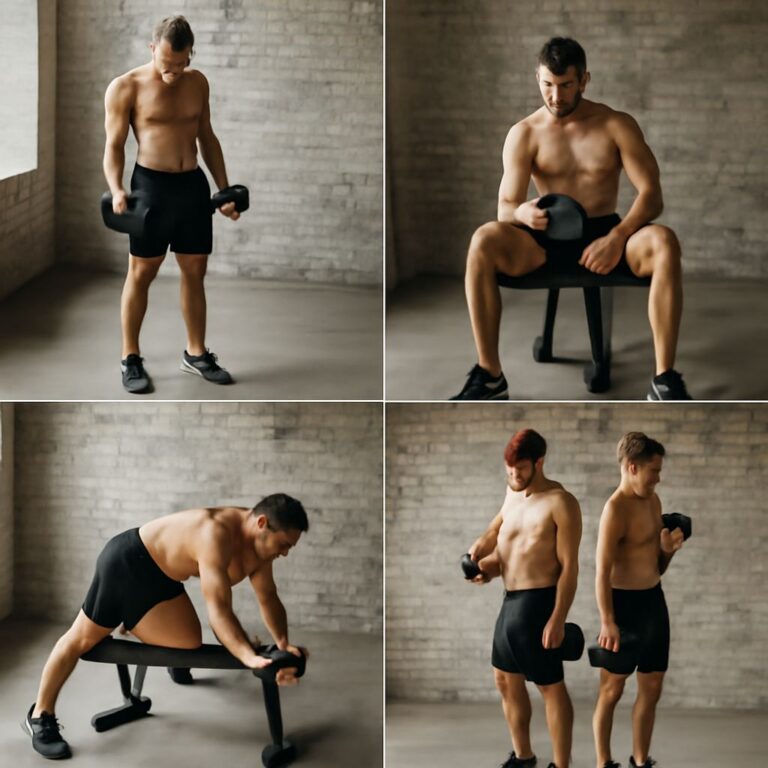
Stronger wrists and forearms can help you handle everyday objects and exercise equipment with more control. A short wrist-strength routine gives you a way to practice moving against a light load without needing a full gym session.
Start with movements that feel comfortable and a weight you can lower slowly. Exercises for wrist strength work in several directions, so a small selection can be more useful than repeatedly bending the wrist one way. Progress gradually and leave time for recovery between demanding sessions.
Prepare your hands and equipment
Choose a stable chair and table, a small towel, and a very light dumbbell or an easy-to-hold household object. The object should be secure in your hand and light enough that you do not need to swing it. You can also practice the movements without weight first. Clear the area beneath your hand in case you need to put the object down.
Begin with a few minutes of easy general movement, followed by gently opening and closing your hands and moving your wrists through a comfortable range. Keep the movement relaxed. There is no need to push into a stretch or force your hand to a particular angle.
If you have a recent injury, unexplained swelling, numbness, or persistent pain, seek individual guidance before loading the wrist. Stop any movement that causes sharp pain or increasing discomfort. The following exercises are general strength practice and are not a rehabilitation plan.
Wrist strength exercises with light resistance
These wrist strengthening exercises use a supported forearm so that you can focus on the movement. For these wrist strength exercises, begin with one set of about eight to twelve slow repetitions on each side, resting between movements. Use a smaller range or fewer repetitions if you cannot maintain control. Breathe normally throughout.
1. Palm-up wrist curl
Sit beside a table and rest your forearm on a folded towel, palm facing up, with your hand extending just beyond the edge. Hold a light weight securely. Lower your hand a short distance, then curl it upward at the wrist. Pause briefly and return slowly.
Keep your forearm supported instead of lifting your elbow to move the weight. Let your fingers hold the object without squeezing unnecessarily. The movement can be small; choose a range in which you can control both directions.
2. Palm-down wrist extension
Turn your forearm so your palm faces down and place it on the towel again. With a light weight in hand, lift the back of your hand a short distance, then lower it slowly. This trains movement in the opposite direction from the palm-up curl.
Use a lighter load if needed. If your shoulder or elbow begins to move to help, shorten the range or remove the weight. Try to keep the same pace for each repetition rather than letting the hand drop at the end.
3. Forearm rotation
Rest your elbow and forearm on the table with your elbow bent. Without a weight at first, slowly turn your palm upward and then downward through a comfortable range. The movement occurs mainly in the forearm, while the elbow remains supported.
Once you can control the rotation, hold a very light object with its weight close to your hand. Turning a long object held at one end can create a much larger challenge, so begin with a compact load. Stop before the wrist or elbow twists into discomfort.
4. Gentle grip hold
Hold a soft ball or rolled towel in your hand. Squeeze gently for a few seconds, then release fully. Keep your wrist in a comfortable, nearly straight position and avoid clenching the shoulder. Repeat five to eight times on each side.
Grip work uses the hand and forearm muscles that also help manage loads at the wrist. It complements the other exercises to strengthen wrists, but the squeeze does not need to be maximal. Choose a resistance that allows a complete, relaxed release between holds.
Progress without rushing
A wrist strength workout can begin with one or two movements if you are new to them. When you can perform the chosen repetitions smoothly, add a few repetitions or a second set on another occasion. Later, you can try a slightly heavier weight while keeping the same supported position and controlled lowering phase.
Change one variable at a time. If a heavier object makes you swing your arm or shortens the motion considerably, return to the previous load. A little fatigue near the end of a set is different from sharp or increasing pain; stop and reassess if the movement becomes uncomfortable.
Allow recovery between challenging sessions. Pulling exercises, carrying, climbing, and other activities can also demand a lot from your grip and forearms, so consider that work when deciding how much to add. A brief session for stronger wrists can follow general strength training or stand alone on a less demanding day.
Start with a controlled movement
To begin now, rest one forearm on a folded towel with your hand beyond a table edge. Without holding a weight, make five slow palm-up wrist movements through a comfortable range, then repeat on the other side. Notice whether you can return smoothly; use that range as your starting point when you add a light load.