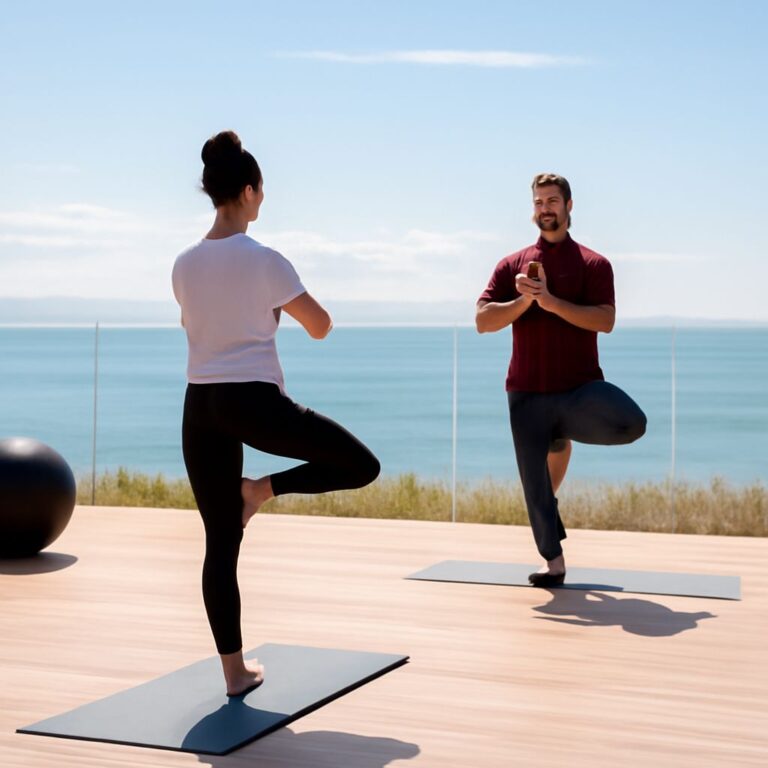
Four people with a clear room and a chair each can move through stations together. In a smaller space with one chair, the same four people may need to take turns or follow a shared movement in place. A session for the whole group works best when the layout is settled before the timer starts.
Plan exercises that participants can adjust to their own abilities, and agree on how to change stations. Shared workouts do not require everyone to complete the same number of repetitions; the common schedule keeps the activity organized while each person chooses a manageable pace.
Group workouts: Choose a format and prepare the space
Group workouts with three or four participants can use one station per person, with everyone rotating in the same direction. With five to eight people, use pairs at four stations if there is enough room for two people to move safely at each one. Otherwise, split into smaller rounds or choose a shared sequence with everyone in a separate spot.
Before choosing group workout ideas, count the people and equipment, then test the space with arms extended and enough room to step in every direction. Clear bags and cords from the travel path. Place chairs against a wall so they cannot slide, and use a sturdy wall for supported push-ups. Keep water accessible without blocking a station.
Assign one person to explain the movements and call the changes, and another to run a visible or audible timer. Agree on a signal to pause the whole group if someone needs space or help. Ask participants privately about any relevant limitations and invite them to select a simpler option without needing to explain it to the group.
Four stations with options
Demonstrate each movement before starting. At every station, participants can stop early, rest, or choose the easier version. Quality of movement matters more than matching a neighbor’s count.
- Chair sit-to-stand: Sit near the front of a stable chair, place your feet on the floor, stand and sit back down with control. For support, use the chair arms or a higher seat. For more challenge, move slowly or pause briefly above the seat before sitting.
- Wall push-up: Place your hands on a clear wall and step back. Bend your elbows to bring your chest toward the wall, then press away. Stand closer for an easier angle; step farther back for more challenge while keeping your body steady.
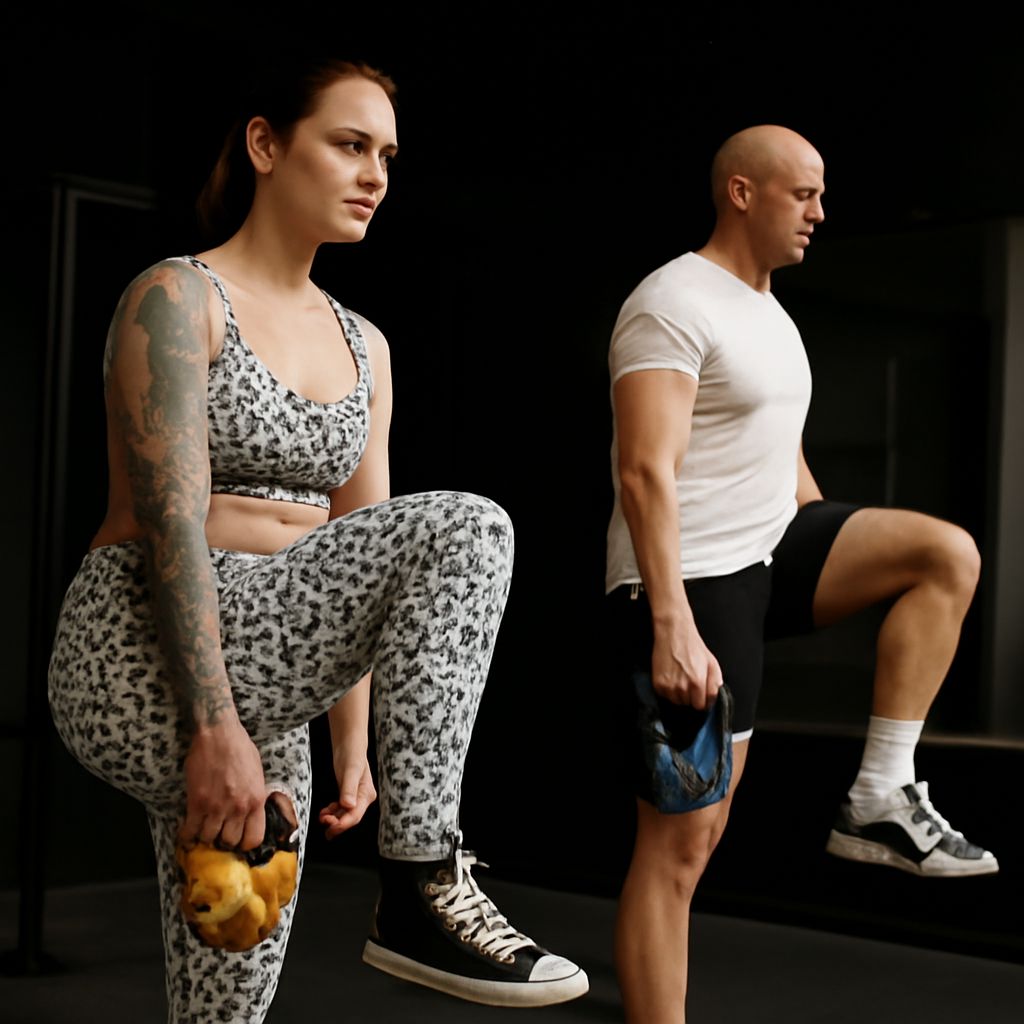
- March or step in place: March with comfortable steps and swing your arms. Use a chair back for balance or step more slowly if needed. Increase the pace or lift the knees a little higher for a greater challenge without crowding the next station.
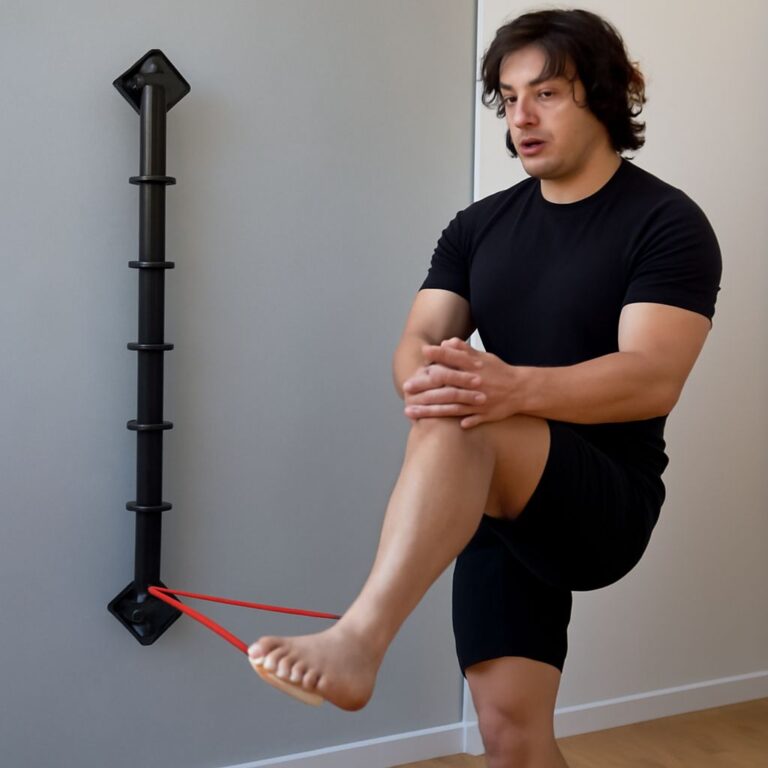
- Standing row with a resistance band: Secure the band to a suitable fixed anchor at about waist height. Hold the ends, step back until there is light tension, and pull your elbows toward your sides before returning slowly. Use a lighter band or stand closer for less tension. If a secure anchor is unavailable, replace this station with shoulder-blade squeezes without a band.
Check the band for damage and make sure the anchor cannot move or release. Demonstrate each option to everyone so that choosing an adaptation feels like a normal part of the session. If a movement causes sharp pain, stop it and choose another comfortable activity or rest.
Example: A 23-minute session for four
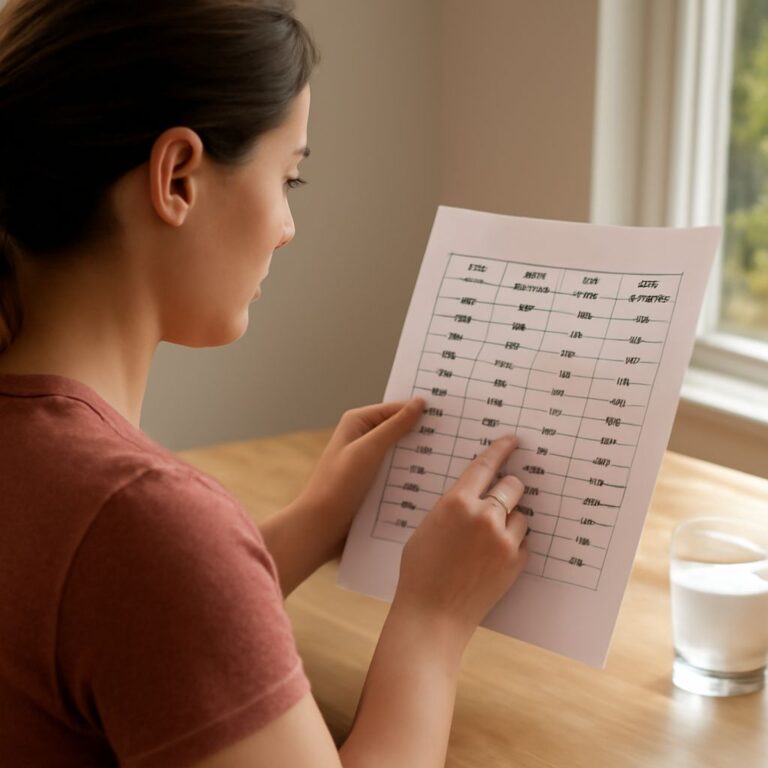
This timetable uses four stations, one person at each. Each station lasts one minute: up to 40 seconds of controlled movement followed by at least 20 seconds to rest and move to the next position. Participants may rest earlier and take the full changeover time. Three rounds take 12 minutes.
| Time | What the group does |
|---|---|
| Minutes 0–5 | Warm up together with easy marching, shoulder rolls and gentle movements through a comfortable range. |
| Minutes 5–8 | Demonstrate the four stations and their easier options; assign starting positions and the direction of travel. |
| Minutes 8–20 | Complete three rounds. The timer calls the end of work and the change to the next station. |
| Minutes 20–23 | Slow the march, breathe comfortably and check in before putting equipment away. |
For eight participants, place two at each station only if both can move without contact and the equipment is sufficient. At the chair station, two chairs allow simultaneous work; with one chair, partners can alternate while the other rests. At the band station, use two safe setups or have one person do the no-band option. Keep the same change signal for the whole room.
Coordinate effort and transitions
At the start, tell participants that they control their pace and can ask for a pause. During marching, the CDC’s talk test can help people judge their own aerobic effort: at a moderate personal intensity, they can generally talk but not sing. The same pace may feel different to different people.
Between rounds, check that everyone knows the next station and that no path is crowded. If transitions take longer than expected, lengthen the rest interval and reduce the number of rounds; do not rush people carrying equipment. Afterward, ask which movements or locations were difficult to follow, and use the answer to adjust the next session.
Choose the format for your number of participants and available space, then agree on the stations, rotation and movement options before beginning.