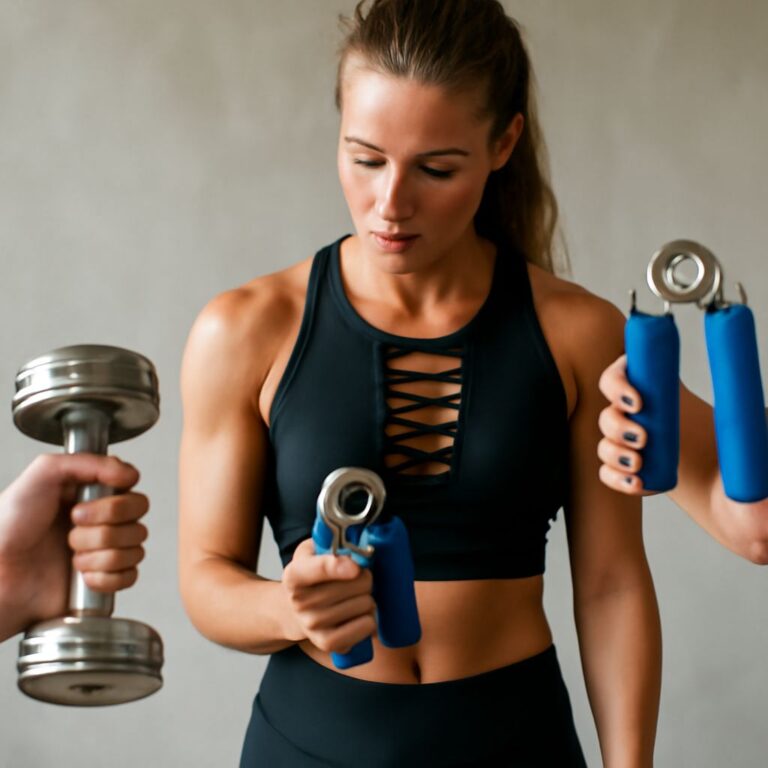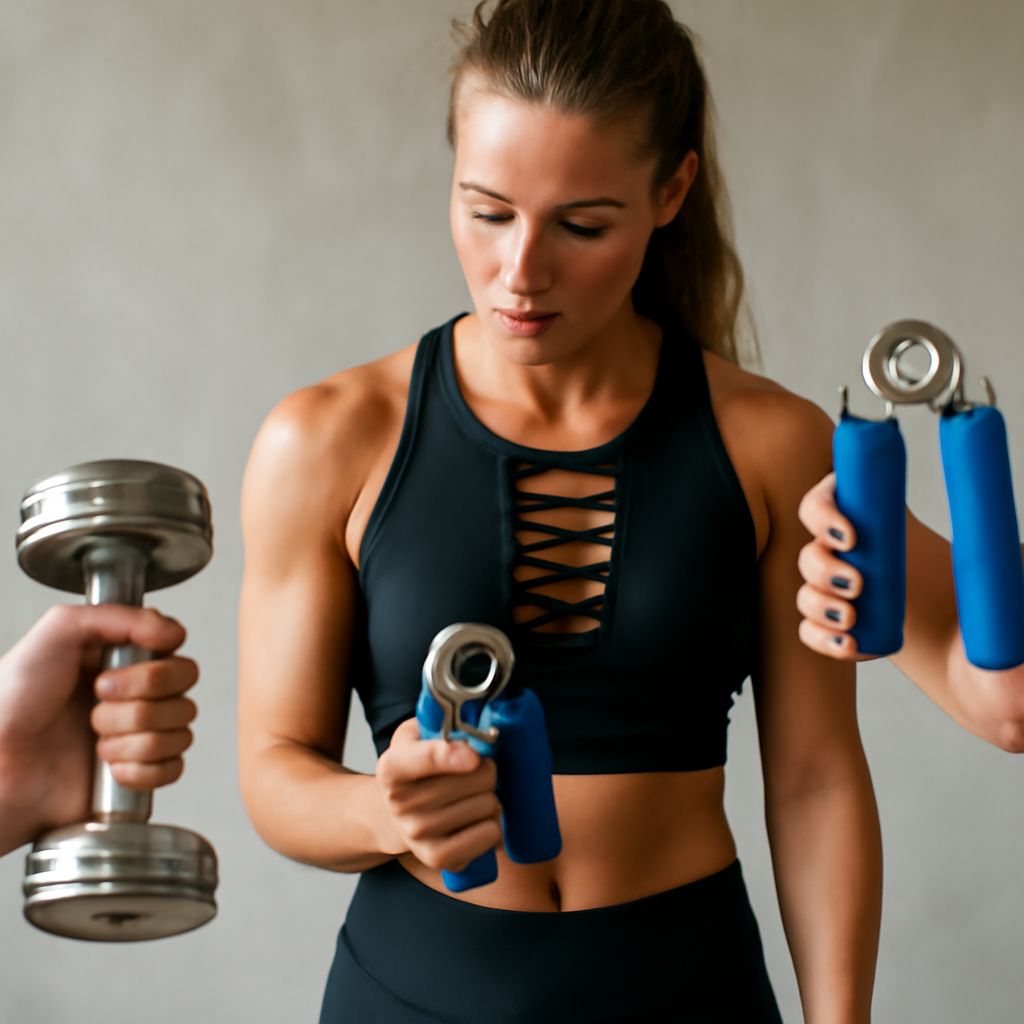
Holding a grocery bag or a dumbbell securely calls for a grip you can maintain as well as a grip you can close. Gripping drills can help you practice both: use a soft object for repeated squeezes and a manageable weight for a steady hold. Practicing to strengthen your hold works best when you can keep your fingers and wrist comfortable throughout each repetition.
The hand can squeeze an object, pinch it between the thumb and fingers, or support a handle for time. These related actions place different demands on the hand, so choose movements that resemble what you want to practice and add them gradually to your routine.
Exercises for Grip Strength: Start With a Squeeze
A soft ball, sponge, or rolled towel gives your fingers something to close around. The National Health Service’s hand exercise guidance for patients advised by a clinician describes using a soft ball or rolled socks for a squeeze and hold. For general practice, begin with an object that compresses without requiring a maximum effort.
- Sit or stand comfortably with your forearm supported and your wrist in line with it.
- Wrap your fingers and thumb around the object. Squeeze steadily for about five seconds without holding your breath.
- Release fully, then repeat five to eight times. Switch hands and use the same controlled pace.
If you have to bend your wrist sharply or strain to compress the object, choose something softer. As this becomes comfortable, add a few repetitions or use a slightly firmer object. A small change makes it easier to judge whether you can maintain the same movement.
Hold and Carry
A stationary hold trains you to maintain a secure hand position over time. Choose a dumbbell, a filled water bottle with a secure cap, or a bag with a strong handle. Begin with a weight you can set down easily.
- Stand tall with the object at your side, your arm relaxed and your wrist roughly straight. Close your hand around the handle.
- Hold for 10 to 20 seconds while breathing normally. Set it down before your fingers begin to slip.
- Rest, then repeat with the other hand. One or two holds per side are enough to learn the movement.
For a carry, use a clear, level route and walk slowly with a manageable weight in each hand. The American Council on Exercise’s farmer’s carry describes holding dumbbells at the sides and walking a set distance. Start with a short trip across the room and set the weights down if your posture or grip changes. Leave space around your feet and use containers that will not spill if placed down quickly.
Exercises for grip strength can be adjusted by changing weight, hold time, or distance. Change one of these at a time so you can tell which adjustment makes the task harder. If one hand tires sooner, begin with that hand and match its comfortable duration on the other side.
Add a Light Pinch
Pinching uses the thumb against the fingers rather than wrapping the whole hand around a handle. Start with a thin, lightweight book or an empty plastic container. Hold it close to a table with your thumb on one side and your fingers on the other. Lift it just above the surface, hold for a few seconds, and put it down before relaxing your hand.
Repeat a few times on each side. The table limits the distance the object can fall if it slips. Choose a narrower or lighter object if you must twist your wrist or squeeze so hard that you cannot release smoothly. Avoid fragile objects and heavy plates while learning the position.
Grip and Wrist Movement Are Different
In a hold, the fingers secure the object while the wrist generally stays in position. A wrist curl instead moves the hand at the wrist against resistance. Both can be part of training, but they are separate actions. For a simple wrist movement, rest your forearm on a table with your hand just beyond the edge, hold a light bottle, and slowly raise and lower the hand through a comfortable range. Use the other hand to help place the bottle safely if needed.
The NHS wrist exercise leaflet illustrates wrist extension separately from squeezing a soft object. Treat the wrist movement as an optional addition; a steady hold already gives you a clear task for the fingers.
Build a Sustainable Routine
Choose two grip strengthening exercises, such as a squeeze and a hold, and begin with one or two short sets of each. Give your hands and forearms time to recover between harder sessions, particularly if your other training also involves pulling or carrying. For these grip-focused exercises, a day or two between sessions is a practical starting point; reduce the work if fatigue carries into the next session.
Progress by a small amount only after you can repeat the current work with control. You might hold for a few seconds longer or carry a slightly heavier object, but avoid increasing both at once. Stop an exercise if it causes pain, numbness, or tingling.
For your next session, choose grip exercises you can perform without slipping or straining. Record the object, hold time, and how your hands feel afterward; repeat the load until your control and comfort are consistent.