To train the back of your shoulders with a controlled pulling movement, choose a setup that lets you guide the handles without swinging your torso. A high-pulley rear-delt fly opens the arms in a wide arc, while a rope pull for the rear delts bends the elbows and brings the hands toward the face. Both use cable resistance, but they are different movements.
The rear deltoid is the muscle at the back of the shoulder. Other upper-back and shoulder muscles also help move and stabilize the arms. Begin with resistance light enough to learn the path, and choose the version that you can perform comfortably and consistently.
Set Up the Fly
For a high cable rear delt fly, use two adjustable pulleys with individual handles. Set them a little above shoulder height, choose a light weight on each stack, and stand centered between them. Take the left handle in your right hand and the right handle in your left, so the cables cross in front of you. Step into a balanced stance with your knees relaxed.
- Start with your hands in front of your upper chest and a slight, comfortable bend in both elbows. Keep your wrists aligned with your forearms.
- Brace your midsection gently and keep your torso upright. Move both arms out and slightly downward in a broad arc, maintaining roughly the same elbow bend.
- Stop when your arms are out to the sides within a comfortable range. Avoid forcing your hands behind your body.
- Return the handles slowly along the same path, keeping control as the arms cross again. Repeat without letting the stacks slam together.
The American Council on Exercise’s reverse fly uses crossed cables at approximately shoulder height and a steady, upright stance. In a high-pulley rear-delt fly, this higher setting changes the direction of the pull; it should still allow a smooth, comfortable arc.
Rear Delt Rope Pull: A Different Path
For a rear delt rope pull, attach a rope to one pulley around upper-chest or shoulder height. Face the machine, hold one end of the rope in each hand, and step back until the cable has tension with your arms extended in front of you. Place one foot slightly behind the other if that makes it easier to stay balanced.
Pull the rope toward your upper chest or face, bending your elbows and letting them move outward. Separate your hands as they approach you, stopping before the shoulders or wrists feel strained. Then extend your arms slowly toward the pulley. Keep your ribs over your pelvis and avoid leaning backward to move the weight.
A rope pull aimed at the rear delts resembles the ACE high row, which uses a shoulder-height pulley and bent elbows. Unlike the fly, this version has a distinct elbow bend and a shorter hand path toward the body. Try pulling the rope for your rear delts when you prefer one cable and a rope attachment, and adjust the height slightly if needed for a comfortable line of pull.
Try a Raise With One Handle
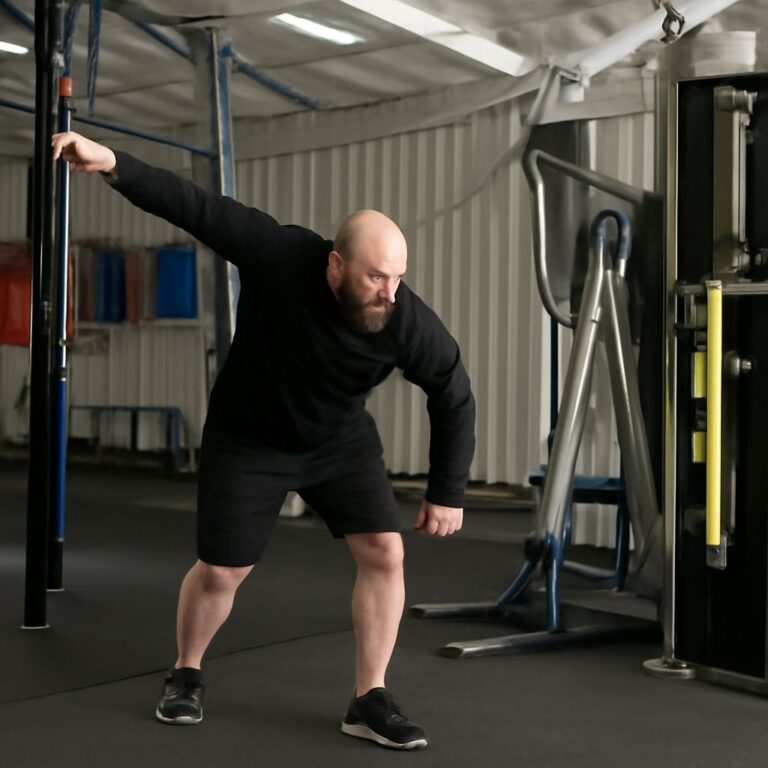
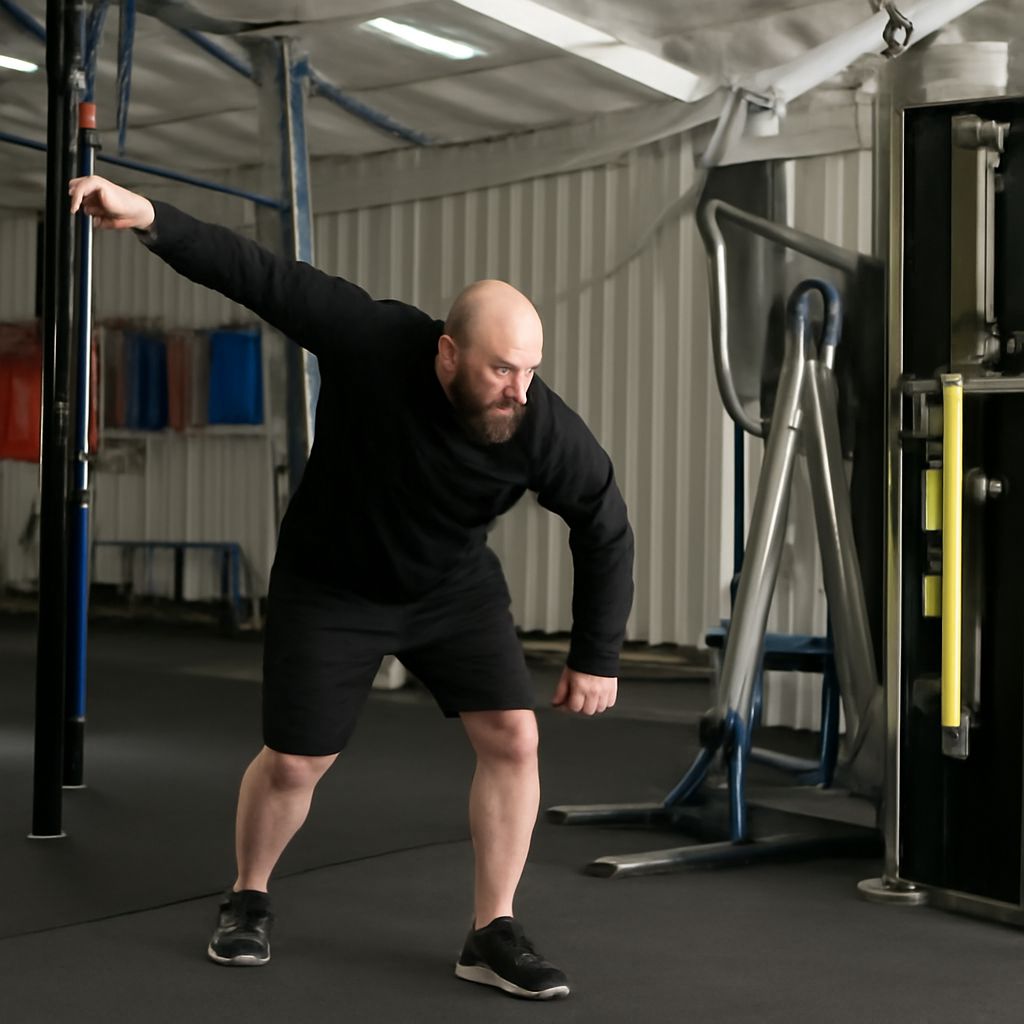
A rear delt cable raise can be done one arm at a time using a low pulley and a single handle. Stand sideways to the stack, take the handle in the hand farther from it, and hinge slightly forward at the hips. Let the working arm start across the front of your body with a soft elbow bend and the cable under light tension.
Raise the arm outward and slightly back in a controlled arc until it approaches shoulder level, or stop earlier if that is your comfortable limit. Lower along the same path, keeping the torso still. Turn around and repeat on the other side. This low-cable rear-shoulder raise has a different starting position from the high-pulley fly; keep the weight modest while you learn its path.
Choose Resistance and Correct Common Errors
For a first practice set, select a load you can move smoothly for about 8 to 12 repetitions without changing posture. Rest and adjust the weight before another set if the last repetitions require a swing or a shortened return. Matching the two stacks on a dual-pulley station helps keep the fly even from side to side.
Watch for these common errors:
- Shrugging toward the ears: Reduce the load and let the shoulders move naturally without lifting them throughout the pull.
- Jerking or leaning back: Use a lighter setting, plant your feet, and move at a pace that lets you stop at either end.
- Pulling too far: Finish at a comfortable point rather than forcing the arms behind the torso or the rope past your face.
- Rushing the return: Guide the handles back instead of letting the stack pull your arms forward.
To make the upper-cable rear-delt fly easier, lower the resistance first and use a shorter comfortable range. You can also practice the path with one arm at a time, standing securely and resisting any twist of the torso. For either variation, stop if you feel pain rather than trying to push through it.
Choose one version, set a manageable resistance, and try one calm set. Follow a controlled path out and back, then adjust the load or range before continuing.