To increase the number of strict pull-ups you can complete in one set, the Russian fighter pull-up method uses frequent practice and a planned sequence of repetitions. This fighter-style pull-up plan starts from your present ability and adds work over time, so the number on the page should be measured against the quality of each rep.
Fighter Pull Up Program: The Five-Rep Example
The Russian fighter pull up program uses sets with descending repetitions, then adds one repetition at a time. In the earlier version of Pavel Tsatsouline’s plan, preserved in the StrongFirst CZ/SK translation, the example below begins with a five-repetition maximum: the greatest number of clean repetitions a person can complete in one set. Each number is a separate set, with rest between sets.
| Day | Repetitions in each of five sets |
|---|---|
| 1 | 5, 4, 3, 2, 1 |
| 2 | 5, 4, 3, 2, 2 |
| 3 | 5, 4, 3, 3, 2 |
| 4 | 5, 4, 4, 3, 2 |
| 5 | 5, 5, 4, 3, 2 |
| 6 | Rest |
| 7 | 6, 5, 4, 3, 2 |
The first day starts with the maximum set and reduces the count by one in each following set. On subsequent training days, one rep is added, beginning with the last set and moving backward through the sequence. After the rest day, the first set rises to six. The source sets out a four-week progression with a rest day after each five training days, followed by two or three days off before testing again.
The numbers are a sequence of separate efforts, not one long set. Rest long enough between sets to approach the next one with control. The source does not prescribe a single rest interval for everyone, so there is no need to rush the clock to finish the five sets.
Find the Right Starting Point
Before beginning the fighter pullup program, establish how many strict repetitions you can do in one continuous set. Warm up first, then stop counting when you can no longer complete a repetition with the same controlled movement. That count is your repetition maximum, often abbreviated as RM. A five-rep maximum makes the table above relevant; it does not mean that five is the right first set for everyone.
The Russian fighter’s pull-up progression also describes a three-rep entry and starting later in the five-rep table for people whose maximum is higher. For example, the source places a six-rep maximum at day 7. Use the appropriate entry rather than adding weight or extra sets simply to make the first day harder.
If you cannot yet complete three clean repetitions, practice an easier variation instead of forcing the listed sets. Assisted pull-ups with a band or an assisted machine can provide support while you learn the path of the movement. This is an adaptation, not the published five-rep schedule. Choose assistance that lets you complete controlled repetitions without swinging, and track the assistance as well as the reps.
Make Each Rep Count
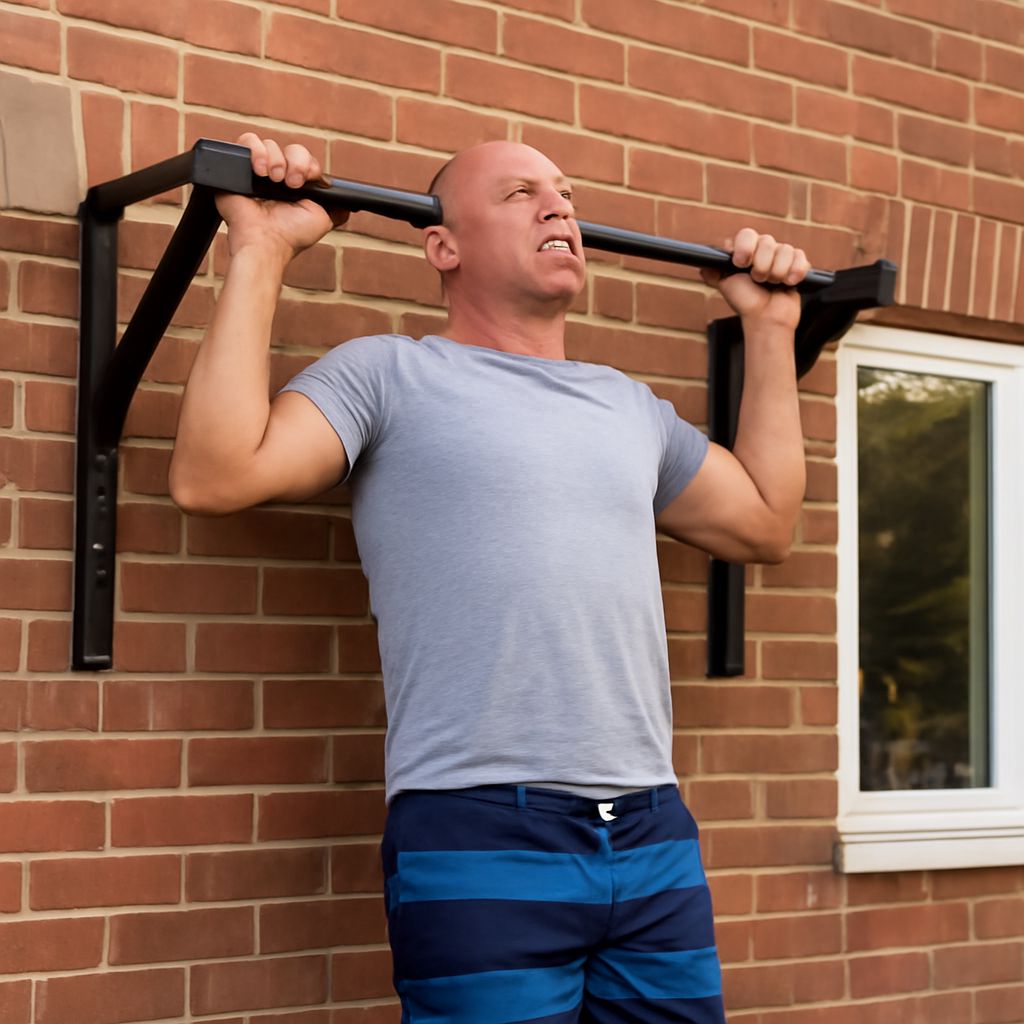
Use a stable bar and a grip that allows your shoulders to move comfortably. Start from a hang with arms extended, engage your upper body, and pull until your chin clears the bar. Lower under control until the arms are extended again. Keep the movement consistent from one set to the next, without kicking or using a large body swing to get over the bar.
A clean range of motion makes the numbers meaningful. If one session starts from a full hang and the next starts with bent elbows, the totals no longer describe the same movement. A secure grip and enough room beneath the bar also make it easier to focus on the exercise rather than on staying in position.
Keep a short log of the date, each set, and any change in technique or assistance. The log can show whether the later sets are becoming slower or shorter even when the written target is reached. It also helps distinguish a difficult day from a pattern that continues across several sessions.
Fit the Work Around Recovery
The Russian fighter’s pull-up routine is frequent: five training days followed by a day off. Pulling work elsewhere in your routine adds to that load, including rows, climbing, and heavy grip work. Consider reducing that additional work while trying the sequence, and protect time for sleep and regular meals. A rest day means no scheduled sets from this plan, not a requirement to avoid all movement.
A less frequent schedule or a repeated day can be a practical adjustment if recovery is inadequate, but it changes the original protocol. For example, after a demanding session, taking an extra day off and returning to a previously manageable set sequence reduces the immediate workload. The objective is controlled practice over time, not completing every line of a calendar.
When Repetitions Lose Quality
Watch for the chin no longer reaching the bar, a shortened lowering phase, or swinging that was absent at the start. If form deteriorates, end the set rather than forcing the remaining reps. For the next session, repeat an earlier manageable sequence or reduce the number of sets and allow more recovery; these are adjustments rather than the prescribed progression. Stop the exercise if it causes pain, and seek appropriate professional advice if pain persists or is significant.