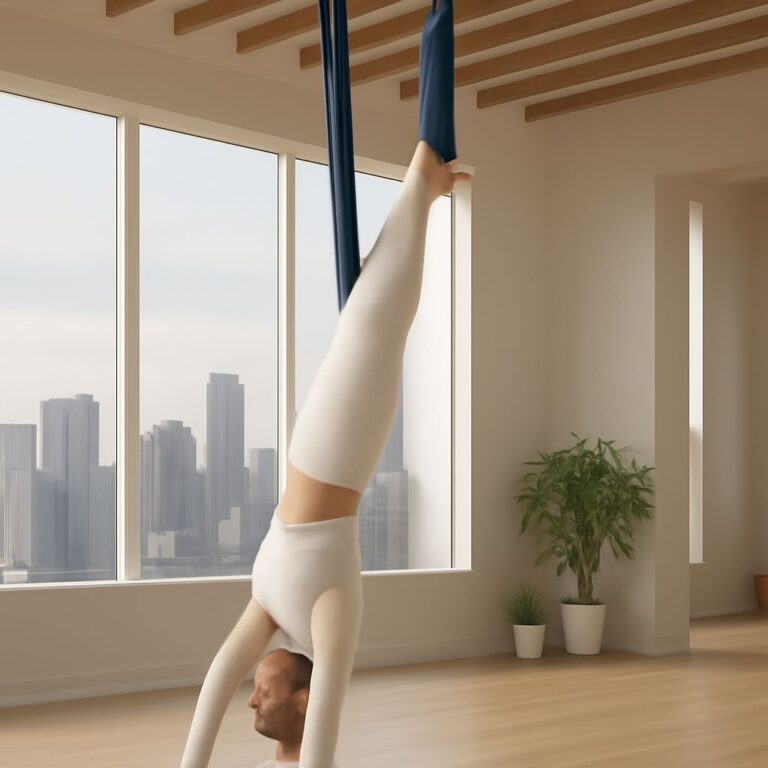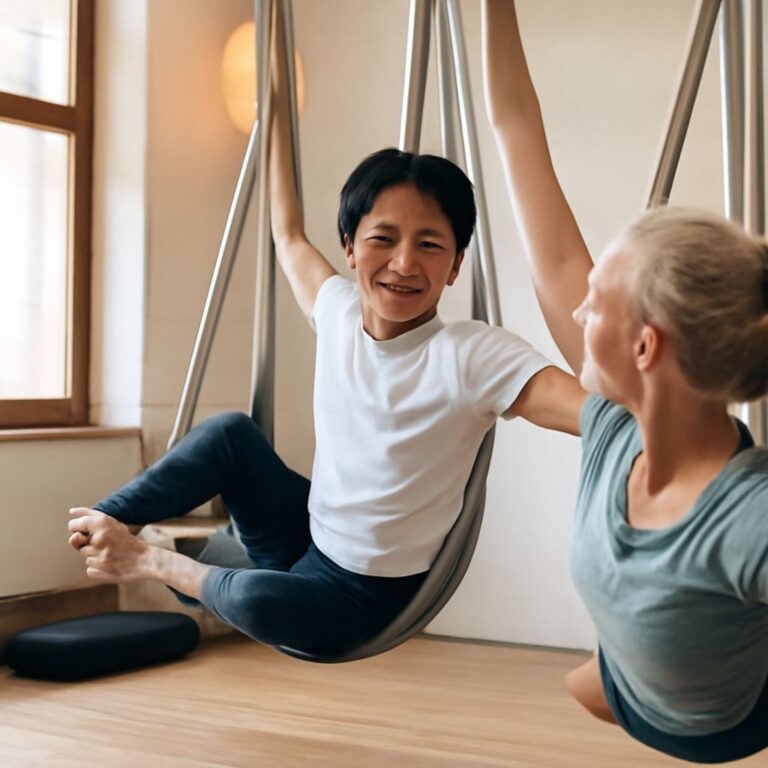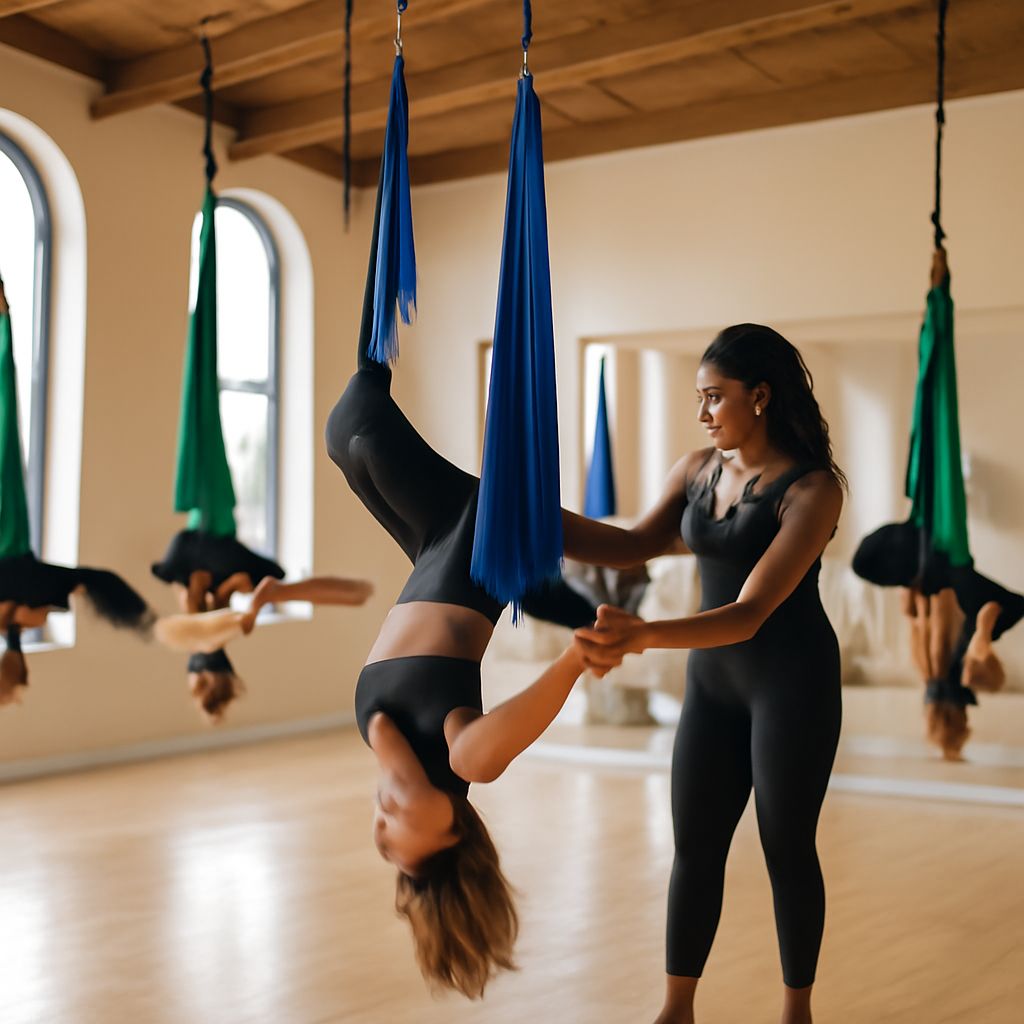
Many people believe yoga is solely grounded in traditional floor practices, yet aerial yoga introduces a transformative twist. Utilizing a hammock to support the body, aerial yoga defies the conventional norms of yoga. While some might think it’s just a trend, the aerial yoga benefits are indeed profound, encompassing both the physical and mental realms.
The term “aerial yoga” might conjure images of acrobatic stunts, but this unique practice is accessible to all levels. Combining the principles of traditional yoga with aerial arts, it offers a new perspective that can enhance flexibility, core strength, and even mental clarity. As we delve into what aerial yoga truly offers, we will also touch on how it can complement advanced yoga practices like kama sutra yoga, guiding practitioners to a heightened state of awareness and well-being.
Understanding What is Aerial Yoga
Origins of Aerial Yoga
Aerial yoga, a relatively modern evolution, has roots that intertwine ancient yoga traditions with the art of aerial acrobatics. Originating in the 2000s, it has rapidly gained popularity worldwide. The innovative practice was developed to help individuals experience yoga poses in a new way, using a fabric hammock to support and facilitate movement.
How Aerial Yoga Differs from Traditional Yoga
While traditional yoga is practiced on a mat, aerial yoga introduces a suspended element, allowing practitioners to perform poses in mid-air. This aerial component offers a range of motion not achievable on the floor, encouraging deeper stretches and unique inversions. Unlike conventional yoga, aerial sessions often involve swinging and spinning, challenging balance and core stability in novel ways.
Exploring Aerial Yoga Benefits
Physical Health Benefits
One of the most significant aerial yoga benefits is its impact on physical health. By incorporating the hammock, aerial yoga facilitates spinal decompression, enhancing flexibility and mobility. The practice is also known to improve core strength significantly, as maintaining balance in the air requires robust abdominal engagement.
In addition to these benefits, aerial yoga can amplify muscular endurance. The dynamic nature of the poses ensures a comprehensive workout, engaging muscles that traditional yoga might not target as intensively. It also aids in joint relief, as the absence of direct contact with the ground reduces pressure on the joints.
Mental and Emotional Benefits
Beyond its physical advantages, aerial yoga contributes significantly to mental and emotional well-being. The practice demands a high level of concentration and focus, fostering mindfulness and a meditative state. As practitioners elevate off the ground, they often experience a sense of liberation and relaxation, reducing stress and anxiety.
Aerial yoga also encourages emotional release and self-discovery. The unique experience of floating and inverting can lead to heightened self-awareness and confidence, providing a new perspective on personal challenges and triumphs.
Advanced Yoga Practices: Beyond the Basics
Integrating Aerial Yoga with Kama Sutra Yoga
For those seeking to deepen their yoga journey, integrating aerial yoga with kama sutra yoga offers an intriguing path. Kama sutra yoga, with its emphasis on connection and sensual awareness, can be beautifully complemented by aerial techniques. The freedom of movement in aerial yoga enhances the fluidity and creativity required in kama sutra practices, opening new avenues for exploration and expression.
This integration not only enriches the physical experience but also deepens the spiritual and emotional dimensions of practice. By combining these advanced practices, practitioners can explore a profound sense of harmony and unity, both within themselves and with others. The synergy of aerial and kama sutra yoga fosters a holistic approach to well-being, promoting a balanced and fulfilled life.