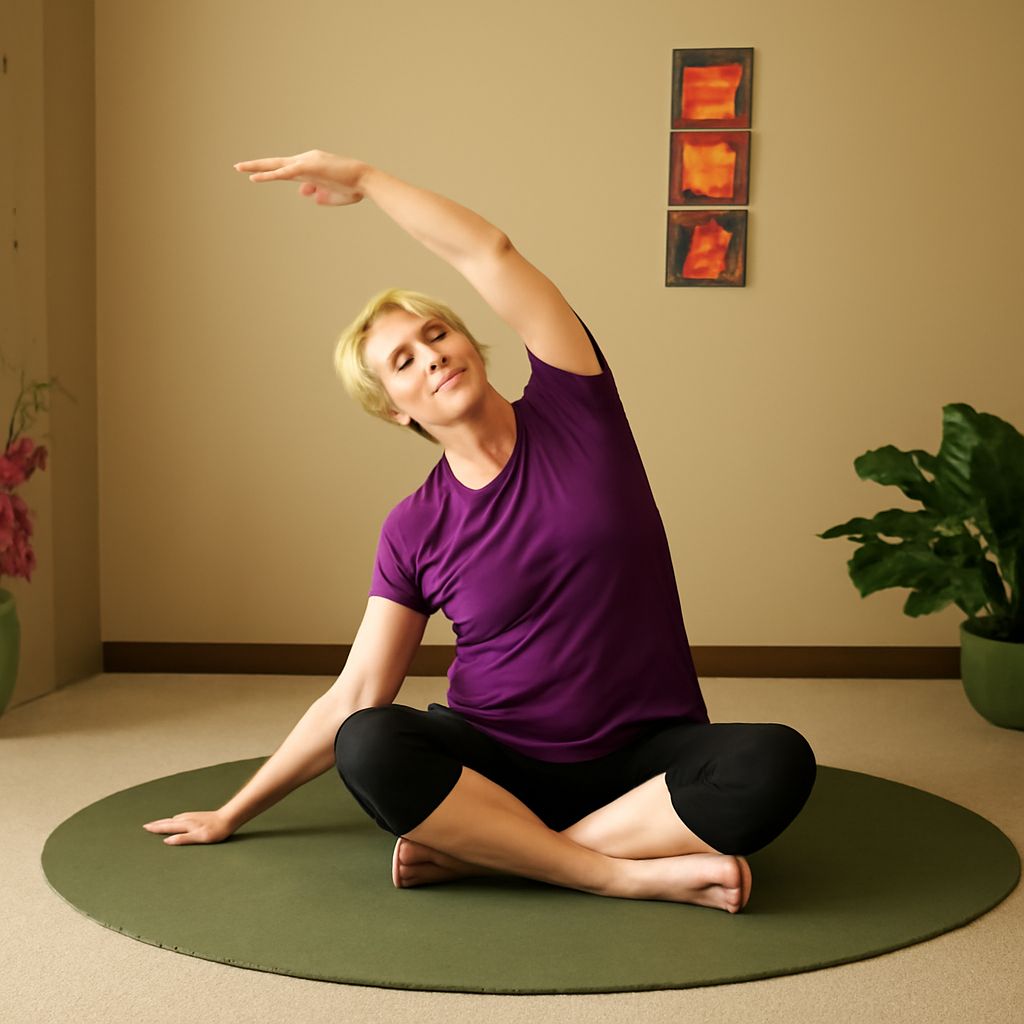
June 21st, International yoga day, generates enormous interest in starting yoga. Studios fill up with first-timers who often pick the most intense class available because the event atmosphere makes ambitious choices feel appropriate. A better approach for new practitioners is to start with a yoga fusion format that blends gentle yoga with another modality you already know, like stretching, Pilates, or light strength work. The overlap gives you familiar anchors while introducing yoga-specific breath and body awareness without the shock of an entirely new practice system. Warrior 1 yoga pose, one of the first standing postures most new practitioners learn, is a good barometer. If you can hold it comfortably for five steady breaths with both hips squared forward, your body is ready for general mixed-level classes.
Pilates fusion classes combine Pilates core work with yoga transitions and breath cuing in formats that run forty-five to sixty minutes. These are especially valuable for people returning to movement after a physical setback. Yoga after spinal fusion surgery is a category of practice that requires specific medical clearance and a teacher with rehabilitation experience. Spinal fusion limits certain rotational and extension movements permanently or temporarily depending on the spinal levels fused and the type of instrumentation used. A teacher without this clinical knowledge can inadvertently cue movements that stress the fusion site or adjacent segments above and below it.
What to Know Before Practicing Yoga After Spinal Fusion
The earliest timeline most spinal surgeons clear patients for gentle yoga movement is three to six months post-operation, after the fusion is confirmed stable by imaging. At that point, yoga after surgery means breath work, gentle upper-body mobility, and short walks, not sun salutations or warrior sequences. Full yoga practice with standing balance and mild forward folds typically resumes at six to twelve months post-surgery in uncomplicated cases, and never for movements that stress the fused segment directly.
Movements to avoid permanently or indefinitely after lumbar spinal fusion include deep forward folds that flex the fused segment beyond its fixed range, repeated lumbar rotation that stresses the fusion hardware, and high-impact landing that transmits shear force through the spine. Yoga poses that require significant lumbar flexion, such as seated forward fold and plow pose, should be modified or avoided based on the specific fusion level. A yoga teacher working with fusion patients should receive a copy of the surgeon’s movement restrictions before designing any sequence.
Warrior I yoga in a post-fusion context requires modification. The standard cue to square the hips fully forward requires lumbar rotation in most bodies. After lumbar fusion, this rotation is restricted. A modified warrior I with the back hip allowed to open slightly reduces the rotational demand on the lumbar spine and makes the pose accessible without straining the fusion site or the adjacent mobile segments above it.
Hip opening poses that do not involve lumbar flexion or rotation, such as supine figure-four and reclined pigeon, are typically safe early in recovery. Standing balance poses with the torso upright, such as tree pose and warrior III with a slight forward lean rather than a horizontal torso, are usually introduced in the four-to-six-month window when the patient has reestablished adequate core stability.
Breath work and gentle pranayama are safe from the earliest recovery stages and often recommended by spinal surgeons as tools for managing post-surgical anxiety and pain. Diaphragmatic breathing reduces intra-abdominal pressure during exhalation and provides gentle internal massage of the lumbar structures. Sama vritti, equal-length inhale and exhale at a four-count pace, activates the parasympathetic nervous system and reduces the stress-related muscle guarding around the surgical site that slows recovery.
Yoga fusion formats designed for post-surgical populations prioritize stability over flexibility and proprioceptive training over range of motion. The goal in the first year after spinal fusion is to restore functional movement patterns without stressing the hardware or the adjacent segments that now bear more load than they did before surgery. Progress is measured in stability, not flexibility.
Bottom line: Yoga after spinal fusion is possible, but it requires medical clearance, a qualified teacher with clinical knowledge, and permanent modification of poses that stress the fused segment. Start on International Yoga Day with a gentle fusion class if you are new, not with a class that promises transformation in sixty minutes.