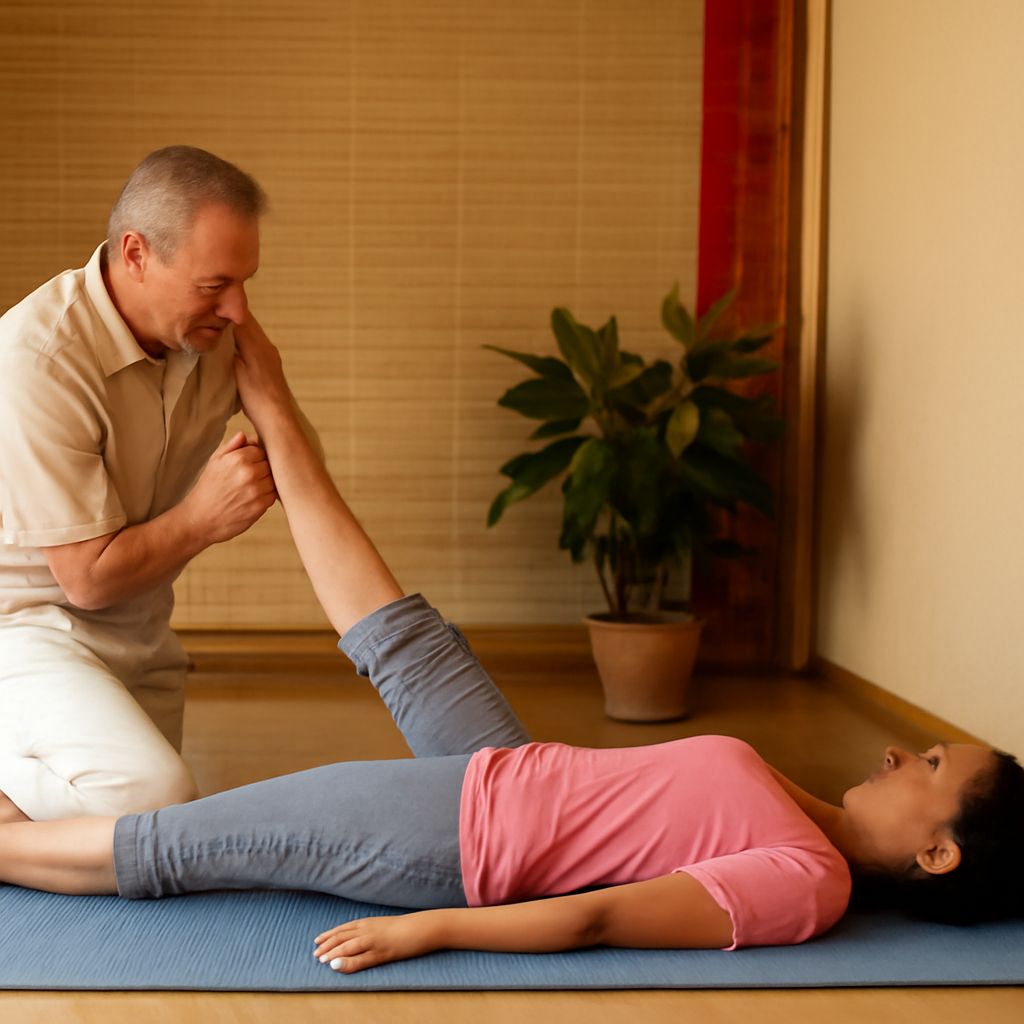
Thai yoga massage gets confused with both Swedish massage and yoga class, and it is neither. It’s a hands-on therapy rooted in Thai medicine in which a practitioner guides the recipient through assisted stretches while applying rhythmic compression along energy lines. The recipient stays fully clothed and lies on a floor mat rather than a table. Thai yoga is active for the practitioner and largely passive for the client.
The term massage yoga is sometimes used loosely to cover a range of bodywork practices that blend movement with touch. Thai yoga massage is the most structured of these, with a defined sequence, specific hand and foot positions, and a clear clinical tradition behind it. Yoga spa treatments marketed as Thai-inspired often borrow elements from this tradition but rarely follow the full therapeutic protocol.
What Happens in a Thai Yoga Session
A full Thai yoga massage session typically lasts 90 to 120 minutes. The practitioner works through the body systematically: feet and legs first, then the torso, arms, neck, and head. Compression is applied with the palms, thumbs, forearms, and sometimes the feet. Each compression point is held for several seconds before the practitioner moves to the next.
Assisted stretching is interspersed with compression. Common stretches include cobra-like spinal extensions, side-lying hip openers, and supine hamstring lengthening. These are performed with the client passive and the practitioner maintaining steady support throughout. The stretches address the full range of motion at the hip, spine, and shoulder in ways that unassisted yoga practice doesn’t easily reach.
The yoga massage framework draws on the concept of sen lines, which are energy pathways in the body roughly analogous to meridians in Chinese medicine. Whether or not you accept the energetic model, the physical effects are well documented: reduced muscle tension, improved range of motion, decreased joint pain, and a pronounced parasympathetic response that many clients describe as deeper relaxation than conventional massage.
Choosing a Thai Yoga Spa or Practitioner
Look for practitioners trained through a recognized school with a minimum of 60 hours of dedicated Thai yoga massage coursework. Many massage therapists add a brief Thai training to their certifications. That’s different from a full practitioner with immersive training, often in Thailand or through programs that replicate that rigor. Ask specifically about training background before booking.
A reputable yoga spa offering Thai bodywork should be able to describe the session structure, what to wear, and any contraindications they screen for. Contraindications include recent surgery, active inflammation, blood clotting disorders, and pregnancy in the first trimester. A practitioner who doesn’t ask about health history before beginning is not following safe practice standards.
Sessions should never be painful. Discomfort during a stretch is normal. Sharp pain is not. Speak up immediately if compression or a stretch crosses that line. A skilled Thai yoga massage practitioner adjusts based on feedback without interrupting the flow of the session.
Safety recap: Thai yoga massage involves deep compression and passive stretching. Communicate your health history to the practitioner before the session begins. If you have joint instability, recent injuries, or inflammatory conditions, discuss them in advance. Pregnant clients should seek out practitioners specifically trained in prenatal Thai bodywork.