Yoga exercises for back pain are everywhere online, but most lists mix poses that genuinely decompress the spine with ones that can aggravate common conditions. Yoga for back health works when the practice matches the underlying cause of pain. A herniated disc, muscle strain, and sacroiliac joint dysfunction each require different approaches, and applying the wrong poses to the wrong condition can delay recovery.
Yoga back pain relief also depends on consistency more than intensity. Thirty minutes of gentle back yoga three times per week produces better long-term outcomes than occasional intense sessions. The nervous system and connective tissue adapt through repeated exposure to safe movement, not through pushing into discomfort. Yoga exercises for lower back pain work the same way.
The Most Effective Back Yoga Poses and Why They Work
Cat-Cow is the foundational yoga for back movement sequence. On hands and knees, alternate between arching the spine toward the ceiling on an exhale and dropping the belly on an inhale. This gentle spinal articulation mobilizes the facet joints, pumps fluid through the intervertebral discs, and re-establishes normal movement rhythm in a spine that has become guarded and stiff.
Child’s Pose decompresses the lumbar spine by creating traction through a forward fold. The hips move back toward the heels and the lower back rounds gently. For people with disc issues, a wide-knee version keeps the lumbar spine from excessive flexion. Hold for two to three minutes and breathe slowly.
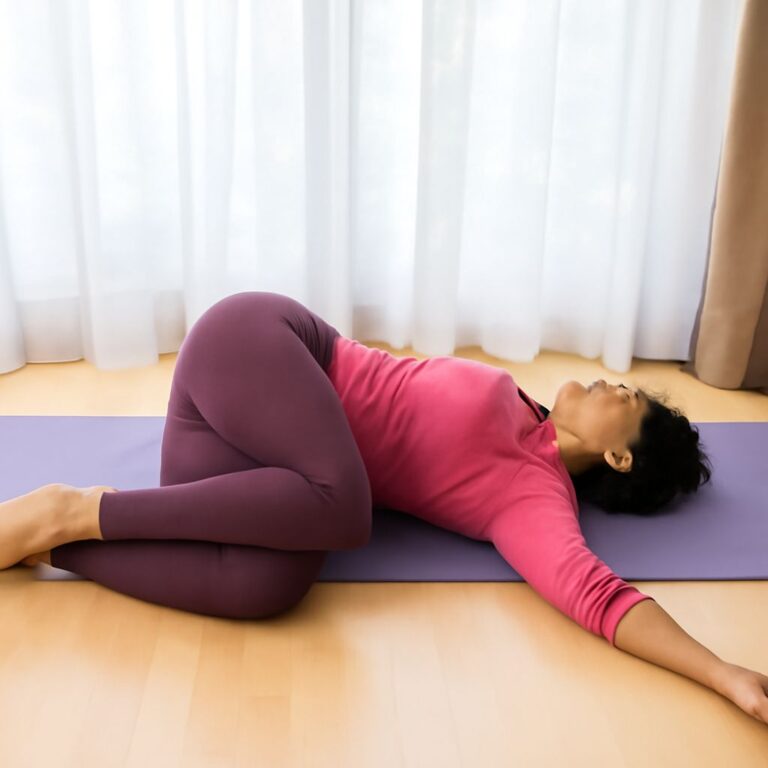
Supine Twist releases the paraspinal muscles and hip external rotators that often contribute to back pain through chronic tightness. Lie on your back, draw one knee to the chest, and guide it across the body while the shoulder remains flat. The rotation mobilizes the thoracic and lumbar spine while the contralateral hip opens. Hold 90 seconds per side.
Bridge Pose strengthens the glutes and hamstrings, which are the primary hip extensors. When these muscles are weak, the lumbar erectors overwork to stabilize the pelvis during movement, leading to chronic lower back fatigue and tightness. Three sets of ten controlled Bridge reps per session begin addressing that imbalance within a few weeks.
Thread the Needle addresses the piriformis and deep hip rotators. Begin in a supine position, cross one ankle over the opposite thigh, and draw both legs toward the chest. This creates a figure-four stretch at the hip. Piriformis tightness contributes to sciatic nerve irritation and lower back referred pain. This pose is one of the most direct back yoga exercises for addressing that connection.
Legs-Up-the-Wall provides passive lumbar decompression and venous drainage from the legs. Hold for five to ten minutes. The only effort required is lying still and breathing. This makes it accessible even on high-pain days when active poses are too much.
Key takeaways: yoga exercises for back pain work best when matched to the specific cause of pain. Start with decompressing poses like Child’s Pose and Legs-Up-the-Wall, then progress to Cat-Cow and Bridge for movement and strength. Yoga for back health requires consistency over months, not dramatic sessions on occasional days. If pain worsens with any pose, stop immediately and consult a healthcare provider.