Living Yoga: How Sutra 1.2, Props, and Daily Principles Shape Your Practice
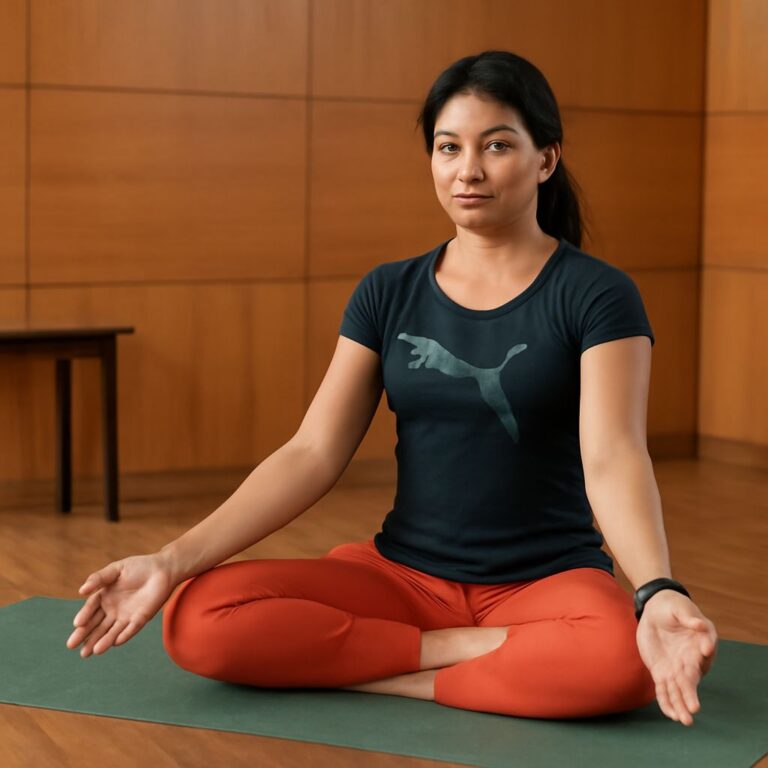
Many people think of yoga as something you do on a mat three times per week. Living yoga is the practice of applying yoga’s ethical and philosophical framework to everyday decisions, conversations, and reactions rather than limiting it to formal sessions. Yoga sutra 1.2, “yogas chitta vritti nirodhah,” defines yoga as the cessation of mental fluctuation. That definition has nothing to do with how long you can hold a pose. It describes a quality of mind that you can cultivate while waiting in traffic, navigating a difficult work meeting, or sitting quietly at home. Most practitioners who study the sutras deeply report that formal asana practice becomes more purposeful once they understand what the sutras are actually describing.
Props confuse a lot of practitioners too. A yoga roll of foam along the spine in restorative practice is not a shortcut. It is a specific tool that produces a different therapeutic effect than lying flat. A yoga table, meaning the tabletop position on hands and knees, is often taught as a transition pose, but it is a complete position for spinal mobility work and hip stabilization training in its own right. The yoga principles underlying prop use are the same ones that guide every other aspect of practice: meet the body where it is, work with intelligence rather than force, and use whatever supports the actual goal of the moment.
Applying Yoga Sutra 1.2 in Everyday Life
What Mental Fluctuation Actually Means in Practice
Vritti means mental fluctuation. Chitta refers to the mind-stuff: memory, ego, intellect, and the field of consciousness itself. Nirodhah means restraint or cessation. The sutra does not claim that yoga eliminates thoughts. It describes a practice of returning attention to a stable point of focus when the mind wanders, repeatedly and without self-criticism. That is a trainable skill, not a destination you reach permanently.
Living this sutra daily means identifying your personal vritti patterns. Do you loop on past conversations? Do you rehearse future arguments? Do you drift into planning during tasks that deserve full attention? Once you identify the patterns, you can apply the practice of nirodhah each time they arise: notice, return, without commentary or judgment. The noticing itself is the practice. How quickly and easily you can return is the metric of progress.
Journaling with sutra 1.2 as a lens is one of the most effective methods for tracking progress. At the end of each day, note two or three moments where your attention was genuinely absorbed in what you were doing, and two or three moments where it scattered to past or future. Over several weeks, you can observe whether your presence-to-absence ratio is improving. This is more meaningful data than tracking how flexible your hamstrings are.
Breath practice, pranayama, is the bridge between formal seated meditation and living yoga during daily activities. A simple four-count inhale and four-count exhale practiced for three minutes before any demanding task stabilizes the nervous system and reduces the vritti that makes clear thinking difficult. This is not mystical. It is a measurable physiological intervention: slowing the breath below twelve cycles per minute activates the parasympathetic nervous system and reduces the cortisol-driven mind chatter that disrupts focus.
Using Props and Principles to Deepen Your Practice
A foam yoga roller along the thoracic spine opens the chest and intercostal spaces that forward-leaning posture compresses throughout the day. Lie over it at shoulder-blade level for two minutes, then move it two inches lower and repeat. This targeted spinal rolling addresses the specific segment most compressed by desk work better than general backbend sequences alone. Use a folded blanket under your head if the extension feels too intense at full range.
The tabletop position functions as both a neutral baseline and an active training posture. From tabletop, you can access bird-dog, thread-the-needle, and flowing cat-cow. You can also hold tabletop itself as a stability challenge by ensuring the spine stays parallel to the floor while breathing for ten counts. Maintaining that position without sagging through the low back or hiking the hips requires active engagement from the deep core stabilizers that most people cannot access through direct instruction alone.
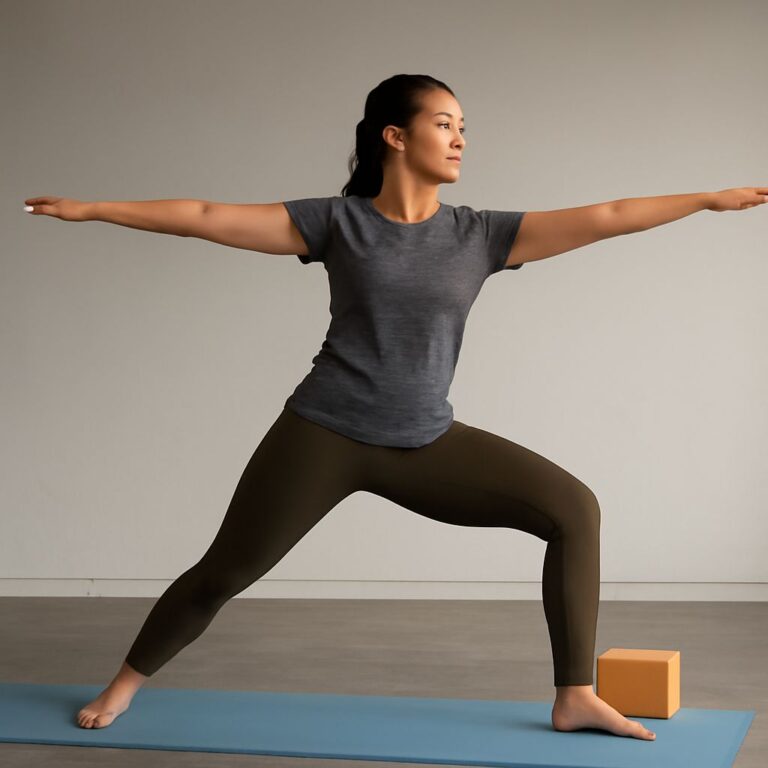
Yoga principles applied to prop choice mean using the minimum support that allows full breath and ease in the position. A student who can hold seated staff pose with a long spine without blocks does not need blocks. A student who cannot maintain a neutral spine without elevating the pelvis needs a folded blanket under the sit bones. Props are calibrated to the individual body and session, not to a fixed protocol.
Pro tips recap: Read one sutra per week with a commentary. Practice sutra 1.2 outside the mat at least once each day. Use props to meet your body as it is today, not as you expect it to be. Integrate breath work into daily transitions, not just formal sessions.