Yoga Wheel Guide: Exercises, Modern Yoga Uses, and Dhyana Practice
The yoga wheel shows up constantly in modern yoga content, but its actual applications remain poorly understood. Many practitioners buy one and use it occasionally as a backbend prop without exploring the range of yoga wheel exercises that make it genuinely useful. The wheel is more versatile than it appears and integrates into practice types that don’t immediately come to mind, including restorative, strength-building, and dhyana yoga contexts.
Modern yoga has incorporated the yoga wheel into common practice largely through social media and teacher training programs that emphasize prop-supported shapes. Yoga wheels as a category have expanded in size, material, and load rating. Knowing which type fits your practice prevents the frustration of buying a wheel that’s too narrow for your back or too slick to balance on safely.
Practical Yoga Wheel Exercises for All Levels
For thoracic extension, sit in front of the wheel with feet flat on the floor, lean back until the wheel supports the mid-back, and extend the arms overhead toward the floor. The wheel provides incremental support through a deeper backbend than most people can access on a flat mat alone. Breathe slowly and let the spine extend over five to eight breath cycles.
Hip flexor release is another primary yoga wheel exercise. From a low lunge, place the back shin on top of the wheel and gently rock forward and back. The wheel’s rolling surface introduces movement into the hip flexor stretch, which many people find more effective than a static hold. Keep the front knee tracking over the front foot throughout.
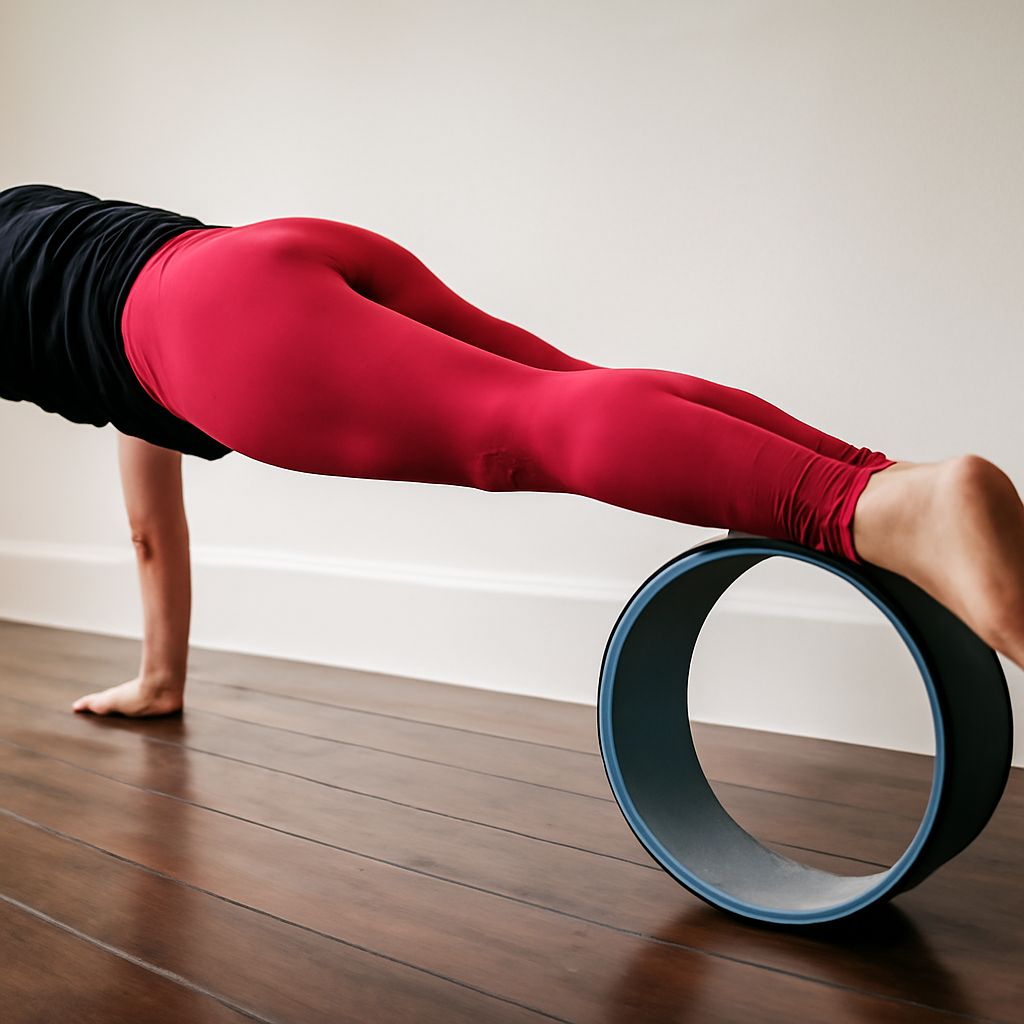
Balance training on the wheel builds proprioception and ankle stability. Place both hands on the wheel in a Plank position, hands instead of feet elevated, and hold for 30 to 60 seconds. The unstable surface requires constant micro-adjustments from the core and shoulder stabilizers. This is substantially harder than standard Plank and should be approached progressively.
Yoga Wheel and Dhyana Yoga: A Less Obvious Connection
Dhyana yoga refers to meditation practice, the seventh limb of Patanjali’s Eightfold Path. The connection between the yoga wheel and dhyana practice is indirect but real. Using the wheel for restorative backbend holds and passive chest openers for several minutes creates a body state that transitions naturally into meditation. An open chest and lengthened spine reduce the physical discomfort that short-circuits many meditation attempts.
Placing the wheel under the upper back in a supine position and lying still for five to ten minutes is a restorative yoga wheel exercise that doubles as pre-meditation preparation. The heart opens toward the ceiling, the breath deepens, and the nervous system shifts toward parasympathetic dominance. Beginning a dhyana practice from this position is smoother than sitting cold in Sukhasana.
Yoga wheels come in standard and large formats. Standard wheels are around 12 inches in diameter and 5 to 6 inches wide. Larger wheels at 15 inches diameter provide a more gradual backbend arc, which suits people with tighter thoracic spines or those with longer torsos. The cork and EVA foam surface options provide better grip for sweaty palms than basic plastic-wrapped wheels.
Next steps: if you’re new to the yoga wheel, start with supported backbend holds before attempting balance work. Build confidence with the wheel under your back before placing weight through your hands on its surface. Once comfortable with basic yoga wheel exercises, explore integrating three to five minutes of restorative wheel use at the end of each session as a transition into dhyana meditation or Savasana.