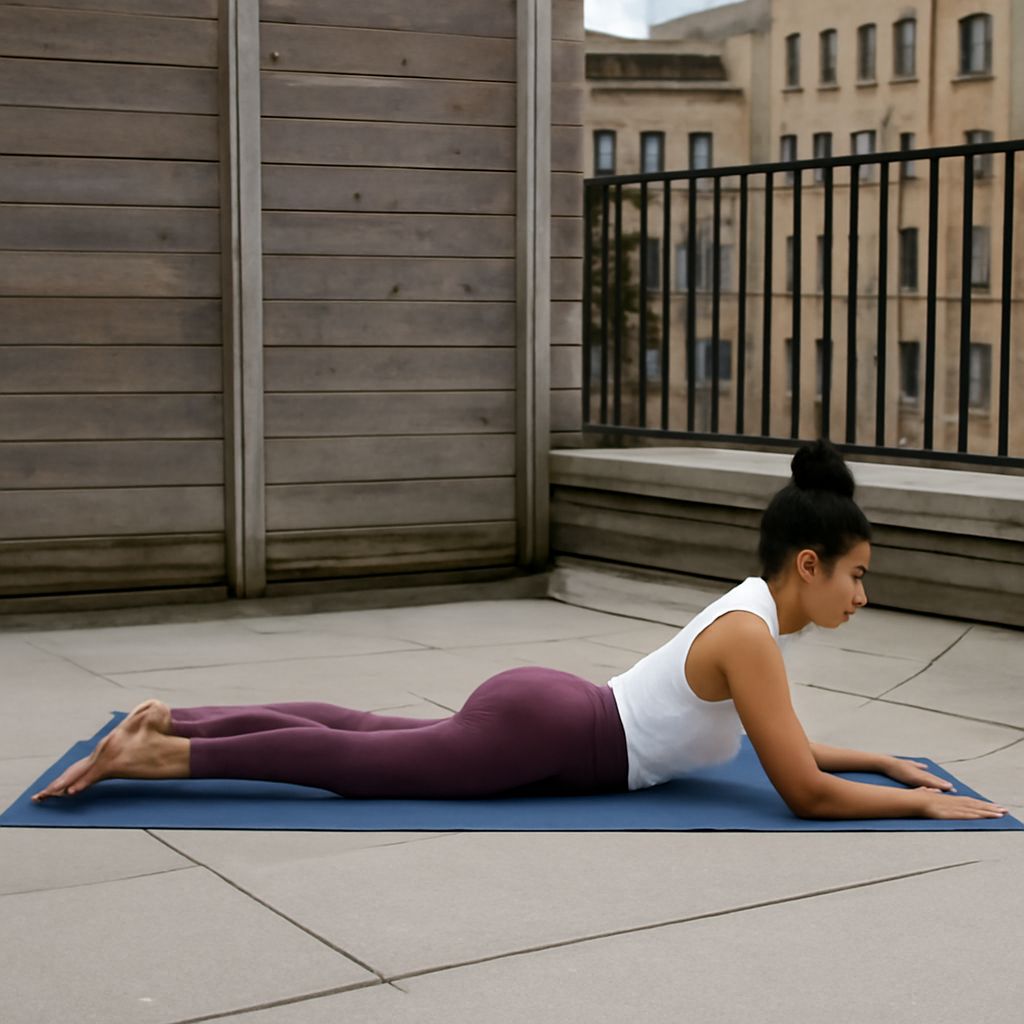
Yoga Stretches for Lower Back Pain: Positions and Back Care Yoga
Yoga stretches for lower back pain are widely recommended, but the generic lists circulating online often miss what actually helps. Yoga for back pain relief is not one-size-fits-all. The right yoga positions for lower back pain depend on whether the pain comes from muscle tension, disc issues, nerve compression, or sacroiliac dysfunction. Applying the wrong approach to the wrong condition can worsen rather than relieve symptoms.
Back care yoga as a distinct practice framework exists precisely because the generic yoga class does not always serve people managing lower back conditions. Back care programs modify standard poses, remove those that are contraindicated for certain conditions, and sequence sequences around decompression and gentle mobility rather than challenge and strength. Understanding that context makes the following stretches more useful.
The Most Effective Yoga Positions for Lower Back Pain
Cat-Cow provides gentle spinal articulation that mobilizes stiff lumbar segments and promotes fluid circulation through the intervertebral discs. Move slowly, pairing each direction with a full breath cycle. Five minutes of Cat-Cow first thing in the morning addresses morning stiffness that many people with chronic lower back tension experience upon waking.
Reclined Knee-to-Chest stretches the lower back extensors and hip flexors simultaneously. Lie on your back, draw one or both knees toward the chest, and hold for two minutes. The lumbar spine gently rounds and the paraspinal muscles release. For people with disc bulges, this position typically reduces pain because it decompresses the posterior disc space.
Supported Child’s Pose with a bolster or folded blanket under the chest makes a forward fold accessible for people who can’t fully flex the hips. The supported version removes the demand for hip mobility and places the weight of the torso on the prop, allowing the lower back to relax without effort. Hold for three to five minutes.
Pigeon Pose is effective for piriformis tightness that creates referred pain into the lower back and buttock. The external hip rotation targets the piriformis and other deep rotators that when tight, compress the sciatic nerve. If full Pigeon is too intense, use a Supine Figure-Four (thread the needle) as a milder alternative that produces the same hip rotation without the balance demand.
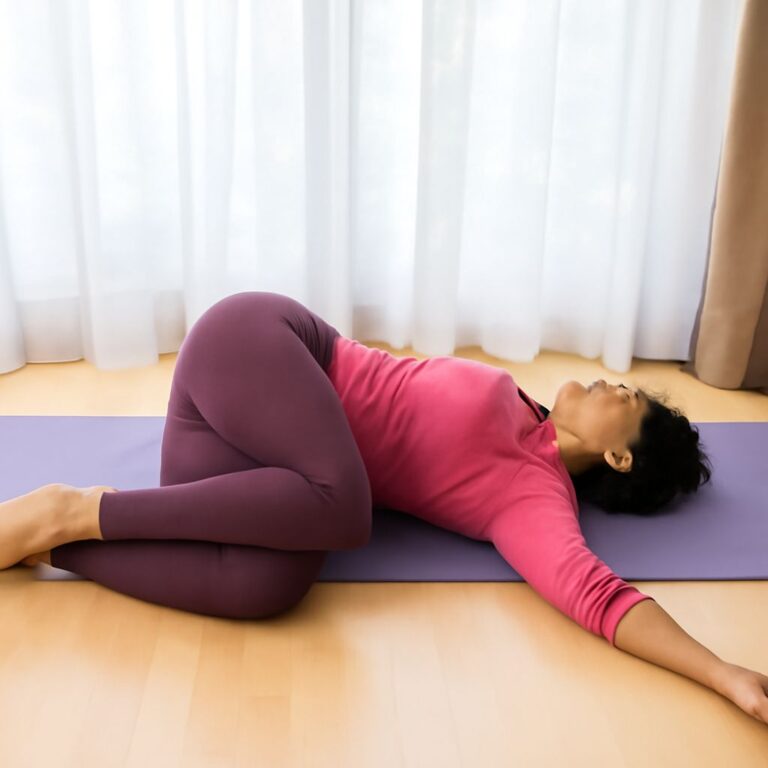
Yoga poses to relieve back pain through spinal rotation include Supine Twist. Lying on the back with one knee crossed over the body while both shoulders remain flat, this position creates a wringing effect on the paraspinal muscles and thoracolumbar fascia. Many people feel an immediate sense of relief in the lower back after 90 seconds on each side.
Legs-Up-The-Wall provides passive lumbar decompression and is gentle enough for most people regardless of the specific lower back condition. Lie on your back with legs resting up against the wall. The hip flexors lengthen passively, the lower back receives traction from gravity, and the nervous system quiets. Hold for five to ten minutes without any active effort.
Back care yoga works best as a consistent daily practice rather than an occasional treatment. Ten to fifteen minutes of the stretches above done every morning produces better cumulative outcomes than a 60-minute class once a week. The nervous system habituates to the movement patterns and the body’s response to trigger positions changes gradually over weeks of repetition.