Child’s Pose Yoga, Wheel Pose, and How to Use a Yoga Wheel and Block
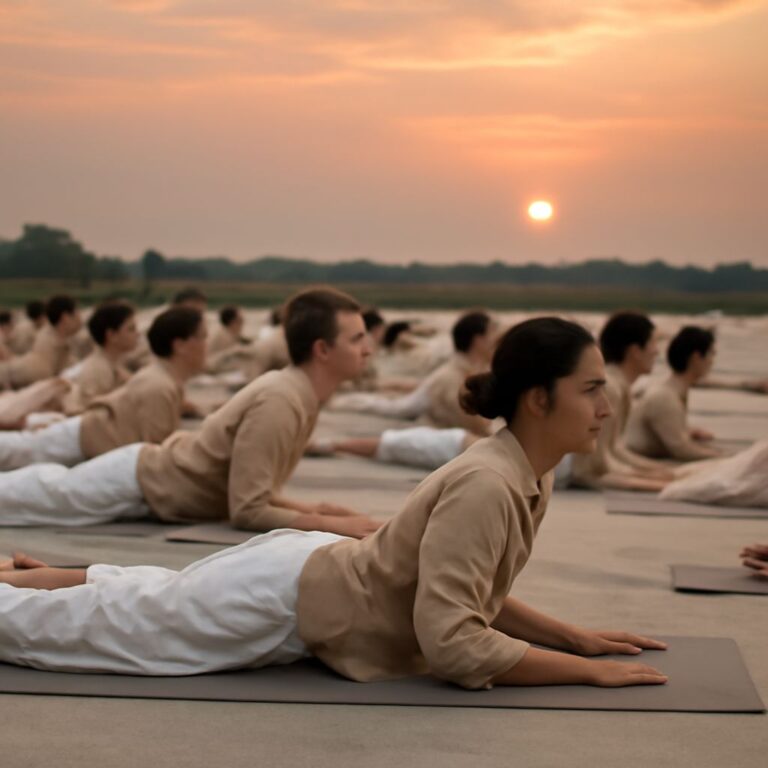
Child’s pose yoga is one of the most misunderstood postures in practice. Many students treat it as a rest position requiring no attention. In reality, proper child’s pose with arms extended and hips drawing back toward heels provides active hip flexion, a passive lower back stretch, and shoulder decompression. How you set up the pose determines how much benefit you get from it.
Wheel pose yoga, known as Urdhva Dhanurasana or Chakrasana, sits at the other end of the difficulty spectrum. It requires simultaneous shoulder flexion, wrist extension, hip extension, and spinal extension in a shape that the yoga wheel pose can help develop progressively. Knowing how to use a yoga wheel in preparation for full wheel, and how to use a yoga block for both poses, turns two props into a complete practice toolkit.
Child’s Pose Setup and Wheel Pose Preparation
For child’s pose yoga with maximum lower back benefit, set the knees wide, big toes touching, and walk the hands as far forward as possible. The hips sink back toward the heels. A blanket between the thighs and calves removes the compression in the knees if deep hip flexion is uncomfortable. Hold for two to three minutes and breathe into the back body.
Learning how to use a yoga block in child’s pose is simple. Place a block under the forehead to take pressure off the neck if the forehead doesn’t reach the floor comfortably. For tight hip practitioners, a block or rolled blanket placed between the sitting bones and heels allows the pelvis to rest without forcing hip flexion past its current comfortable range.
Wheel pose yoga preparation requires building shoulder flexibility, wrist strength, and spinal extension progressively. The yoga wheel pose sequence typically starts with Bridge Pose to develop hip extension and basic spinal loading. From there, Fish Pose and Camel Pose add more thoracic extension. Only then does a supported wheel with hands and feet on the floor become safe to attempt.
How to Use a Yoga Wheel for Wheel Pose and Backbends
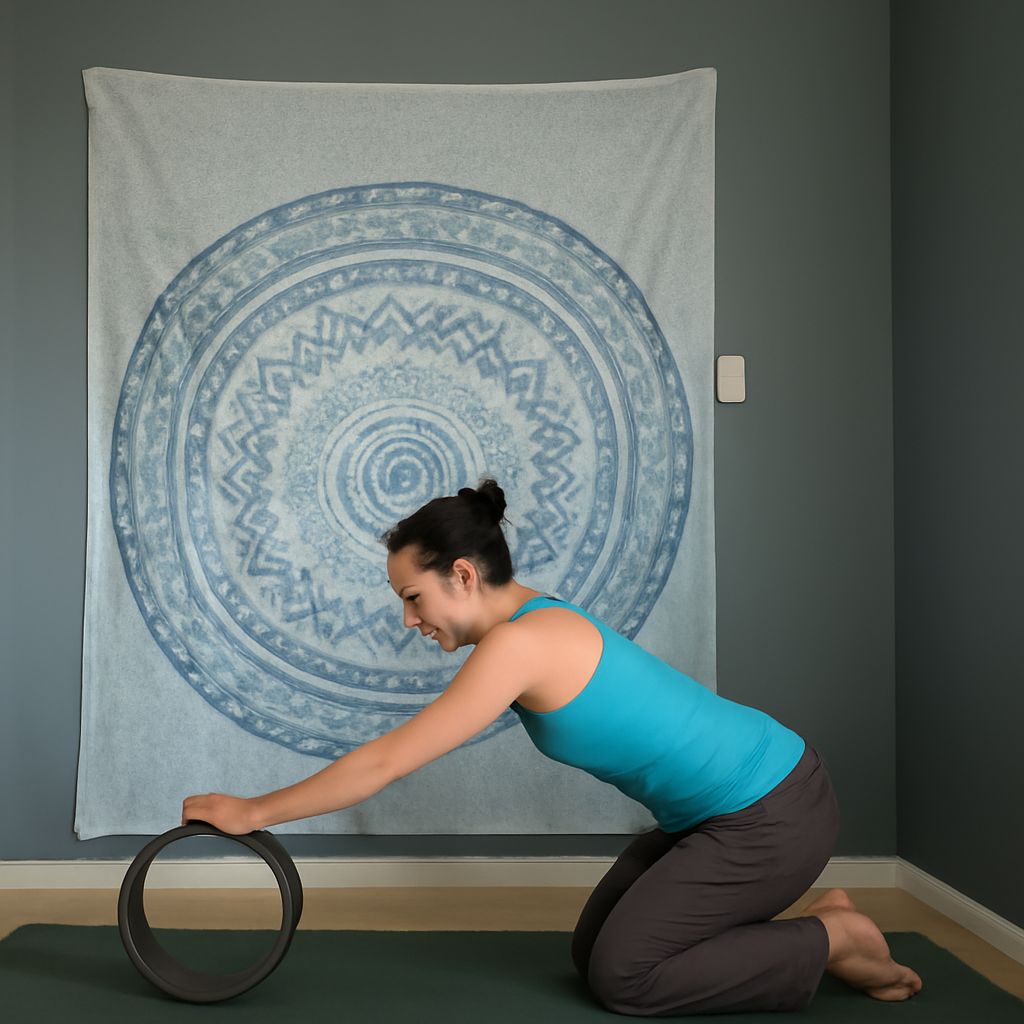
How to use a yoga wheel for wheel pose preparation: lie on your back with the yoga wheel placed at the mid-back. Press through the feet to lift the hips, extend the arms overhead, and reach back toward the wheel with the hands. This supported arch over the wheel builds the shoulder and thoracic extension needed for the unsupported pose without the full demand of a floor wheel.
For the full yoga wheel pose attempt, place hands and feet on the floor, hands shoulder-width with fingers pointing toward the feet. Press equally through hands and feet, lift the hips, and extend the elbows. Most beginners find the wrists or shoulders are the limiting factor rather than the lower back. The yoga wheel used in preparation specifically addresses the shoulder angle that limits the pose for most people.
How to use a yoga block for wheel pose: if the hands don’t reach the floor in a full wheel, blocks placed at the appropriate height for the hands lower the range of motion demand. This allows the shoulder position and spinal extension to be practiced correctly while the shoulder flexibility to reach the floor continues developing.
Child’s pose yoga is the natural counterpose after wheel pose or any backbend sequence. The hip flexion and forward fold counteract the hip extension and spinal extension of the backbend, restoring neutral alignment. Hold for at least one minute after any significant backbend work, longer if the lower back or shoulders feel significant fatigue.