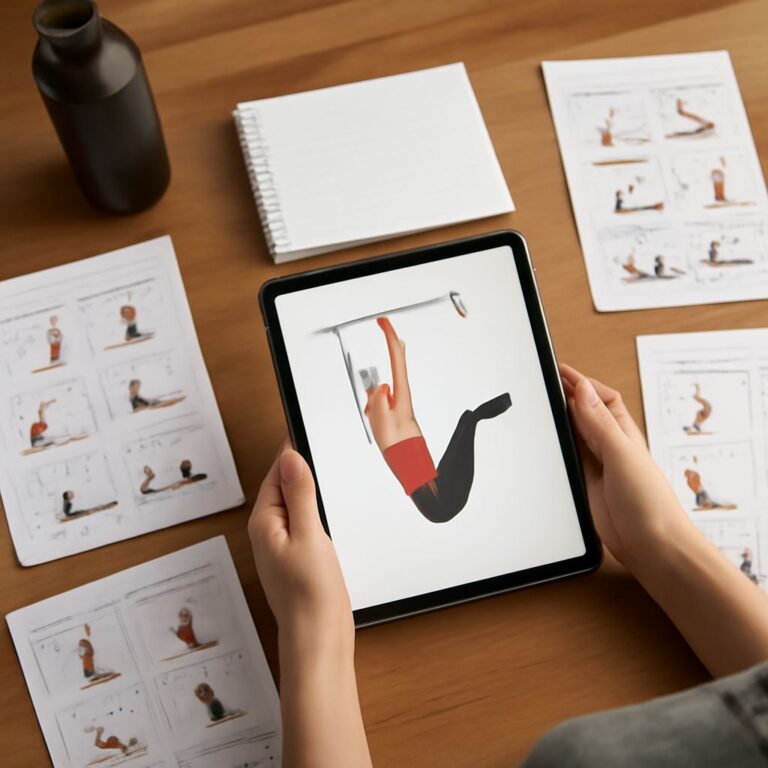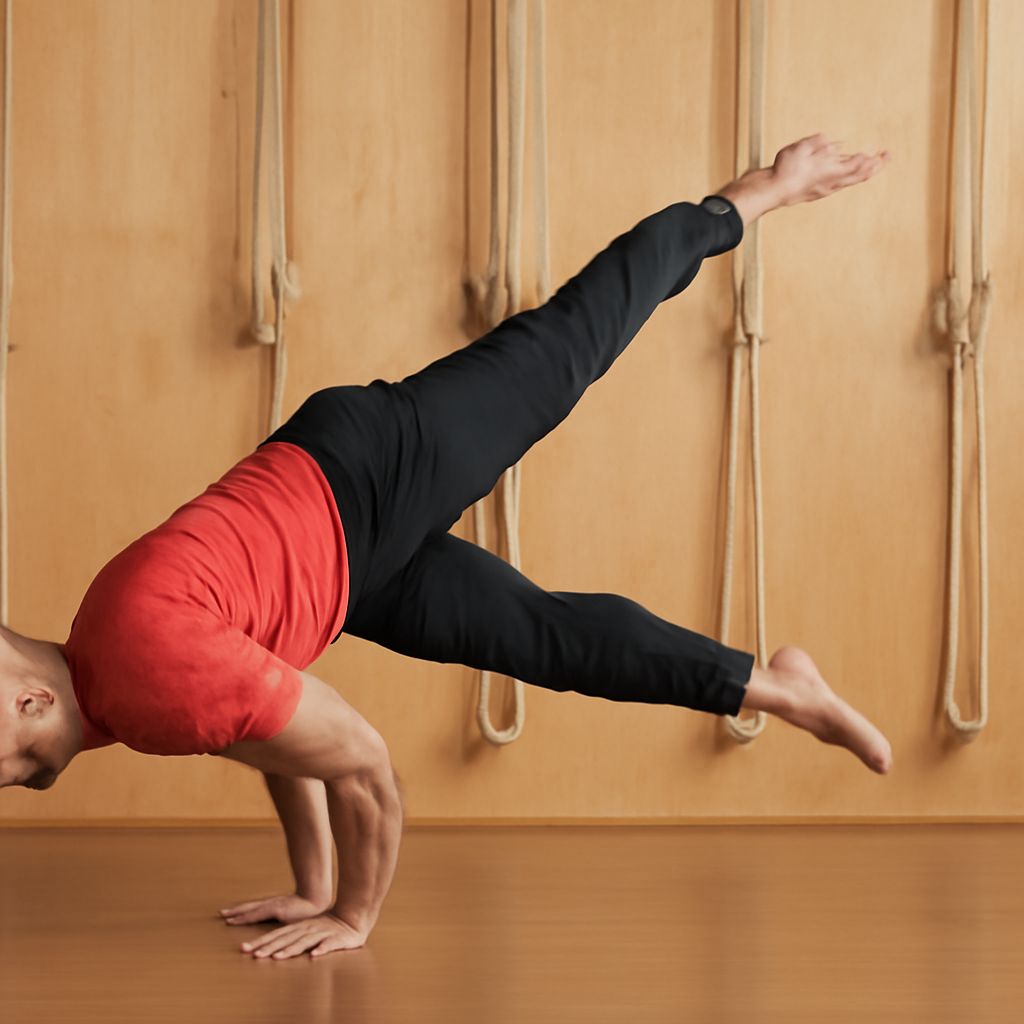
Crow pose yoga looks like a party trick until you understand the mechanics behind it. Most beginners assume you need exceptional upper body strength to hold a crow yoga pose — the kind of strength that requires months of dedicated training before you even attempt it. That’s not accurate. The yoga crow pose is primarily a balance problem, not a strength problem. Your arms work as shelf supports, not as presses. The weight of your legs rests on your triceps, not in your hands. What keeps you airborne is core engagement and forward weight shift, not muscular brute force. Once you internalize that shift, crow yoga becomes accessible faster than almost any other arm balance in the practice. The yoga crow sequence below breaks the pose into progressive steps anyone with consistent practice can work through.
The other persistent myth: falling is dangerous. Falls in crow yoga pose happen forward, not backward. You’re only a few inches off the ground. Landing happens on your feet or hands, rarely with impact. Place a folded blanket in front of your mat during early attempts, commit to the forward lean, and the fear becomes manageable.
What Makes Crow Yoga Pose Actually Work
In a crow pose yoga hold, three forces are in balance: your forward lean shifts your center of gravity over your hands, your core draws your knees toward your armpits to create a mechanical shelf, and your gaze stays slightly forward — not down — to keep your weight distributed correctly. Each of these elements depends on the others. Lean too little and your feet stay on the ground. Engage your core insufficiently and your hips drop, which makes the pose feel impossibly heavy. Look straight down and your weight shifts backward, defeating the setup.
Your wrists need adequate mobility and strength for crow yoga. Spend two to three minutes warming them up before attempting the pose — wrist circles, table-top pushes, and prayer stretch in both directions. Many practitioners who struggle with arm balances have restricted wrist extension from desk work or phone use. Addressing that restriction directly unlocks the pose more than any amount of additional shoulder training.
Arm placement matters more than most tutorials emphasize. Your hands should be shoulder-width apart, fingers spread wide to maximize the base of support. Your elbows bend slightly and tilt outward — not parallel — so your inner thighs can rest on the shelf of your outer upper arms. When your thighs are actually resting on your arms rather than floating near them, you have a stable platform. That physical contact is the foundation of the pose.
Common Crow Yoga Mistakes and How to Fix Them
The most frequent error in the yoga crow pose is insufficient forward lean. Practitioners get their knees on their arms, feel the strange sensation, and stop there without committing to the shift. Your hips need to travel forward until they’re over or slightly in front of your hands. Squeeze your knees toward your armpits as you do this — that action is what keeps the structure stable. Another common mistake is holding the breath. Crow requires you to breathe. Holding your breath creates tension that works against the fine motor control the balance demands. Inhale before you begin the shift, then breathe normally throughout. The third mistake is looking down. Fix your gaze on a point six to twelve inches in front of your fingertips and keep it there.
Building to Yoga Crow: A Progressive Training Plan
You don’t need to jump straight into the full expression of crow yoga. Build toward it through a progression that develops strength, mobility, and confidence simultaneously.
- Week 1–2: Wrist prep and squat practice. Do wrist warm-ups daily. Practice deep yogic squat (Malasana) for 60 seconds to open hips and develop the hip flexion range crow requires.
- Week 3–4: Arm shelf practice. From Malasana, place your hands on the floor and bring your knees to your outer upper arms. Rock forward slightly without lifting your feet. Get familiar with the sensation of weight shifting into your hands.
- Week 5–6: Tiptoe holds. From the shelf position, rise onto your tiptoes and increase the forward lean. Lift one foot at a time for a breath. Return. Alternate sides until lifting both feet feels like the next natural step.
- Week 7+: Full pose practice. Commit to the lean. Lift both feet, draw your heels toward your glutes, and breathe. Hold for one breath, then three, then five.
Key takeaways: Crow pose yoga is a balance skill, not a strength feat — forward lean and core engagement matter more than raw arm power. Consistent wrist preparation and a staged progression reduce your learning time significantly. Once you hold the yoga crow pose for five breaths, building to ten takes only a few additional sessions.