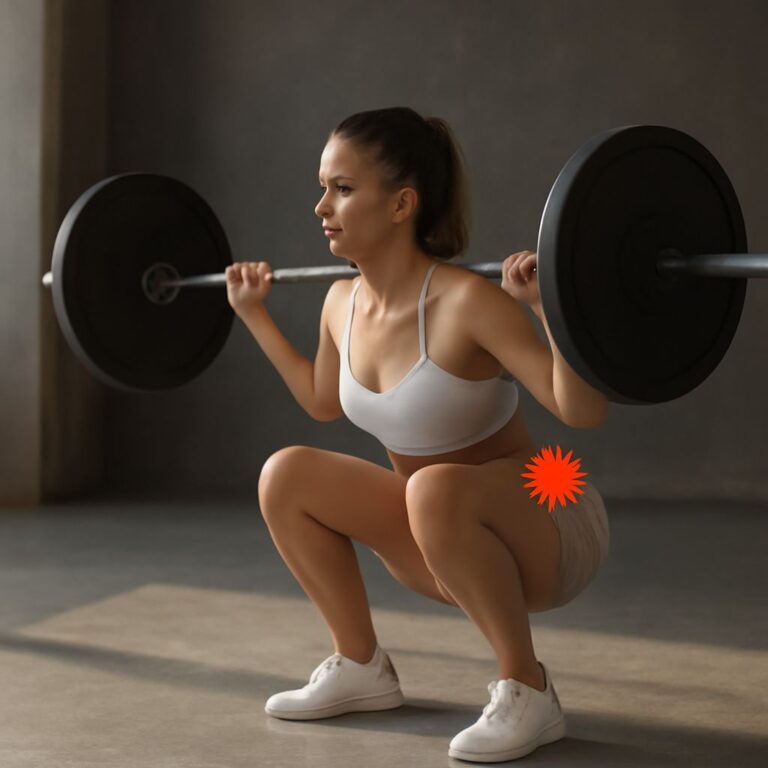
Wall squats, asian squats, ball squats, and squats machine options all train the lower body but in fundamentally different ways. Conflating them or assuming one covers all the bases leads to training gaps that show up as plateaus, movement restrictions, or injury patterns. Each variation has a distinct mechanical profile, target adaptation, and appropriate use case.
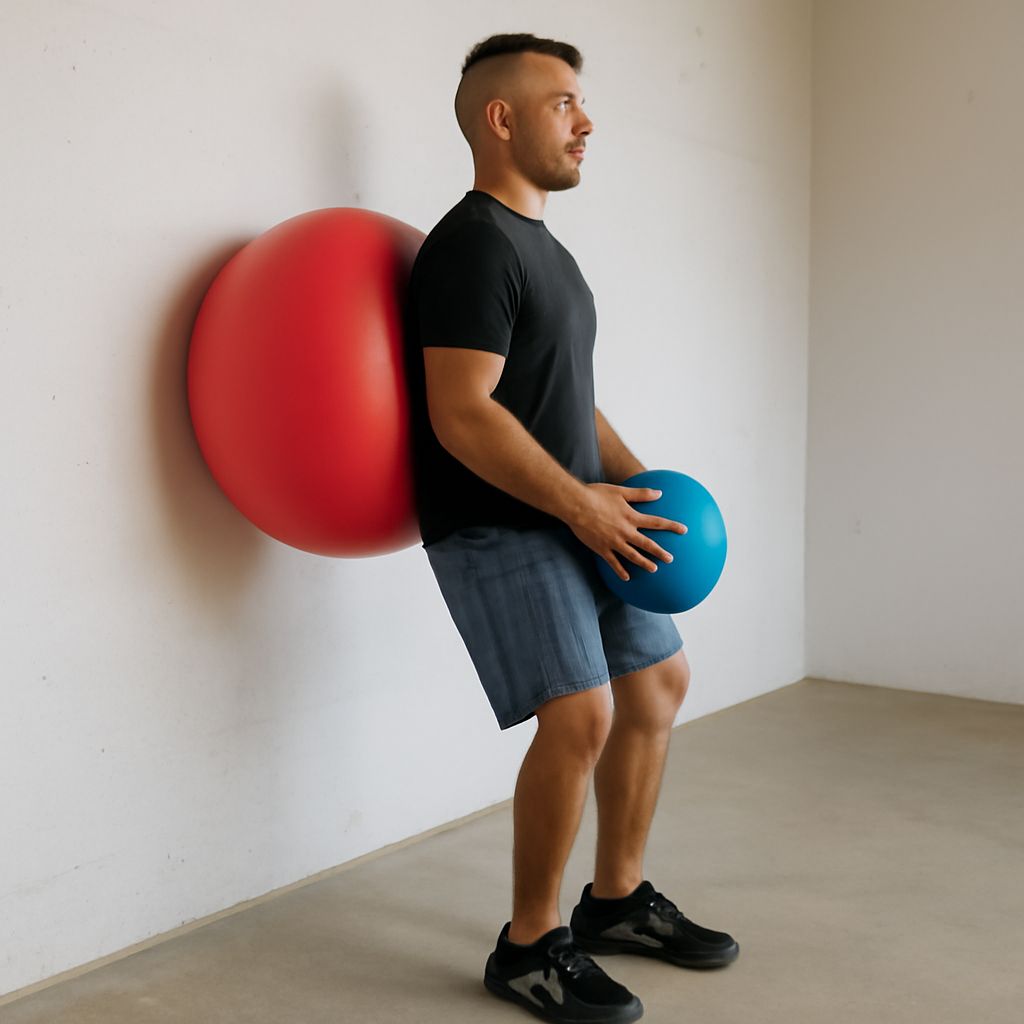
The wall squats with ball format, also called wall squat with stability ball, adds a balance and proprioception element to the classic wall sit. It’s not just a beginner modification. Physical therapists use it for knee rehabilitation because it controls the depth of the squat precisely while keeping the knee tracking correctly. That level of control is difficult to achieve with free-standing squat patterns until the movement is well established.
Breaking Down Each Squat Variation
Wall squats are performed with the back flat against a wall, feet placed out in front of the body, sliding down until the thighs are parallel to the floor. The isometric hold builds quadriceps endurance. There is no concentric or eccentric component during the hold itself. Adding a wall squats with ball between the back and the wall creates a slight instability that activates trunk stabilizers and reduces direct wall friction, making the movement feel more like a dynamic squat.
Asian squats refer to the deep resting squat common in many Asian countries, where the feet are flat, the knees track over the toes in deep flexion, and the body is in an upright balanced position near the floor. This requires substantial ankle dorsiflexion, hip external rotation, and thoracic mobility that most sedentary Western adults lack. Training the asian squat progressively improves all three simultaneously, which makes it a valuable mobility benchmark.
Ball squats, meaning squats with a stability ball against the wall or held at the chest, are used across rehabilitation, older adult fitness programs, and sports conditioning. Holding a ball at chest height during a squat adds anterior load that challenges core stability and encourages an upright torso. The wall ball version uses the same mechanics as wall squats but adds the ball as a tactile guide for back positioning.
Squats machine options include the hack squat machine, Smith machine squat, belt squat machine, and leg press. Each removes or reduces balance demands while allowing load management that differs from free-standing barbell squatting. The squats machine environment is useful for volume work when the goal is muscular fatigue without the neural demand of free-standing balance. It’s also valuable for beginners learning the squat movement pattern before adding balance complexity.
For programming, include wall squats or ball squats for isometric endurance and rehabilitation-focused work. Use asian squat practice as a daily mobility exercise, holding the bottom position for 30 to 60 seconds to build the flexibility required progressively. Include a squats machine variation on volume days when you want to accumulate reps without the balance fatigue of free weights. The combination covers endurance, mobility, and hypertrophy components that no single squat variation addresses alone.