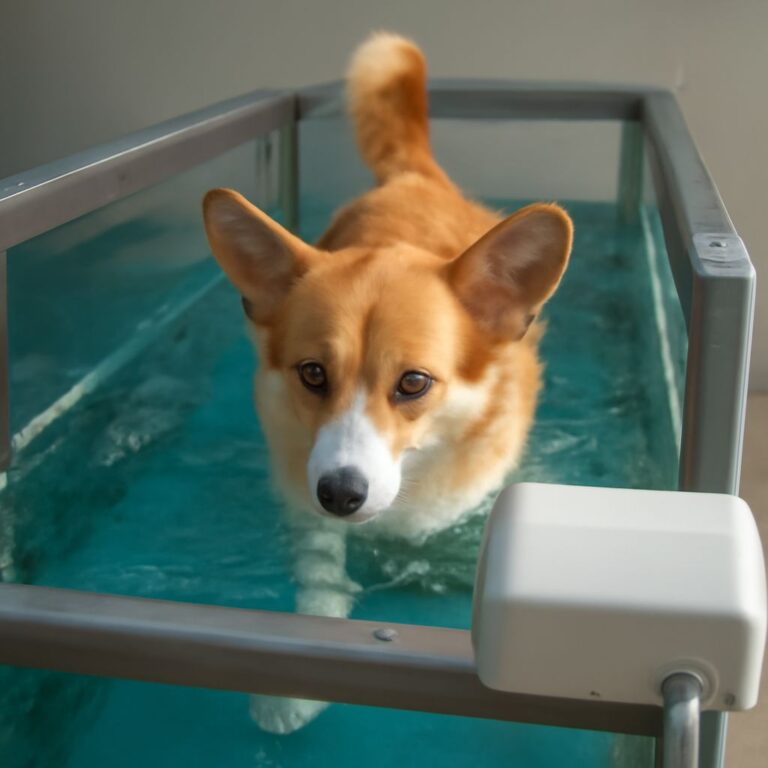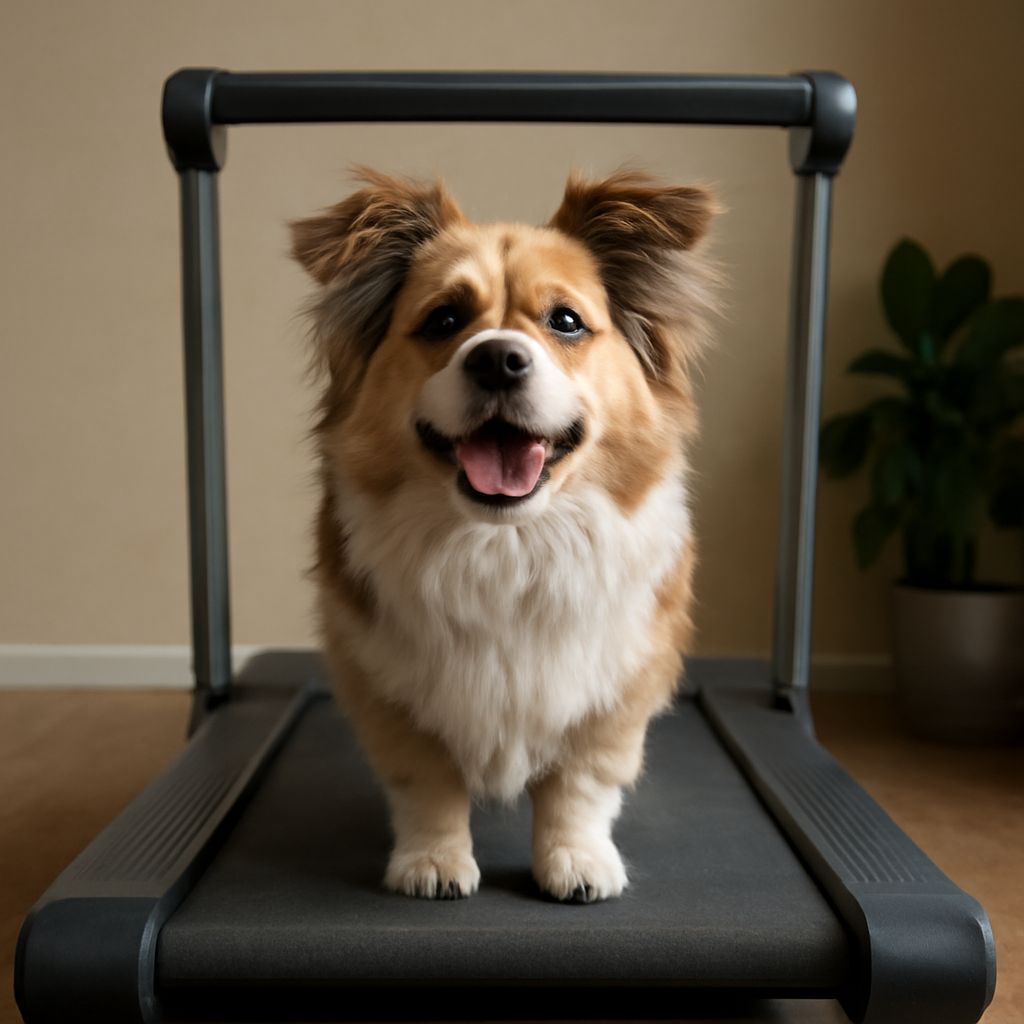
Owning a dog treadmill is not just for professional trainers and show-dog handlers. Working-breed owners, urban apartment dwellers with high-energy dogs, and people managing a dog’s post-surgical rehabilitation all use canine treadmills as practical everyday tools. A doggie treadmill built specifically for dogs differs from a human machine in one critical way: the side rails. Without those rails, a dog can step off the belt laterally and fall, particularly during early training when the dog has not yet learned to center itself. Human treadmills do not have them, which makes them genuinely unsafe for unsupervised canine use regardless of belt width.
Watching a dog on treadmill for the first time, most people are surprised by how quickly the animal adapts once the training is done correctly. Dogs respond to positive reinforcement on treadmills faster than most owners expect. Treat placement at nose level, directly in front of the face, keeps the dog moving forward without pulling the head down or to the side. Some owners also practice yoga dog poses alongside their pet during treadmill cool-downs to build a shared activity routine. If budget is a concern, a dog treadmill cheap option from brands like GoPet or PetRun can handle dogs up to 150 lbs for under $400, which is significantly less than the premium options but still purpose-built for dogs.
Buying Guide: What Specs Matter Most for Your Dog’s Size
Belt Dimensions, Motor Power, and Side Rails
Belt length is calculated from your dog’s body length plus at least six inches of clearance. A 24-inch-long dog needs a belt at least 30 inches long to walk comfortably without the rear paws hanging off the back. Belt width should accommodate the dog’s natural stance width plus two to three inches on each side. Measure your dog’s chest width while standing and add five to six inches for a comfortable working width.
Motor power in continuous horsepower determines whether the belt runs smoothly under load. Underpowered motors bog down as a dog speeds up, creating jerky belt movement that frightens most dogs immediately. For dogs under 50 lbs, 1.5 continuous horsepower is the minimum. For dogs between 50 and 100 lbs, use 2.0 or more. Above 100 lbs, look for 2.5 or higher. The continuous horsepower rating, not peak horsepower, is the relevant number because peak ratings measure burst capacity, not sustained running ability.
Side rails should be solid, smooth-edged, and tall enough to prevent the dog from stepping over them during a distracted moment. Rails padded with foam or wrapped in neoprene prevent bruising if the dog drifts laterally and contacts them during a session. Avoid rails with gaps or openings that could trap a paw.
Speed range is the third critical spec. Most dogs walk at 2–3 mph and trot at 4–5 mph. Some high-drive breeds can sustain 6–7 mph for short sprints. A machine with a lower limit of 0.5 mph allows very slow rehabilitation walking and careful early training. Machines that start at 1 mph or higher are too fast for initial treadmill introduction with most dogs.
Training Protocol: From First Sniff to Full Sessions
Introduce the machine while it is completely off. Place treats on the stationary belt and let the dog step on and off voluntarily. Repeat over two to three days until the dog steps on without hesitation and shows no stress signals when near the machine. Only then should you turn it on for the first time.
First powered session: belt at minimum speed, treats held at nose height, one to two minutes maximum. Keep the dog centered with the treat and end the session before the dog shows any fatigue or anxiety. Every session should end while the dog is still enjoying itself. Ending on a stressed note creates an aversion that can take weeks of reconditioning to resolve.
Increase session length by sixty seconds per session. Once the dog completes five minutes comfortably at walk speed, you can introduce brief trot speed intervals. Run thirty seconds of trotting speed followed by ninety seconds of walking speed for two to three intervals per session. Progress gradually to longer trot intervals over two to three weeks.
Pro tips recap: Always verify belt specs before buying rather than trusting the price tag. Train in two-minute increments and never rush the introduction phase. Keep a small towel nearby for wiping paws, as sweat buildup on paw pads reduces traction on the belt surface during longer sessions.