Hot Yoga Poses: Sequences, Gratitude Practice, and Trapeze Integration
Hot yoga poses are not simply room-temperature poses performed while sweating — the heat fundamentally changes how these shapes feel and what they demand. A grateful yoga perspective transforms the experience: rather than enduring the heat, practitioners who approach it with gratitude for their body’s capacity develop remarkable mental resilience. Yoga hand poses — mudras — serve as focal anchors that stabilize attention when heat makes concentration difficult.
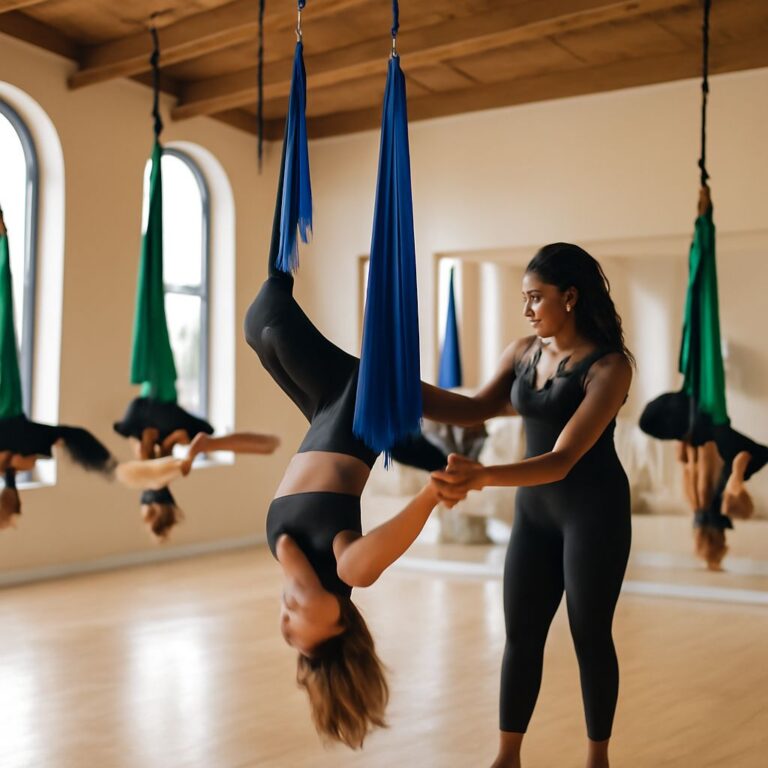
A hot yoga sequence builds systematically from standing to floor work, using the progressive heat accumulation in the room and the body to prepare tissues for deeper opening in later poses. Yoga trapeze poses, while typically practiced at room temperature, share the principle of using support creatively — in the trapeze, fabric assists; in hot yoga, heat assists.
Essential Hot Yoga Poses and Their Sequencing
A traditional Bikram sequence runs 26 postures and two breathing exercises in a specific order designed to compress and release every organ and gland in the body systematically. Modern hot vinyasa sequences use similar poses but arrange them with more flow. Both approaches begin with standing balance work that uses the heat-loosened joints and muscles most effectively.
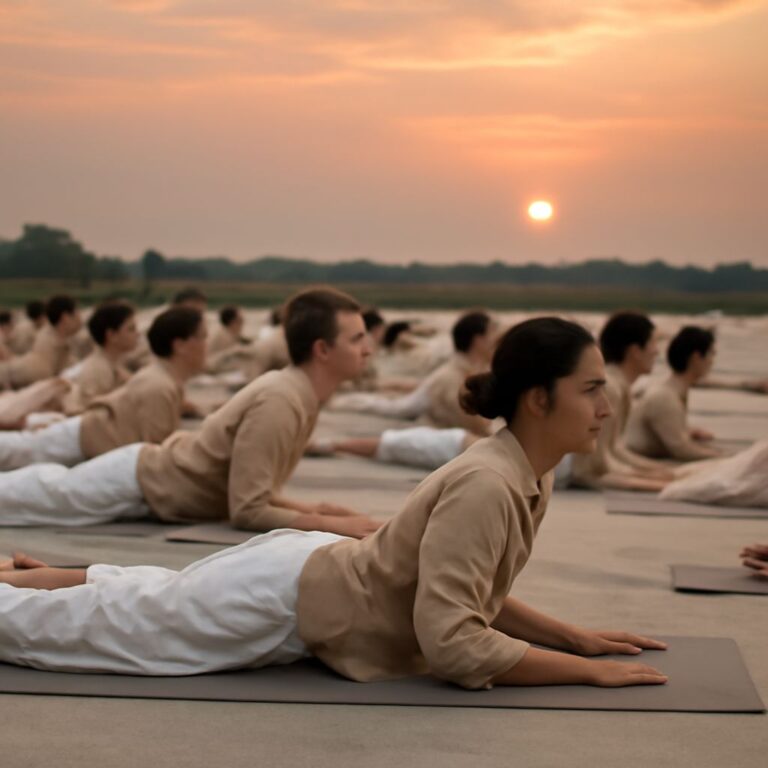
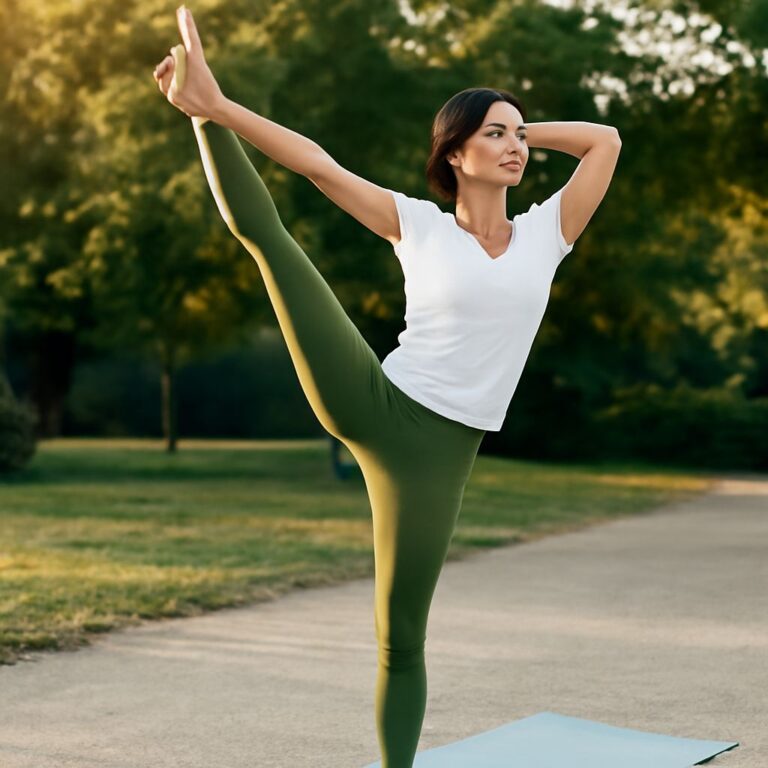
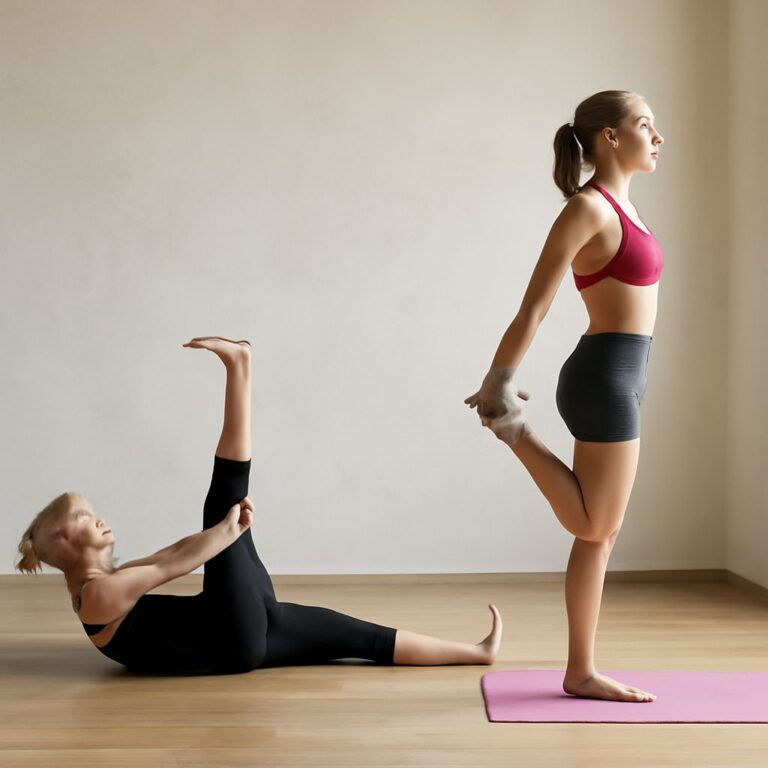
Key standing poses: half moon with hands to feet (spine lengthening), awkward pose (quad and hip flexor loading), eagle pose (hip and shoulder joint compression), standing head to knee (hamstring and hip flexor), and triangle (lateral body stretch). Floor series: locust, full locust, floor bow, fixed firm, half tortoise, camel, and rabbit — all working the spine through progressive degrees of extension and flexion.
Mudras and Gratitude Practice in Heated Classes
- Anjali mudra: Hands at heart center — grounds attention and signals intention at the start of each pose
- Gyan mudra: Index finger to thumb — supports concentration during balance poses when heat creates mental fog
- Apana mudra: Middle and ring fingers to thumb — associated with detoxification, appropriate for heated practice
- Prana mudra: Ring and little fingers to thumb — energizing; useful during the floor series when fatigue builds
Gratitude practice in heated yoga is simple and transformative: before each pose, briefly acknowledge what your body can do rather than lamenting what it cannot. This single shift — from deficit thinking to appreciative awareness — changes the entire quality of the session. Teachers who build gratitude language into hot yoga sequences report dramatically better class retention and practitioner satisfaction. Use the heat as your teacher, the poses as the curriculum, and gratitude as the learning posture.