Dumbbell Stiff Leg Deadlift: Complete Guide to Form and Posterior Chain Development
The dumbbell stiff leg deadlift is often confused with the Romanian deadlift, but they are distinct exercises with different target ranges. A dumbbell stiff legged deadlift keeps the knees nearly fully extended throughout the movement, maximizing hamstring stretch at the bottom position. A bent leg deadlift reduces that stretch intentionally to shift work toward the glutes and lower back.
The single leg deadlift barbell variation adds a balance challenge that recruits stabilizing muscles of the ankle, hip, and core simultaneously. A stiff leg barbell good morning places the load behind the neck rather than in front, creating a slightly different spinal loading pattern — related in purpose but distinct in execution.
Proper Form for the Dumbbell Stiff Leg Deadlift
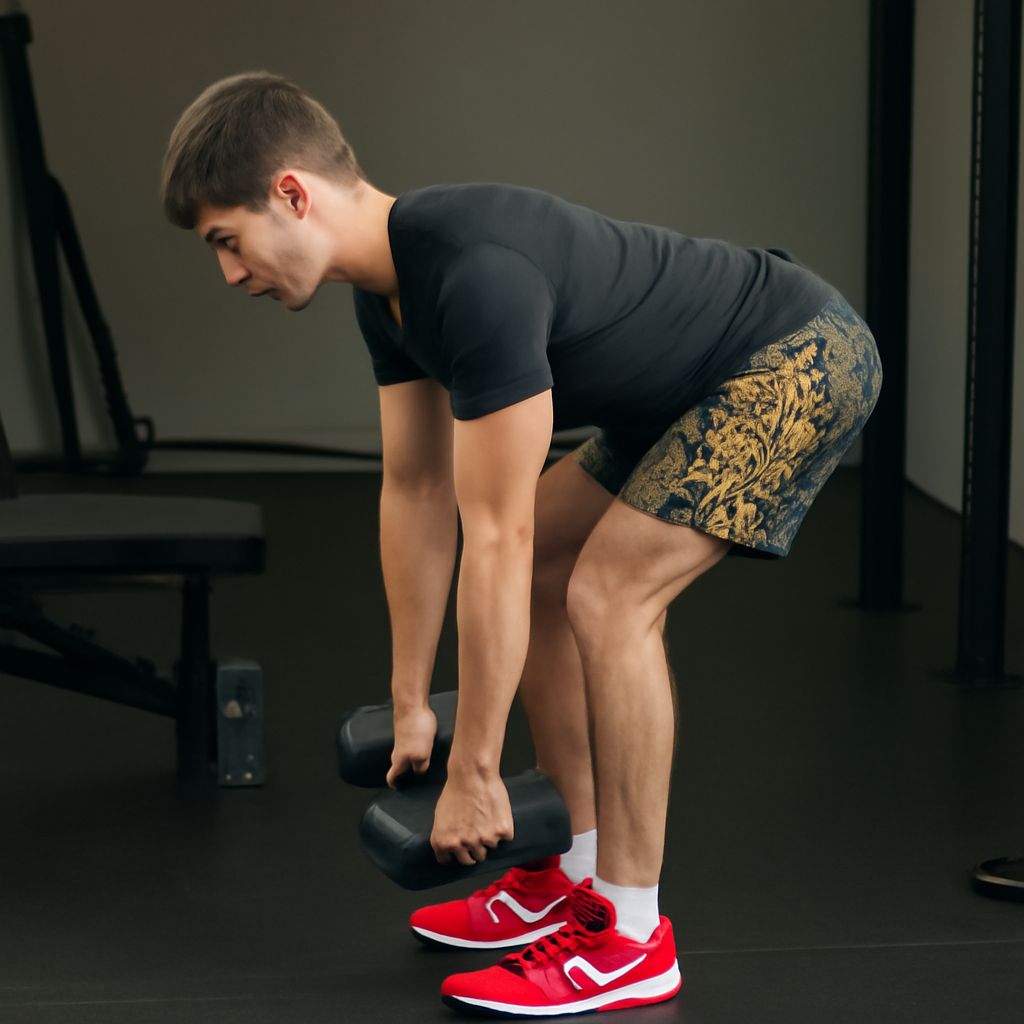
Stand with feet hip-width apart, holding a dumbbell in each hand in front of your thighs. Maintain a slight knee bend throughout — stiff leg means minimal knee flexion, not locked knees. Hinge at the hips while keeping the back flat and the core braced. Lower the dumbbells along the legs until you feel a strong hamstring stretch, typically when the weights reach mid-shin level.
Drive the hips forward to return to standing, squeezing the glutes at the top without hyperextending the lumbar spine. The movement should feel like a hinge, not a squat. Common errors include rounding the upper back, allowing the weights to drift away from the legs, and bending the knees too much during descent.
Single Leg Variation for Balance and Symmetry
The single leg dumbbell deadlift is invaluable for identifying and correcting side-to-side imbalances. Hold one dumbbell in the hand opposite the working leg. Hinge forward while the non-working leg extends behind you, maintaining a neutral spine throughout. Lower until your torso is approximately parallel to the floor, then drive through the standing heel to return upright. Three sets of eight per side, twice weekly, addresses bilateral strength discrepancies effectively.
Programming Recommendations
- Use dumbbell stiff leg deadlifts as an accessory movement after primary hip hinges like barbell Romanian deadlifts or trap bar deadlifts
- Program 3 to 4 sets of 8 to 15 reps — posterior chain work responds well to moderate rep ranges
- Prioritize the stretch at the bottom; slow eccentrics of 3 to 4 seconds increase hypertrophy stimulus
- Increase weight only when you can maintain perfect form through the full range of motion
The stiff leg barbell good morning complements dumbbell work by adding spinal erector loading in a similar hinge pattern. Alternating between the two movements across training cycles provides variety while targeting the same posterior chain musculature from complementary angles.