Pilates Socks: Grip, Style, and What Actually Works on the Reformer
Most people assume any pair of socks will do for a Pilates class. That assumption lands you sliding across a reformer carriage or slipping on a mat the moment you try a standing split. Pilates socks are engineered differently from regular athletic socks. They have rubber or silicone grips on the sole that keep your feet planted through every bridge, plank, and footwork series. Skip them and you are fighting your equipment instead of your muscles.
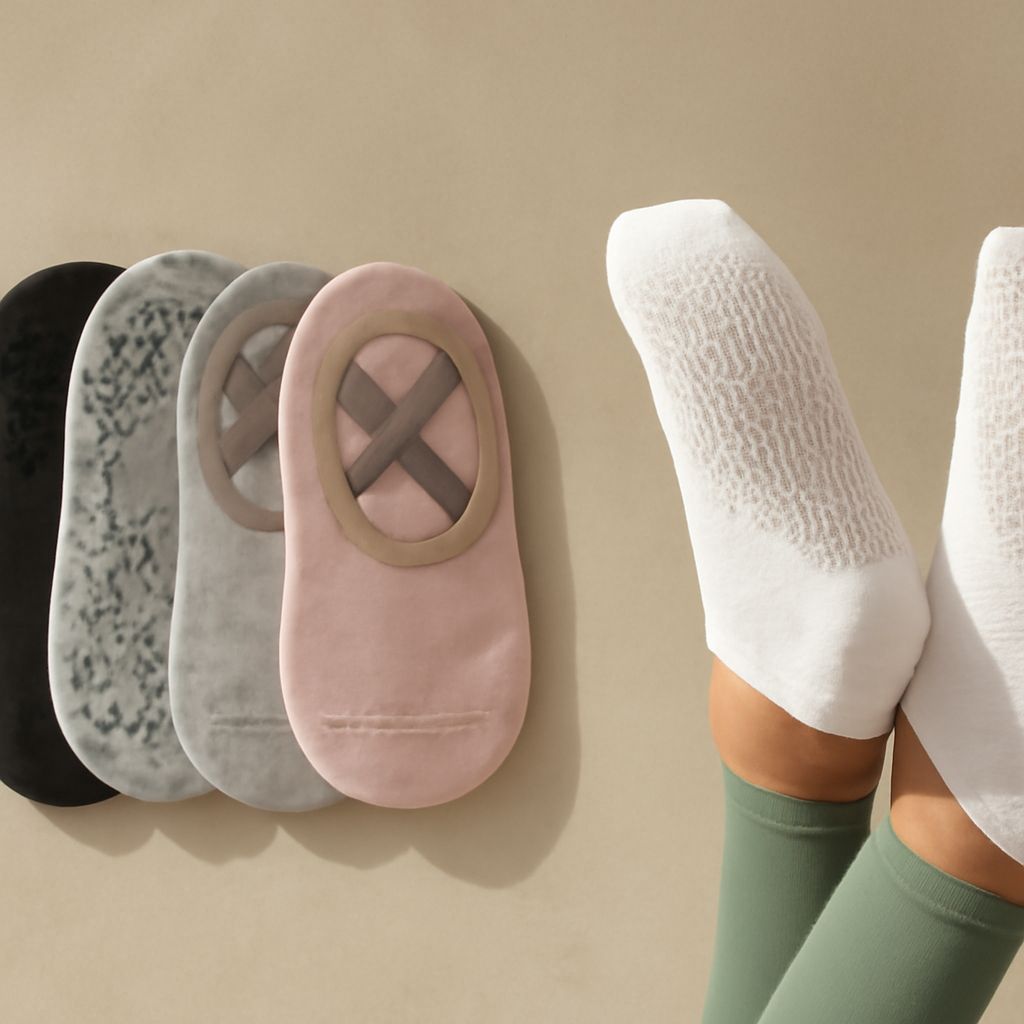
The confusion often comes from lumping all specialty socks together. Pilates grip socks use strategic grip placement under the ball of the foot and heel, while yoga toe socks separate each toe to improve proprioception and spread weight evenly. Pilates x socks are a specific brand known for their full-foot silicone grid pattern. And then there are crochet yoga socks, which are open-weave and decorative but offer minimal grip for reformer work. Knowing the difference saves you money and frustration.
How Grip Placement Changes Your Pilates Practice
Reading the Sole Pattern Before You Buy
Flip any pair of grip socks over and study the pattern. A dot grid across the entire sole works well on reformer foot bars and mat surfaces alike. A toe-only grip suits standing Pilates on wood floors but slides when your heel loads the carriage. Look for silicone dots that are at least 2 mm thick and spaced no more than 5 mm apart. Thinner or more spread-out grips compress flat under body weight and lose traction fast.
If you take reformer classes, choose a sock with grip across the full arch. Your heel contacts the foot bar during supine footwork, and your arch contacts the carriage during kneeling work. Partial grip leaves those zones exposed. For mat-only Pilates, a lighter grip pattern keeps you comfortable without the extra rubber bulk pressing into the mat.
Toe socks add another layer. When your toes can spread independently, your foot activates intrinsic muscles more effectively. That matters in standing balance work, where a clenched toe position shortens your base of support. Toe-separated designs also reduce moisture buildup between toes during a sweaty session, which keeps the grip surface drier and stickier.
Thickness matters too. A thin sock lets you feel the bar or mat clearly, which is useful for precise footwork feedback. A thicker cushioned sole softens repetitive contact with metal bars but muffles tactile cues. Most experienced practitioners prefer a low-profile sole around 2–3 mm thick for reformer work and a slightly thicker option for jump board classes.
Caring for Grip Socks So They Last More Than Ten Washes
The number one reason pilates-specific socks fail early is heat damage to the grip material. Silicone and rubber grips degrade in a dryer. Turn them inside out, wash in cold water on a gentle cycle, and air dry flat. That single habit extends the useful life of your grip from ten washes to sixty or more.
Hand-knit or crocheted socks with grip yarn need even gentler treatment. The open-weave structure of handmade yoga socks can stretch out of shape in a machine. Hand wash them in cool water with a small amount of wool wash, press out excess water in a towel, and reshape them flat to dry. They take longer to dry than standard socks, so keep two pairs in rotation.
Store grip socks laid flat or loosely rolled, never balled up. Balling them pushes the grip dots against each other repeatedly, which can cause silicone to transfer or peel. A small mesh bag in your gym bag keeps them flat and separate from rougher items that might snag the toe separators on toe-style designs.
Replace them when you notice grip dots flattening, peeling, or leaving residue on equipment. Worn grip socks are a safety issue, not just a wear-and-tear annoyance. They slide under load and can cause foot or ankle injury during dynamic reformer movements. Most quality pairs last three to six months with three-times-weekly use and proper care.
Pro tips recap: Match your grip pattern to your equipment, not just your budget. Air dry every time. Buy two pairs so you always have a dry set ready. And if you are trying handmade crochet-style socks, save them for mat flows rather than reformer sessions where full-sole grip is non-negotiable.