Yoga Poses for 2: Partner and Group Flows That Build Strength Together
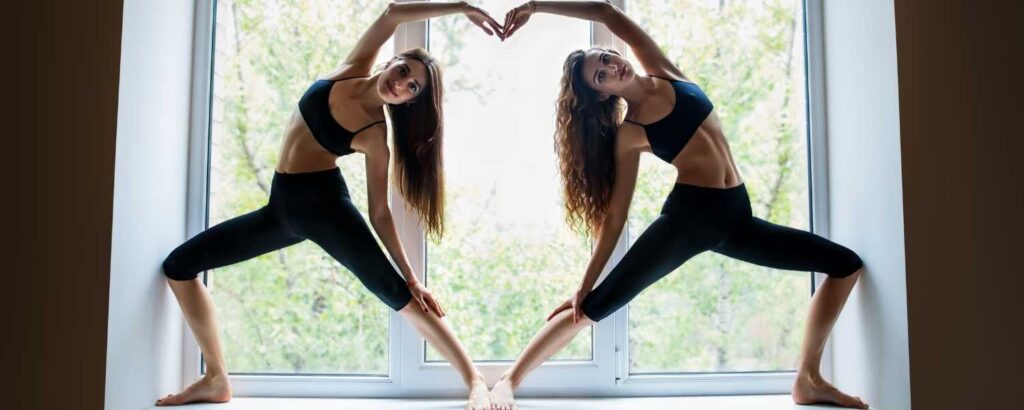
People assume yoga poses for 2 are just photo-worthy acrobatics for experienced practitioners. Most partner poses are actually simpler than their solo counterparts because you use your partner’s weight as counterbalance. A double forward fold, where two people sit facing each other and pull gently on each other’s wrists, goes deeper than either person could reach alone. That counterbalance principle applies across seated twists, back-to-back breathing, and assisted standing balance work. You do not need advanced flexibility to start.
The range extends further than most people realize. Yoga poses for two people include everything from simple assisted stretches to synchronized flow sequences. Yoga poses for 3 add a third body to create triangular support structures that are stable and accessible even for beginners. Not all poses need to be athletic. Some of the most effective partner yoga targets yoga poses for digestion, using gentle assisted twists and forward bends to stimulate the abdominal organs. Others focus specifically on yoga poses for legs, using a partner’s resistance to deepen hamstring and hip flexor stretches beyond what a solo practice allows.
Partner Poses That Work for Any Fitness Level
Start standing back to back with your feet hip-width apart and your spines touching from tailbone to shoulders. Both partners inhale to lengthen. On the exhale, one partner twists right while the other twists left, placing hands on each other’s knees for gentle rotation. Hold five breaths, then switch directions. This back-to-back twist decompresses the lumbar spine and coordinates breathing between partners in a way that solo twisting cannot replicate.
Seated double forward fold requires both partners to sit facing each other with legs extended, feet touching. Reach for each other’s wrists. Partner A leans back slowly while Partner B folds forward, allowing their hamstrings to release with the assistance of a real counterweight rather than a strap. Hold ninety seconds, then switch roles. Research from yoga therapy programs shows assisted forward folds produce 15–20% greater hamstring lengthening compared to unassisted versions over a six-week period.
For a trio variation, three people sit in a triangle formation facing outward, knees bent and feet touching in the center. All three lean back simultaneously until they find the balance point where their combined weight creates a stable wheel-spoke structure. From there, each person can extend their arms overhead or lean into side stretches. The three-way tension allows movements that two-person or solo work cannot balance.
Partner boat pose targets the core and legs simultaneously. Both partners sit facing each other, knees bent, feet touching. Reach for each other’s wrists. Slowly extend legs up until shins are parallel to the floor, pressing feet together for resistance. Hold for five to eight breaths. Progress to straight-leg boat pose once you can hold the bent version without gripping or shaking.
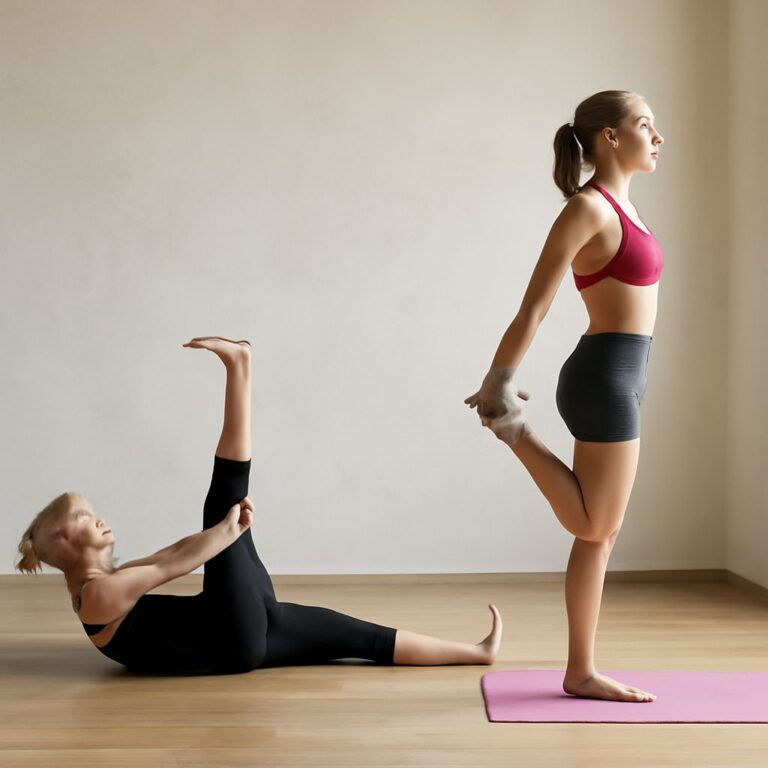
For leg work specifically, lying hamstring stretches with a partner are more effective than a yoga strap. Lie on your back, lift one leg, and have your partner stand at your side to gently push the heel toward the ceiling using steady, progressive pressure. Your partner controls the depth. They maintain the stretch at the point of resistance for thirty seconds, then ease off and allow two seconds of passive release before applying pressure again. This contract-relax method produces faster flexibility gains than static holds alone.
Partner poses for digestive support use twisting and compression. Seated spinal twist with a partner pressing gently on your upper back deepens the rotation of the thoracic spine, which massages the transverse colon. Forward-fold variations that compress the belly against the thighs stimulate the ascending and descending colon. These are not medical treatments, but practitioners who include them in a consistent routine often report reduced bloating and improved post-meal comfort.
Safety in partner yoga comes down to communication and consent. Agree on a verbal signal before every assisted stretch, something simple like “more” or “hold.” Never apply force to a joint. Work with gravity and your partner’s own muscle release, not against it. Check in every thirty to forty-five seconds during holds to ensure neither partner is holding their breath or clenching to manage discomfort.