Bridge Pose Yoga: Master Setu Bandha and Build a Stronger Spine
Many practitioners treat bridge pose yoga as a simple warm-up rather than a serious posture deserving careful attention. That underestimation leads to missed benefits and common alignment errors. The cat cow yoga pose sequence is often paired with bridge as a spinal preparation, but the two moves serve distinct purposes that are worth understanding separately. Practicing cat cow yoga loosens the thoracic spine and resets neutral pelvis — laying the groundwork for the fuller extension that bridge demands. The cat cow pose yoga movement also activates the multifidus and erector muscles in a controlled, rhythmic way before they bear load in bridge. Crane pose yoga, a demanding arm balance, shares several preparatory demands with bridge in terms of shoulder stability and core engagement, making bridge a useful foundation for practitioners working toward more advanced postures.
When performed with full attention to alignment, bridge is among the most productive poses in any sequence — for beginners building foundational strength and for advanced practitioners refining thoracic extension. Here is what correct technique actually requires.
Alignment and Technique for Bridge Pose
Foot Placement and Spinal Sequencing
Foot placement sets the entire foundation for bridge pose. Heels should be positioned directly under the knees when the shins are vertical — not so far back that the knee extends past the ankle, and not so close that the hip flexors cannot release fully. Many practitioners place the feet too wide, which causes the knees to splay and reduces the internal rotation needed to fully activate the glutes.
Rising into the pose requires a specific spinal sequence: press through the feet, tilt the pelvis posteriorly, and peel the spine off the floor one vertebra at a time from tailbone to thoracic spine. The common error is lifting the hips before the pelvis is properly tilted, which compresses the lumbar spine rather than creating the uniform curve that healthy bridge demands. Taking five to eight breaths to rise slowly — rather than pressing up in one movement — trains the sequential activation pattern the pose is designed to build.
At the top of the pose, the focus shifts to maintaining active engagement rather than resting. Press the feet firmly into the floor, draw the inner thighs toward each other without letting the knees splay, and keep the chin slightly lifted to preserve space in the cervical spine. Many teachers clasp the hands beneath the hips to encourage thoracic opening, but this is an option rather than a requirement.
Integrating Bridge, Cat-Cow, and Crane Into a Cohesive Practice
Cat-cow spinal waves belong at the beginning of any session that includes bridge or advanced back-bending. Four to six slow rounds — inhaling into cow, exhaling into cat — warm the facet joints, redistribute synovial fluid, and signal the nervous system that extension work is coming. Skipping this preparation and moving directly into bridge shortens the available range of motion and increases the risk of acute muscular strain.
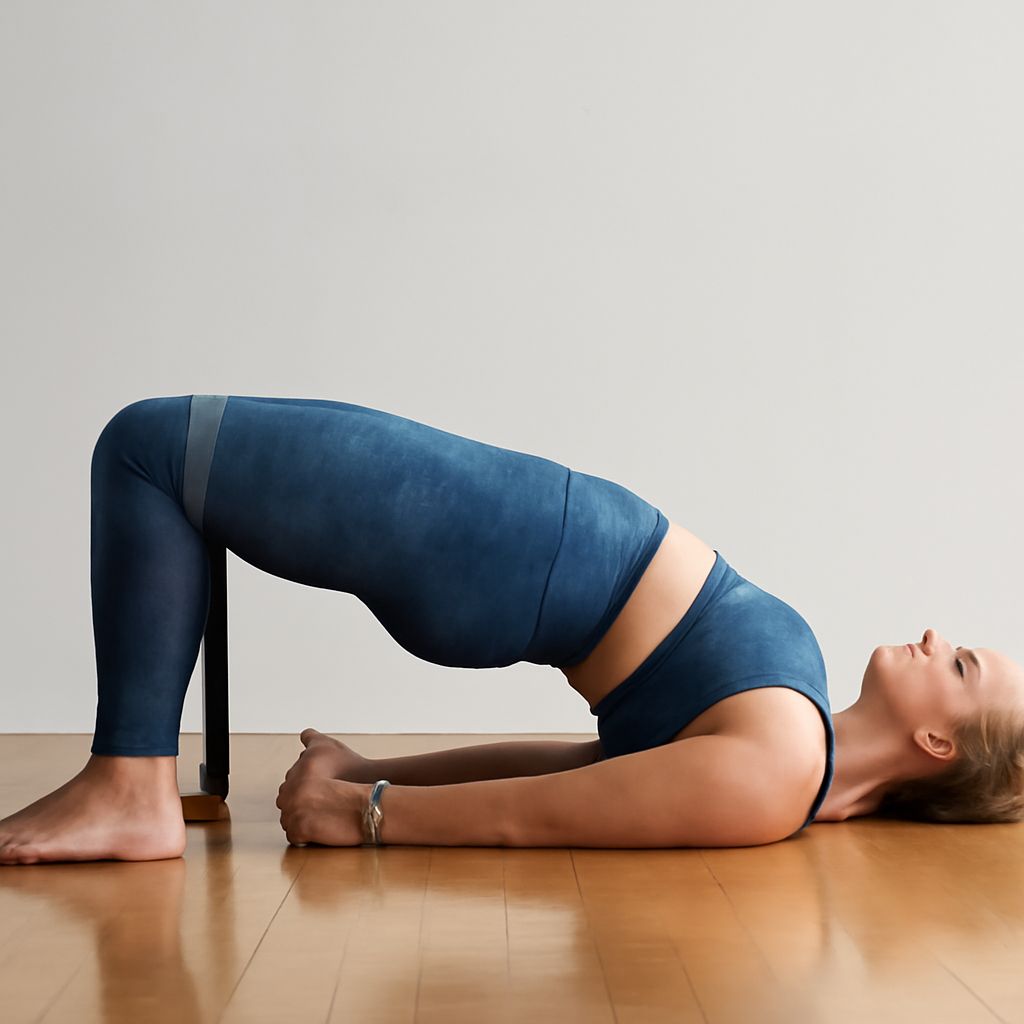
Bridge variations extend the pose’s value considerably. Single-leg bridge challenges pelvic stability and isolates each side of the glute complex independently. Bridge with a block between the thighs cues adductor activation and corrects the tendency to over-recruit the lower back. Supported bridge using a block under the sacrum shifts the pose into a passive restorative, useful for recovery sessions or for practitioners managing lower back sensitivity.
For students targeting crane pose, bridge is a logical preparatory step because it opens the anterior shoulder line and activates the serratus anterior — the same muscle responsible for the scapular protraction that crane requires. Including bridge in the sequence leading toward crane builds the strength and openness simultaneously rather than addressing them as separate problems.
Safety recap: Avoid forceful lumping of the pelvis into bridge — use sequential spinal articulation to protect the lumbar region. Those with neck sensitivities should avoid clasping the hands under the body until thoracic mobility is adequate. Always warm the spine with cat-cow or similar movements before practicing bridge.