Bed Yoga: Sleep Yoga Poses and a Night Yoga Routine That Works
Bed yoga gets dismissed as too easy to be real yoga. That misses the point. The goal of doing yoga poses for sleep is not to challenge the body. It is to down-regulate the nervous system before sleep, shifting out of the sympathetic fight-or-flight state and into the parasympathetic rest-and-digest response. That transition is exactly what most people need after a day of screens, deadlines, and sensory overload.
Sleep yoga is also practical in a way that studio practice isn’t. You don’t need to change clothes, drive somewhere, or carve out a 60-minute window. A yoga for better sleep sequence can take ten to fifteen minutes performed directly in bed before you turn out the light. Night yoga routine adherence is far higher than morning practice for most people precisely because the barrier to entry is so low.
Effective Yoga Poses for Sleep
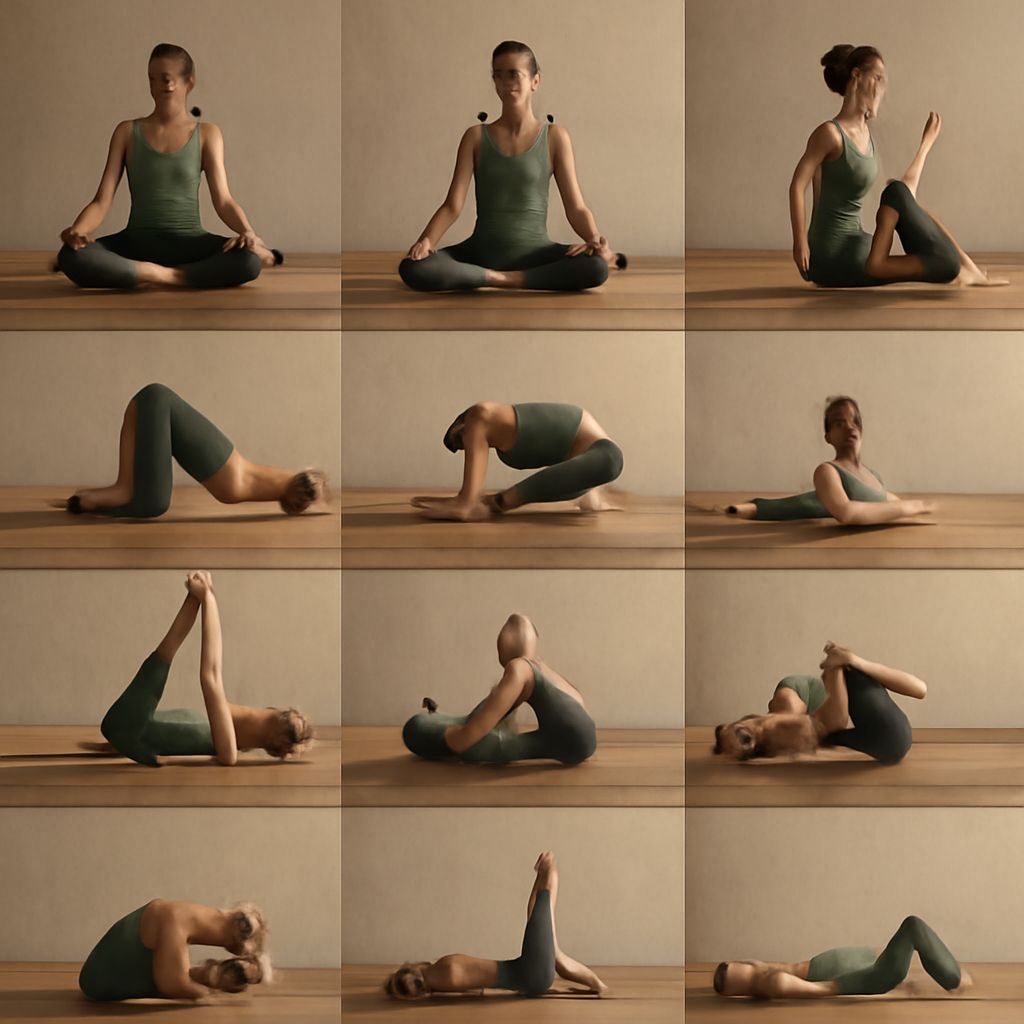
Child’s Pose performed in bed with your knees wide and torso folded forward is one of the best openers for this type of practice. The forward fold activates the body’s rest response. Hold it for two to three minutes while breathing slowly. If your bed is too soft to get a good fold, place a firm pillow under your chest for support.
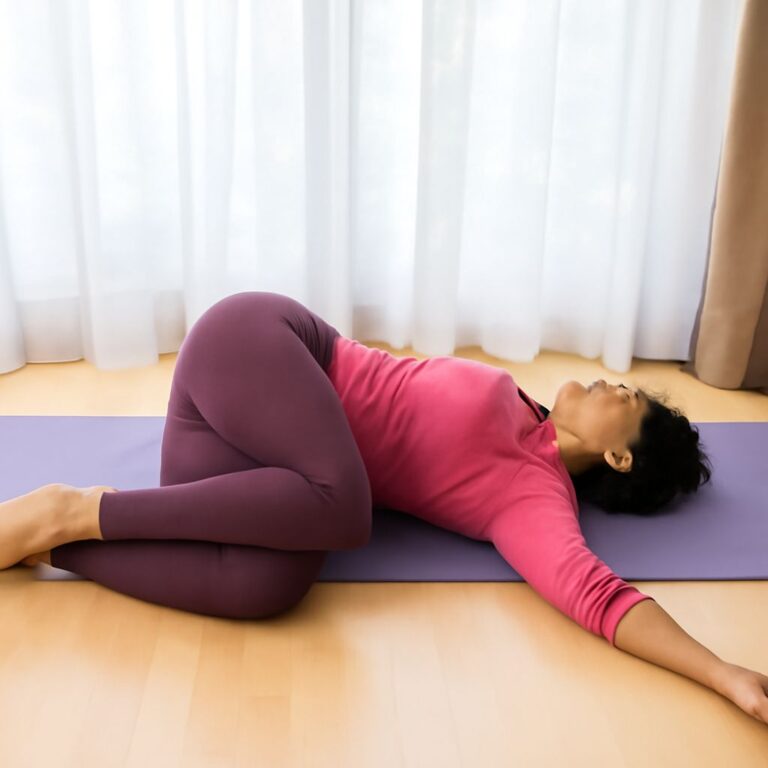
Supine spinal twist releases the lower back and hips accumulated from sitting. Lie on your back, draw one knee to your chest, and let it fall across the body while you extend both arms wide. Hold for ninety seconds on each side. Let gravity do the work rather than forcing the knee lower.
Legs-Up-The-Wall is one of the most powerful yoga poses for sleep available. In bed, use the headboard or wall at the head of the bed. Lie on your back and rest your legs up vertically for three to five minutes. This passive inversion reverses venous return, reduces swelling in the legs and feet, and has a measurable calming effect on the cardiovascular system.
Building a Consistent Night Yoga Routine
Sequence matters. Start with the most active poses, like seated forward folds or gentle twists, and progress toward increasingly passive positions. End with Savasana or simply roll onto your side for sleep. Moving from active to passive mirrors the natural descent into sleep and reinforces the body’s transition.
Add a breathing component to deepen the effect. Four-count inhale, six to eight count exhale activates the vagal brake and measurably lowers heart rate within minutes. You can layer this breathing pattern onto any of the poses above without changing the physical practice at all.
Dim screens and overhead lights at least thirty minutes before your yoga for better sleep practice begins. The wind-down environment matters as much as the practice itself. Practicing bed yoga under harsh light with notifications buzzing undercuts the physiological signal you are trying to send.
Consistency over complexity. A simple five-pose night yoga routine done every night for a month produces better sleep outcomes than an elaborate sequence practiced sporadically. Pick poses you can remember without guidance and that feel genuinely good in your body. Stick with them for at least three weeks before evaluating results.
If sleep onset remains difficult after several weeks of consistent practice, look at other factors: room temperature, mattress firmness, alcohol intake, and screen exposure. Bed yoga is a powerful tool. It works best as part of a broader sleep hygiene approach rather than as a standalone fix for serious insomnia.