Aerial Yoga Hammock Guide: Swings, Silks, and Equipment Explained
The aerial yoga hammock, yoga hammock, and aerial yoga swing are often used interchangeably in product listings and class descriptions. They refer to similar but distinct pieces of aerial yoga equipment. Understanding the differences helps you choose correctly for your goals and avoids the frustration of purchasing fabric or hardware that doesn’t suit your intended practice.
Yoga silks are circus-derived aerial fabric used for vertical climbs, wraps, and drops. They are distinct from hammocks and swings in length, stretch, and intended application. A practitioner expecting a yoga hammock experience who purchases silk fabric will find the practice entirely different. The reverse is equally true. Clarifying terminology is the first step.
Types of Aerial Yoga Equipment and Their Differences
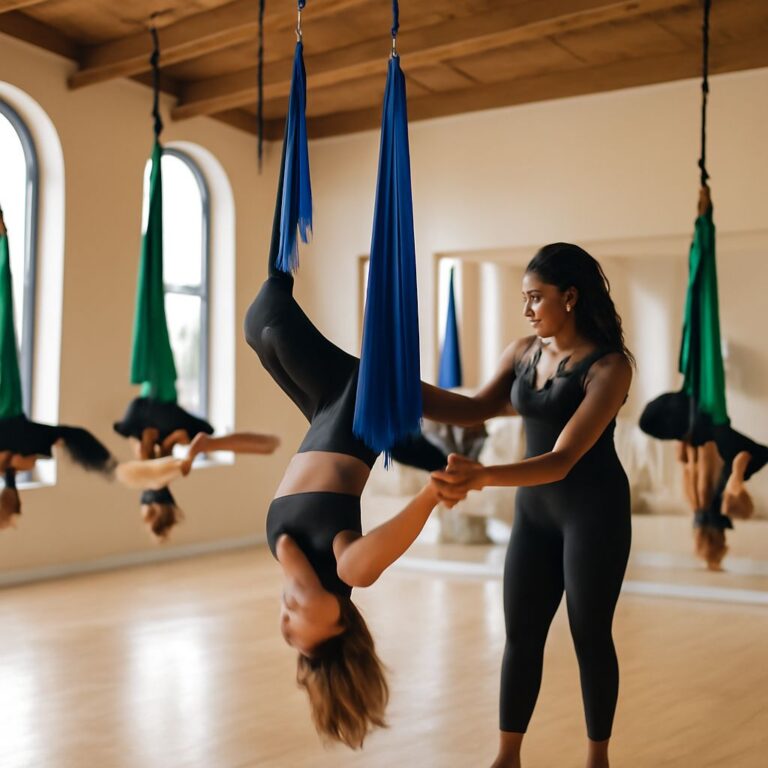
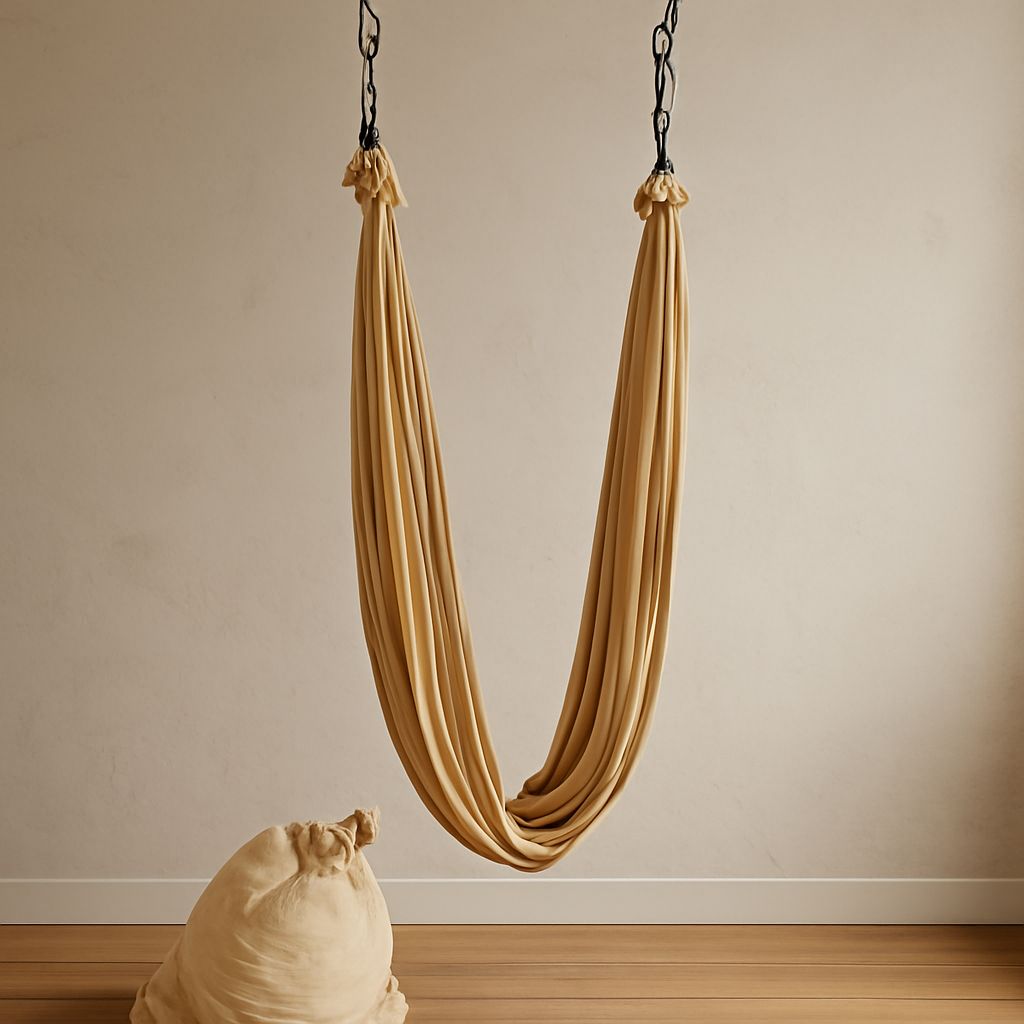
An aerial yoga hammock is a wide fabric sling, typically 2 to 3 meters long when folded, that creates a fabric loop at a consistent height. It can support the full body weight in a supine position, allowing spinal traction, supported inversions, and restorative poses with the body partially or fully suspended. The fabric is low-stretch nylon or polyester rated for loads well above typical body weight.
An aerial yoga swing is a more structured apparatus with fabric handles and foot stirrups at specific heights below the main seat. It creates fixed grip and support points rather than a continuous fabric loop. Swings are better suited for specific exercise patterns like back stretches, shoulder openers, and hip traction exercises where having defined grip points improves control.
Yoga silks are typically 8 to 9 meters long, made of low-stretch nylon tricot, and require substantial upper body strength and aerial training to use safely. They are used in circus arts and advanced aerial yoga programs. A beginner purchasing yoga silks expecting to do basic inversions will find the entry barrier substantially higher than with a hammock or swing.
Choosing and Installing Aerial Yoga Equipment at Home
Ceiling attachment for aerial yoga equipment requires a structural anchor point rated for dynamic loads. A standard drywall ceiling anchor is insufficient. The anchor must be attached to a ceiling joist, beam, or purpose-built aerial rig. The minimum recommended load rating is 300 to 400 pounds for a single-point suspension to account for dynamic forces during movement.
Daisy chains and carabiners used for aerial yoga rigging must be rated for overhead use. Climbing-rated hardware is appropriate. The hardware should be inspected before each session for wear, corrosion, or gate damage. A gate that doesn’t fully close is a failure waiting to happen under load.
For studio installation, purpose-built aerial yoga rigging frames are preferable to ceiling attachment in older buildings where structural ceiling integrity is uncertain. These free-standing rigs are available in standard and heavy-duty configurations and remove the structural calculation burden from the practitioner.
Bottom line: an aerial yoga hammock is the most accessible entry point for beginners, providing full-body support for inversions and restorative work. An aerial yoga swing suits targeted exercise with defined grip points. Yoga silks require aerial training and are not beginner aerial yoga equipment. All three require structurally sound installation and load-rated hardware regardless of the practice level.