Back pain is one of the most common complaints in adults worldwide. Many assume rest is the answer. Research consistently shows the opposite: controlled movement, particularly yoga for back strength, reduces pain and rebuilds functional capacity faster than extended rest. The spine needs both mobility and stability, and the right yoga poses deliver both.
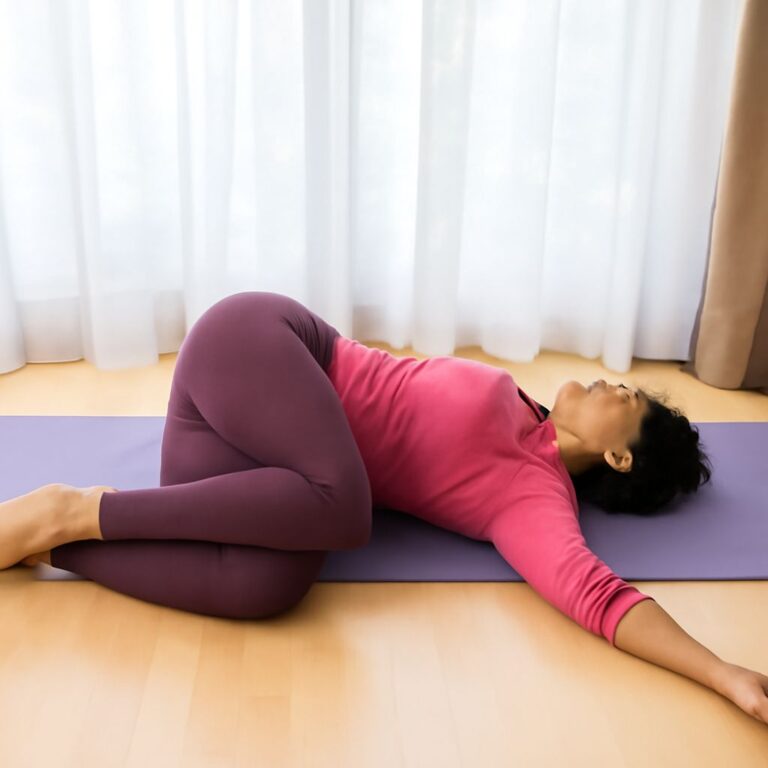
People often confuse yoga poses on back with yoga poses that target the back. They are different categories. Poses done while lying face up, like bridge or supine twist, are performed on the back. Poses that train the back musculature, like locust or cat-cow progressions, work back strengthening yoga in a more targeted way. Both matter. Yoga to strengthen back muscles requires combining these categories intelligently.
Essential Poses That Build Back Strength and Stability
Cat-Cow is the foundation. This spinal flexion and extension sequence warms the vertebrae, lubricates the facet joints, and trains the deep erector muscles to move through their full range. Moving slowly through ten to fifteen rounds before any other back work primes the spine safely.
Locust pose is underrated. Lying face down and lifting the chest, arms, and legs simultaneously activates the entire posterior chain. The glutes, hamstrings, and thoracic extensors all fire at once. Most practitioners find this pose harder than it looks. That difficulty signals it is working the right muscles.
Bridge pose targets the posterior chain from a supine position. Pressing the feet into the mat and lifting the hips fires the glutes and lower back in a way that directly counters the hip flexor tightening that comes from prolonged sitting. Holding for five breaths per repetition builds endurance in these critical stabilizers.
- Begin every back-focused session with Cat-Cow to warm spinal segments
- Practice Locust in three sets of five breath holds to build posterior strength
- Use Bridge to train the glute-lower back connection under gentle load
- Add Thread-the-Needle for thoracic rotation and upper back release
Child’s pose provides decompression between strengthening efforts. Holding it for five to eight breaths between stronger poses allows the spinal muscles to reset before the next set of effort.
Building a Consistent Practice That Protects Your Spine
Three sessions per week is enough to build meaningful back resilience over eight to twelve weeks. The key is consistency rather than intensity. Doing yoga poses for back health twice a week for three months outperforms aggressive daily practice for two weeks followed by a break.
Proper alignment matters more than depth. A shallow backbend with the spine long and even is more therapeutic than a dramatic arch that compresses the lumbar vertebrae. Learning what a neutral spine feels like from the inside takes time but pays dividends in every pose.
Progress looks different for everyone. Some people notice reduced stiffness in the first week. Others require four to six weeks of consistent practice before changes register. Neither timeline is wrong. The body responds to accumulated input, not to single sessions.
Working with a qualified yoga teacher for the first several sessions gives you feedback on alignment that self-practice cannot provide. Even three to five guided sessions can correct patterns that might otherwise lead to strain rather than strength building.