Warrior Yoga: Mastering Yoga Warrior Poses for Strength and Balance
Some practitioners assume warrior yoga is only for advanced students. That is a common misreading of these poses. Yoga warrior poses build foundational strength in the legs, core, and shoulders while training focus and balance that carry into every other part of your practice. They are challenging, yes, but accessible to most students from the first session with appropriate modifications.
You may have seen naturist yoga classes where warriors are practiced outdoors without clothing, or unicorn yoga events where colorful themes and whimsy set the tone. The underlying poses remain the same in every context. Peaceful warrior yoga, a flowing variation that adds a gentle side bend to Warrior II, is practiced in studios worldwide as a transition sequence between standing poses.
Understanding the Warrior Poses and How They Build Real Strength
The Three Warriors and What Each Trains
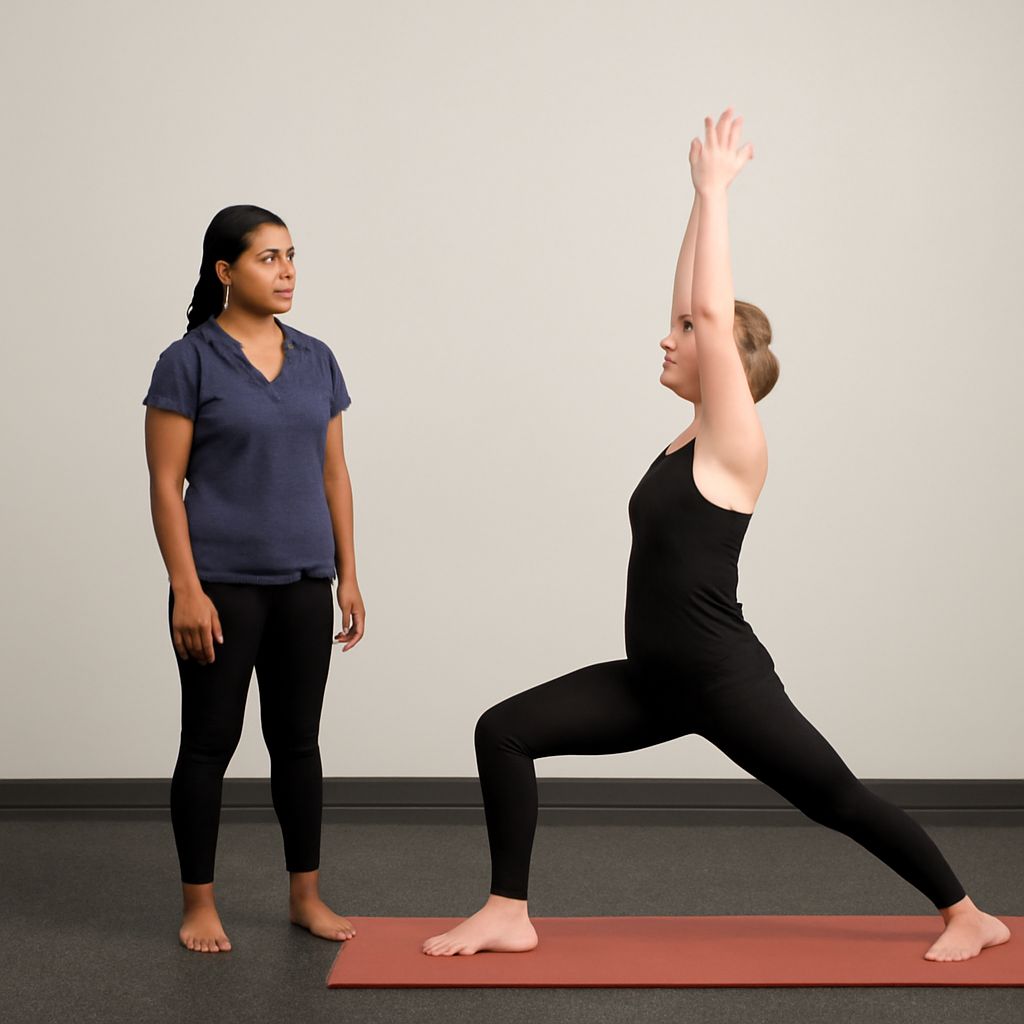
Warrior I requires a deep front knee bend while the back foot presses firmly into the mat. Arms reach overhead, lengthening the spine and opening the chest. The challenge is keeping the back hip squared to the front of the mat while the pelvis wants to rotate. That opposition is exactly what makes the pose so effective for hip flexor lengthening and core stability.
Warrior II opens the stance wide and extends the arms in opposite directions. The front knee tracks over the front ankle without collapsing inward. The gaze travels over the front hand. This pose trains the inner thigh and glute of the front leg simultaneously, building the kind of lateral hip stability that benefits runners and cyclists.
Warrior III is the most demanding of the three. Balancing on one leg while the torso and raised leg form a horizontal plane requires tremendous posterior chain activation. The glutes, hamstrings, and spinal extensors all fire to maintain the position. Even ten seconds in a well-aligned Warrior III delivers significant training stimulus.
- Practice Warrior I with the back heel lifted if hip rotation is restricted
- Use blocks under the front thigh in Warrior II to reduce joint loading
- Build Warrior III from a standing split before attempting the full horizontal position
- Hold each pose for five full breaths before transitioning to build endurance
Unicorn yoga and other themed formats often use warrior sequences as their energetic core because these poses photograph well and feel powerful. Whatever the context, the biomechanical work in yoga warrior poses remains unchanged by the surrounding theme.
Peaceful Warrior and the Art of Flowing Between Poses
Peaceful warrior yoga transitions from Warrior II by flipping the front palm upward, dropping the back hand to the back leg, and arching the torso into a gentle side bend. The stretch through the front body contrasts with the strength demand of the warrior it follows. This contrast is deliberate: strength and ease, effort and release, practiced in sequence.
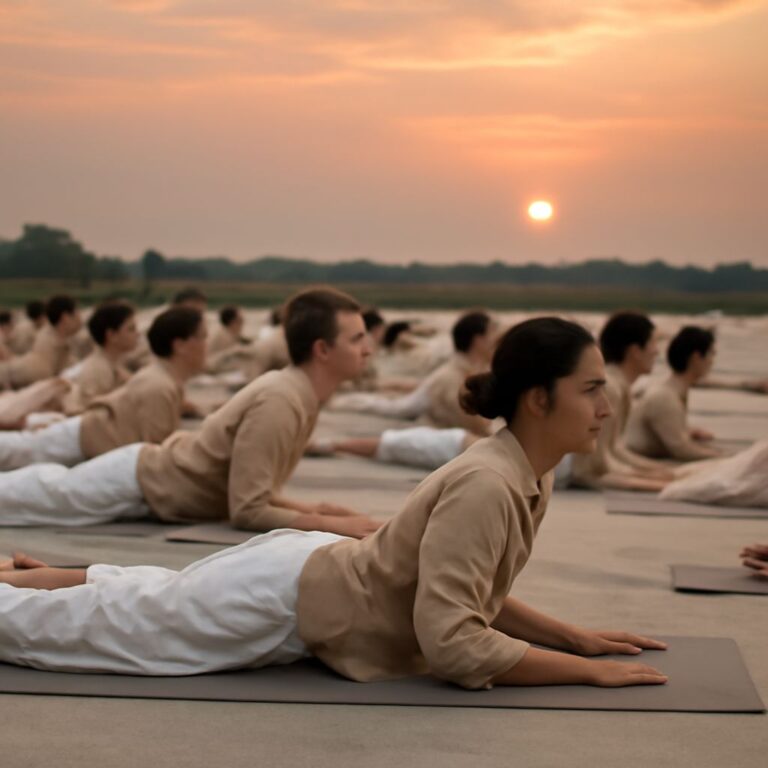
Naturist yoga practitioners often describe the outdoor environment as amplifying the grounded quality of warrior poses. Standing barefoot on grass or earth during these sequences connects proprioception to terrain in a way studio floors cannot replicate. That sensory engagement heightens body awareness regardless of clothing choices.
Flowing between all three warriors and peaceful warrior in a continuous sequence builds cardiovascular demand alongside strength. Five slow breaths in each pose across the sequence generates meaningful heat without requiring a heated room or fast pacing.
Adding warrior yoga to your weekly practice two to three times per week produces visible changes in leg strength, hip stability, and postural alignment within six to eight weeks. Start with the basics, respect the alignment cues, and let the difficulty come from precision rather than speed or depth.