Yoga for Sciatica Pain: Poses That Relieve and Restore
Sciatica is not one condition. It is a symptom with multiple possible causes, and that distinction matters enormously for how you approach yoga for sciatica pain. Some practitioners find relief through deep hip opening. Others find that hip flexor tightening worsens their symptoms. Understanding which pattern applies to you requires careful attention and, ideally, guidance from a physical therapist who can identify the root cause before you start a yoga sequence.
Yoga for circulation, yoga for spine health, yoga for lower back and hip pain, and yoga for quads all overlap with sciatica care in specific ways. The piriformis muscle, which runs through the hip and can compress the sciatic nerve when tight, responds well to targeted hip rotator stretches. The lumbar spine, often involved in disc-related sciatica, benefits from gentle decompression through forward folding and supine twisting. Both approaches have their place depending on your specific presentation.
Poses That Address Sciatica From Multiple Angles
Hip and Spine-Focused Relief Work
Pigeon pose is the most commonly recommended pose for sciatica related to piriformis syndrome. The external hip rotation in the front leg stretches the piriformis directly. Holding for two to three minutes per side with the torso supported on blocks allows gravity to do the work without muscular force.
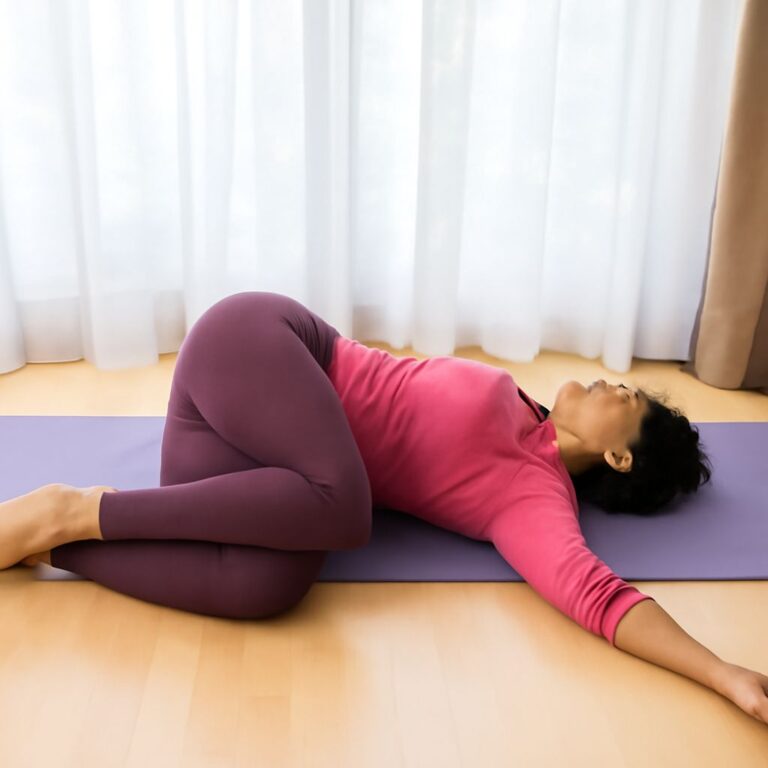
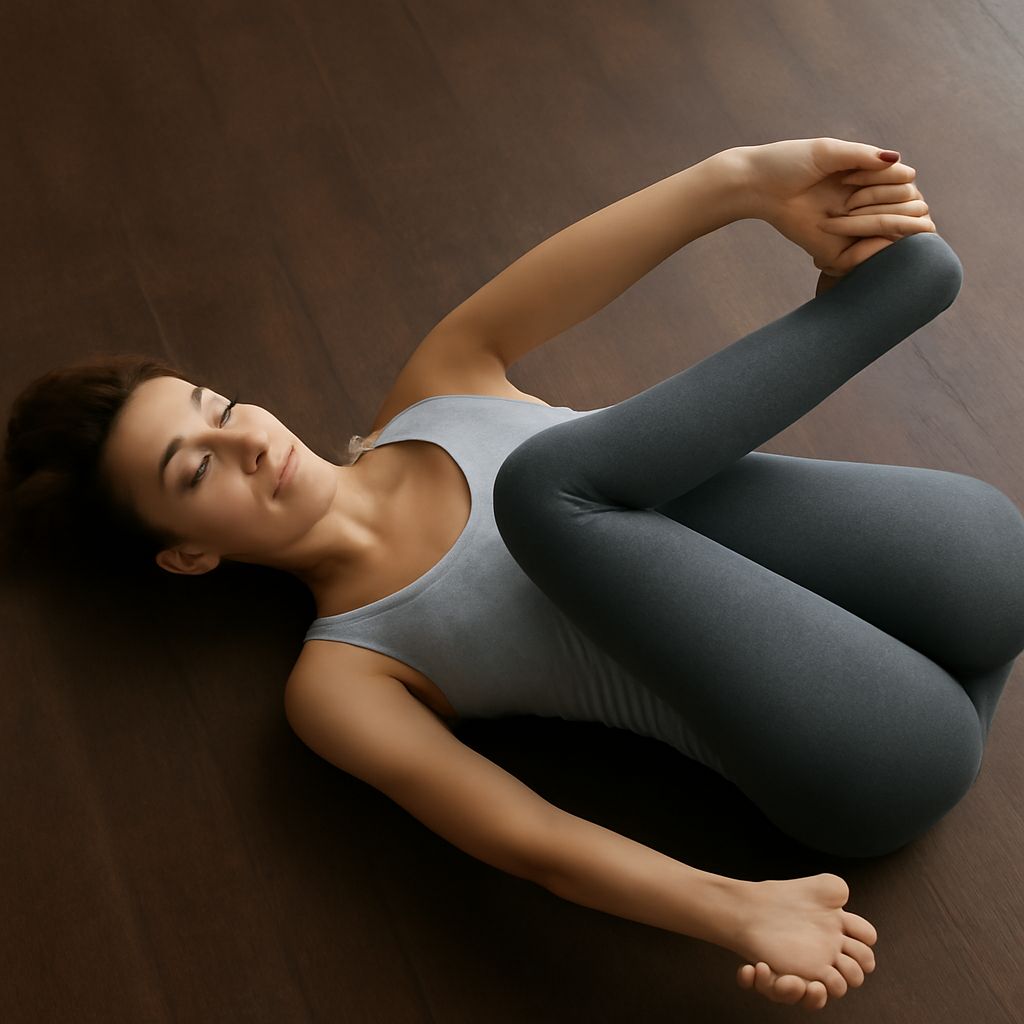
Supine figure-four, also called reclined pigeon, provides similar hip rotator work with less joint loading. Lying on your back with the ankle crossed over the opposite knee removes the body weight from the hip while still targeting the same tissue. This version is often better for acute phases when pain is higher.
For yoga for spine decompression, a gentle seated forward fold with a flat back rather than a rounded spine creates length through the lumbar vertebrae without loading the discs in flexion. People with disc herniation often find this more tolerable than rounded forward folding, which increases pressure in the posterior disc space.
- Test reclined pigeon before progressing to full pigeon if pain is recent or severe
- Use supported bridge pose to strengthen gluteal muscles that protect the sciatic nerve
- Practice yoga for quads with low lunge to release hip flexor compression on the lumbar spine
- Avoid deep twists during acute flare-ups and return to them only once pain has settled
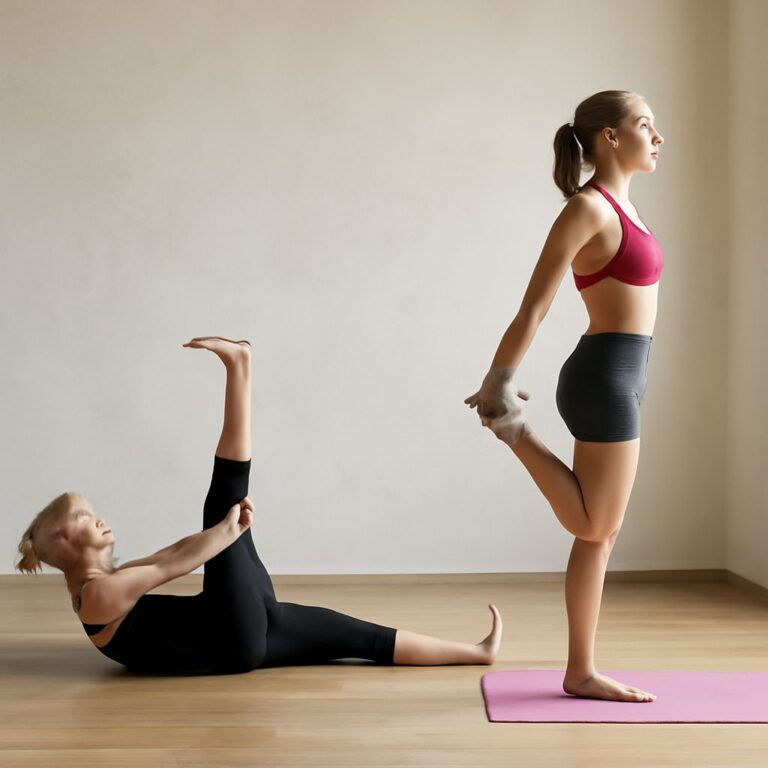
Yoga for lower back and hip pain that involves the hamstrings matters here. Tight hamstrings pull on the sitting bones and can increase sciatic nerve tension along its course down the leg. Supine hamstring stretches with a strap, held gently rather than aggressively, address this without provoking the nerve.
Building a Weekly Practice Around Sciatica Relief
Daily practice of fifteen to twenty minutes beats three long sessions per week for sciatica management. Frequency reduces nerve sensitization more effectively than infrequent deep work. Short, consistent exposure to gentle movement keeps the nervous system from interpreting movement as a threat.
Yoga for circulation plays a supporting role in nerve health. Poses that pump blood through the lower extremities, such as legs-up-the-wall and gentle ankle circles in supine, reduce the venous congestion that sometimes accompanies sciatic symptoms. These low-intensity options are appropriate even on higher-pain days.
Yoga for youth practitioners with developing spines and older adults both benefit from sciatica work, but with different emphases. Young practitioners tend to overstretch and strain the nerve directly. Older practitioners more often deal with stenosis-related compression that responds better to extension work than to flexion. Age and diagnosis both matter in designing an appropriate practice.
Bottom line: Yoga for sciatica pain works best when matched to the specific cause of your symptoms. Start gently, monitor your response after each session, and work with a healthcare provider to confirm your diagnosis before committing to any single approach. The poses that help one person can worsen another’s condition, and that distinction is worth taking seriously.